Hindu religious traditions denigrated; Indian actress calls Karva Chauth observance by educated Hindu women “appalling”
 India
 21 July, 2022
Case Summary
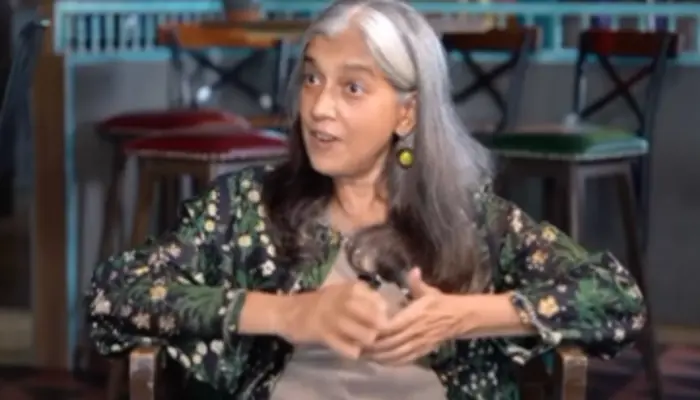
Actress Ratna Pathak Shah denigrated Hindu religious traditions, particularly the festival of Karva Chauth, and criticised Hindu women for observing the festival, calling it "appalling", while commenting on the growing conservatism of Indian society. In an interview with Pinkvilla on 26 July 2022, she criticised the observance of Karva Chauth, a Hindu festival during which married women observe a fast and pray for the long life and well-being of their husbands. She described it as “appalling” that modern, educated women continued to observe the festival and questioned why women prayed for their husbands' longevity, implying that the practice was rooted in their fear of widowhood and their need to secure validity in their lives. Recalling that someone had asked her for the first time in 2021 whether she observed the Karva Chauth fast, she responded, “Am I mad?” Shah further stated that Indian society was becoming increasingly conservative and superstitious, and that people were being forced into accepting religion as an important part of their lives. Pointing to the growing number of advertisements encouraging people to consult astrologers, check their horoscopes and seek Vaastu advice, she questioned why such practices were becoming increasingly commonplace in a supposedly modern society. She also criticised the growing popularity of religious gurus, remarking that “every single silly, old Guru from under every rock has jumped out and everyone’s flocking to them”. Referring to spiritual leader Nithyananda, who had established his own island, she questioned whether this reflected the progress of a modern society. She contrasted his circumstances with those of rationalist Narendra Dabholkar, who was murdered in broad daylight in 2013, and pointed out that his trial was still ongoing, expressing scepticism that justice would ever be delivered in the case. Shah also drew a comparison between Indian society and Saudi Arabia while discussing what she described as increasing conservatism. Referring to the Hindu festival and the religious practices associated with it, she questioned whether India was moving towards becoming like Saudi Arabia, stating, “What’s the scope of women in Saudi Arabia? Do we want to become like Saudi Arabia? And we will become because it’s very, very convenient.” She further argued that conservative societies restricted women's freedom and that women were forced into domestic labour without compensation. Her remarks placed the observance of Karva Chauth within a broader criticism of religious traditions and practices, with her invoking Saudi Arabia as a comparison for the direction in which Indian society was heading.
Why it is Hate Crime ?
This case has been added to the tracker under the primary category of : Hate speech against Hindus. Within it, the sub-category selected here is - Anti-Hindu slurs, mocking faith. Anti-Hindu slurs and the deliberate mocking of the Hindu faith owing to religious animosity involve the usage of derogatory terms, stereotypes, or offensive references to religious practices, symbols, or figures. One of the common anti-Hindu slurs used against Hindus is “cow-worshipper” and “cow piss drinker”. The intention of using this term is to demean and mock Hindus as a group and their religious beliefs since Hindus consider the cow holy. Additionally, some symbols and the slurs attached to them have a historical context that exacerbates the insult, hate, stereotyping, dehumanisation and oppression against Hindus. Cow worship has been used for centuries to denigrate Hindus, insult their faith and oppress Hindus specifically as a religious group. There has been overwhelming documentation about how cow slaughter has been used to persecute Hindus with cow meat being thrown in temples and places of worship. There has also been overwhelming documentation where cow meat (beef) has been force-fed to Hindus to either forcefully convert them to Islam or denigrate their faith. Apart from cow worship, the Swastika – which holds deep religious significance for the Hindus – has also been misinterpreted and distorted to use as a slur against Hindus. Similarly, the worship of the Shivling has been used by supremacist ideologies and religions to denigrate Hindus owing to religious animosity. Such slurs and denigration stem out of inherent animosity and hate towards Hindus and their faith, therefore, it is categorised as hate speech targeted at Hindus specifically owing to their religious identity. The other sub-category selected here is - Anti-Hindu subversion and prejudice. Hate speech is defined as any speech, gesture, conduct, writing, or display that is prejudicial against a specific individual and/or group of people, which is leading to or may lead to violence, prejudicial action or hate against that individual and/or group. Media plays a specific and overarching reach in perpetuating prejudicial attitudes towards a community owing to unfair, untrue coverage and/or misrepresentation/misinterpretation, selective coverage and/or omission of facts of/pertaining to issues affecting a specific religious group. This type of bias can dehumanise the victim group, making it easier for others to justify harmful actions against them, which aligns with the objectives of hate speech laws aimed at preventing such harm. It is often observed that the media takes a prejudicial stand against the Hindu community driven by their need to shield the aggressor community which happens to be a numeric minority, however, is the one perpetrating violence against Hindus. For example, the media is often quick to contextualise religiously motivated crimes against Hindus, omit or misrepresent facts that point towards religiously motivated hate crimes, justify and/or downplay religiously motivated hate crimes or simply present fake news to stereotype Hindus. Such media bias leads to the denial of persecution and is often used to dehumanise Hindus, leading to justification for violence against them. For example, the media covered several fake allegations of Hindus targeting Muslims and forcing them to chant Jai Shree Ram. Most of these cases were proved false and fabricated after police investigation. These fake news reports were subsequently never retracted or clarified. Such fake news led to the justification of violence and dehumanisation of Hindus based on the argument that since Hindus targeted Muslims and forced them to chant Jai Shree Ram, the dehumanisation of Hindus and violence against them was par for the course and merely a retaliation. Such media bias leads to prejudicial portrayal of Hindus and offers a justification for violence against them and therefore, is considered hate speech under this category. The remarks made by Ratna Pathak Shah reflected a dismissive attitude towards Hindu religious traditions and the freedom of Hindu women to practise their faith. Her criticism went beyond expressing a personal preference not to observe Karva Chauth and extended to ridiculing the judgement, modernity and agency of educated Hindu women who chose to observe the festival. By describing their participation as “appalling” and questioning whether they were “mad”, Shah portrayed the voluntary observance of a Hindu religious tradition as irrational and incompatible with being educated or modern. This framing effectively placed Hindu women who followed the tradition in a position where their religious choices were treated as evidence of backwardness rather than recognised as an exercise of personal faith and cultural autonomy. Karva Chauth holds considerable religious and cultural significance in Hindu tradition and is observed by married Hindu women who undertake a day-long fast, offering prayers for the long life, well-being and prosperity of their husbands and families. The festival is also associated with the worship of Goddess Parvati, who symbolised marital devotion and conjugal well-being. For many Hindu women, observing the fast was an expression of faith, devotion, personal choice and cultural continuity, rather than an obligation imposed upon them. The practice also formed part of the wider Hindu tradition of observing festivals and performing rituals for the well-being of loved ones. The fact that Shah described the voluntary observance of Karva Chauth by educated Hindu women as “appalling” further underscored the prejudice reflected in her remarks. The decision to observe a religious fast is a matter of personal faith and individual choice, and Hindu women exercising that freedom should not be subjected to ridicule for doing so. By treating even the voluntary practice of a Hindu religious tradition as something objectionable and incompatible with education or modernity, Shah went beyond expressing a personal disagreement with the festival. Her remarks reflected a dismissive attitude towards Hinduism and its adherents, particularly Hindu women who chose to uphold their religious and cultural traditions. The broader context of her remarks also demonstrated how Hindu religious practices were singled out in her criticism of what she perceived as growing conservatism. Rather than distinguishing between coercive religious practices and voluntary expressions of faith, she invoked Karva Chauth, astrology, Vaastu and religious gurus as examples of India's supposed regression into superstition. Such generalisations reduced diverse Hindu religious and cultural practices to markers of irrationality and social backwardness. Her comments also reflected a failure to recognise that participation in religious traditions did not necessarily indicate an absence of education, independent thinking or women's agency. Hindu women could voluntarily observe Karva Chauth without accepting the patriarchal interpretation she attached to the practice. Shah’s remarks also denigrated Hindu spiritual gurus by dismissively referring to them as “every single silly, old Guru from under every rock” and suggesting that people were indiscriminately flocking to them. This sweeping characterisation reduced Hindu spiritual leaders and those who sought their guidance to objects of ridicule, portraying their followers as gullible and their spiritual beliefs as inherently irrational. While criticism of individual religious leaders or their conduct is legitimate, her blanket dismissal of spiritual gurus, without distinguishing between individuals, their teachings or their followers, reinforced the broader disparaging tone of her remarks towards Hindu religious and spiritual traditions. Furthermore, her comparison of India with Saudi Arabia brought an additional dimension to the remarks. By invoking a country with a markedly different religious, political and legal framework as a warning against the growing prominence of religion in India, she associated the visibility of Hindu religious practices with the prospect of women's subjugation. This comparison overlooked the distinction between voluntary religious observance in a pluralistic society and state-enforced religious restrictions. It consequently reinforced a negative portrayal of the growing public expression of Hindu religious identity. The concern, therefore, lay not merely in Shah expressing disagreement with a Hindu religious festival, but in the manner in which she characterised Hindu religious observance and the Hindu women who participated in it. Her remarks contributed to a discourse in which Hindu traditions were treated as inherently regressive and their practitioners as irrational or backward. While criticism of religious customs and the expression of personal disagreement fall within legitimate public discourse, the disparaging generalisation of Hindi religious practices and the questioning of its followers' intelligence and agency can contribute to the normalisation of prejudice against the Hindu community. These remarks therefore reflected an instance of disparagement directed at Hindu religious and cultural identity, and thus have been added to the hate crime database.


Case Status
Unknown


Perpetrators Details
Perpetrators
Others
Perpetrators Range
One Person
Perpetrators Gender
female
 Sources



