Hindu woman sexually exploited by Muslim man posing as Hindu; accused also targeted other Hindu women and minor girls using false Hindu identity
 Bhubaneshwar, Odisha, India
 28 March, 2025
Case Summary
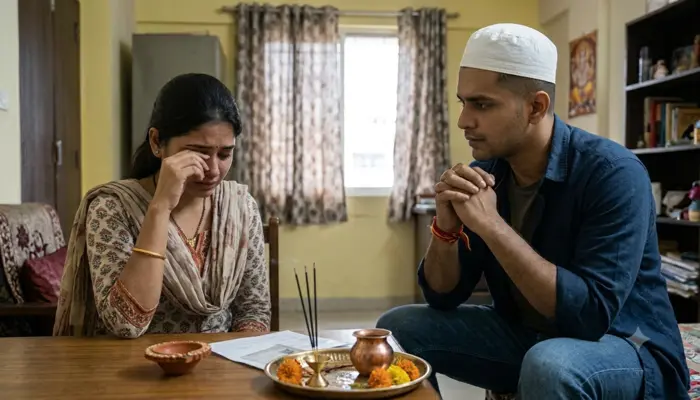
In Bhubaneswar, Odisha, a 20-year-old Hindu woman was lured into a relationship by a Muslim man, SK Irfan, who concealed his religious identity and posed as a Hindu man named Kumar Pintu. The accused entered into a relationship with the victim on the promise of marriage and subsequently sexually exploited her. He also subjected the Hindu victim to blackmail, physical assault and death threats. The Hindu woman also revealed that the accused had similarly targeted other Hindu women and minor girls by concealing his religious identity and promising them marriage. According to media reports, SK Irfan, also known as Sheikh Irfan, was a 21-year-old native of Aul in Kendrapara district, Odisha, while the Hindu woman worked at a private establishment in Bhubaneswar. In March 2025, she came into contact with Irfan through Instagram, where he introduced himself under a false identity and gradually developed a close relationship with her. After gaining her trust, he promised to marry her and persuaded her to enter into a relationship with him. Subsequently, the two began living together in a rented house near Garage Chhak, under the jurisdiction of Lingaraj Police Station in Bhubaneswar. During the relationship, the woman discovered that the accused was a Muslim named SK Irfan and that he had deliberately concealed his religious identity from her. She also learnt that he had been involved with several other Hindu women and minor girls. When she confronted him about his concealed identity and relationships with other women, differences arose between them, following which Irfan subjected her to physical and mental harassment. Distressed by his conduct, the woman decided to end the relationship and distance herself from him. However, Irfan refused to accept her decision and continued contacting her. During their relationship, Irfan had recorded the woman's intimate photographs and videos, which he subsequently used to threaten and blackmail her after she decided to end the relationship. He sent her the private material and demanded money in exchange for not misusing or circulating it. However, the woman refused to comply with his demands. On 24 October 2026, at around 3 pm, while the woman was on her way to work, Irfan intercepted her on the road and assaulted her with a wooden stick before attempting to strangle her. During the assault, he also snatched her gold chain, cash and important documents before fleeing the scene. He further threatened to kill her if she approached the police or reported the incident. Following the assault, the woman approached Mahila Police Station (Women Police Station) in Bhubaneswar and lodged a formal complaint. Based on her complaint, the police registered a case and initiated an investigation. Acting on the complaint, Bhubaneswar City Police traced Irfan to Kendrapara district and arrested him on 29 October 2026 while he was attempting to flee. He was apprehended at Tinimuhani bus stand in Kendrapara and subsequently produced before the court. During the investigation, police examined Irfan's mobile phone and recovered digital material that opened up further avenues of inquiry. Investigators probed whether he had established relationships with several other Hindu women by concealing his religious identity and promising marriage. They also examined whether other women had been taken to hotels, where their intimate photographs and videos were recorded without their consent. Further inquiries focused on whether the private material had been shared with his associates, whether other women, including minor girls, had been targeted, and whether other individuals or organisations were involved. Police continued analysing the digital evidence to identify potential victims, establish the extent of the blackmailing and determine whether others had participated in these activities.
Why it is Hate Crime ?
The primary category selected in this case is: Crimes against women in relationships and other sexual crimes. The subcategory selected is: Man pretends to be Hindu. The tertiary categories selected are: Name changed and Pattern of targeting Hindu women. When a non-Hindu man pretends to be a Hindu to deceive a Hindu woman into a relationship, the act is seen as triggered by mala fide intentions. In some cases, the woman eventually accepts the man’s original religious identity and converts after the man’s identity is revealed. These cases could be argued as cases of religious brainwashing and a result of the pressure a woman feels after getting into a relationship with a man. The woman, it can be argued, also changed her religious identity because of the stigma she believes she might face if she chooses to walk out of a deceptive relationship. However, for the purpose of documenting hate crimes, the cases in this subcategory are limited to those where there is explicit violence aimed at religious conversion against the wishes of the victim (force-feeding beef, blackmailing with intimate videos, rape on refusal to convert, etc.), or if the woman herself complains of the man’s religious deception. In such cases, it is established that the deception of the non-Hindu man had a specific aim of religious conversion or targeting of the victim due to her Hindu religious identity, therefore making it a religiously motivated hate crime. In this case, a Hindu woman was deceived into a relationship by a Muslim man posing as a Hindu and promising marriage. She was sexually exploited, physically and mentally tortured, and blackmailed using intimate photographs and videos. The accused also targeted other Hindu women and minor girls through similar relationships. When the woman decided to end the relationship, he assaulted her, attempted to strangle her and threatened to kill her. Firstly, the perpetrator’s act of deception by posing as a Hindu itself demonstrated a clear disregard for the victim’s religious identity and trust. By hiding his true identity, the Muslim man manipulated the Hindu woman’s trust and targeted her under false pretences, indicating a deliberate effort to deceive her. This constituted a direct violation of her right to make an informed choice about whom she chose to marry, as she was kept unaware of the perpetrator’s actual religious identity. Thus, the perpetrator’s deliberate decision to conceal his Muslim identity and present himself as a Hindu strongly underscored the religious dimension of the crime. In such instances, identity concealment is not just a deceptive tactic for personal reasons but a calculated strategy rooted in religious profiling and targeting. The accused knew that the victim, being Hindu, would likely refuse his advances if she knew his real identity, and he circumvented this by lying, which directly pointed to religiously driven intent. This deception reflects a larger pattern where Hindu women are specifically singled out using false identities by Muslim men. Such targeted victimisation based on religion demonstrates a fundamental disregard for Hinduism and exposes deeper animosity towards Hindu women and their religious identity, making it a religiously driven hate crime. The accused's sexual exploitation of the victim under the pretext of marriage, using a false Hindu identity, demonstrated how the promise of marriage was used as a means to gain sexual access to her. Rather than being a consensual relationship based on an honest understanding between two individuals, the relationship involved the exploitation of the victim's trust and vulnerability for sexual gratification. The fact that the accused used this approach against a Hindu woman, while posing as a member of her own religious community, highlighted the religious dimension of the sexual exploitation. His conduct demonstrated a willingness to exploit Hindu women's trust and intimate relationships to gain sexual access to them, treating their religious identity and personal dignity with disregard. Such targeted sexual exploitation reflected hostility towards Hindu women and their autonomy, extending beyond individual deception to the exploitation of women belonging to the Hindu community. Furthermore, when the victim attempted to end the relationship, the accused subjected her to blackmail using her intimate photographs and videos, physical and mental harassment, assault and death threats. He weaponised her private material to extort money and intimidate her, and resorted to physical violence, including attempting to strangle her, when she refused to comply with his demands. He also threatened to kill her if she approached the police. The escalation from sexually exploiting the victim through religious deception to subjecting her to blackmail, physical violence and threats to her life demonstrated the extent of his coercive and abusive conduct. Having initially gained access to the victim through a fabricated Hindu identity, his subsequent treatment of her reflected a profound disregard for her dignity, safety and religious identity. This further underscored the hostility underlying the targeting of the Hindu woman and the religious dimension of her victimisation. The accused's involvement with several other Hindu women and minor girls through similar relationships further established that the incident was not an isolated case. Rather, it pointed towards a recurring pattern of targeting Hindu women and minor girls through identity deception and promises of marriage. The repeated use of this method demonstrated that the perpetrator deliberately approached Hindu women as targets for exploitation, treating their religious identity as an obstacle to be circumvented through deception. Such conduct reflected a deeply dehumanising attitude towards Hindu women, whose trust, religious identity and personal autonomy were treated as vulnerabilities to be exploited. The targeting of multiple Hindu women and minor girls through similar methods further indicated hostility towards the Hindu community and its women. Overall, since this case meets the parameters of a religiously motivated crime, it is being added to the Hinduphobia Tracker’s hate crime database. Disclaimer: The exact date on which the Hindu woman and the Muslim perpetrator first came into contact was not specified in the available sources. However, the month and year of initial contact were identified as March 2025. The tracker records incident dates based on when the crime occurred rather than when it was reported or published. In this case, 29th March 2025 has been used as the indicative incident date, derived by aligning the known month and year of initial contact with the first media report published on 29th October 2026. This date has been recorded for documentation purposes only. The Hinduphobia Tracker recorded the victim count as '1' in this case. Although the reports referred to several other Hindu women and minor girls in connection with the accused's relationships, the available sources did not specify the total number of victims. Only one victim had been formally identified in connection with the present case. Therefore, the victim count was recorded as one. This represented a conservative estimate based on the information available in the media reports.
Victim Details
Total Victim
1
Deceased
0
Gender
- Male 0
- Female 1
- Third Gender 0
- Unknown 0
Caste
- SC/ST 0
- OBC 0
- General 0
- Unknown 1
Age Group
- Minor 0
- Adult 1
- Senior Citizen 0
- Unknown 0


Case Status
Arrested


Perpetrators Details
Perpetrators
Muslim Extremists
Perpetrators Range
One Person
Perpetrators Gender
male
 Sources



