Hindu place of worship targeted; sacred Shivlinga desecrated by miscreant in Sant Kabir Nagar, Uttar Pradesh
 Sant Kabir Nagar, Uttar Pradesh, India
 30 October, 2026
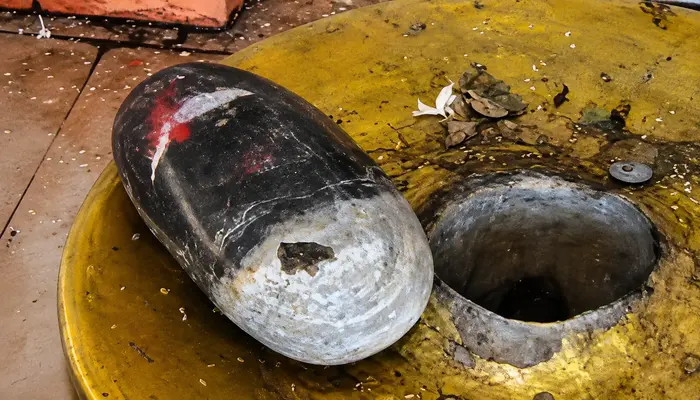
Case Summary
In Basdila locality of Mehdawal Nagar Panchayat, Sant Kabir Nagar district, Uttar Pradesh, a sacred Shivlinga installed inside a Shiva temple was deliberately broken and damaged by a miscreant. The incident involved the desecration of a sacred symbol of Hindu worship. The incident took place on 31 October 2026 at approximately 4:00 pm at a Lord Shiva temple. A video of the incident was recorded and subsequently circulated on social media, drawing attention and sparking outrage among residents, who gathered at the temple and informed the police. At approximately 5:45 pm, resident Shiv Prakash Pandey also posted details of the incident on social media. Upon receiving information, Mehdawal Police Station Inspector-in-Charge Rakesh Kumar Singh arrived at the scene with a police team. He engaged with the assembled residents, appealed for calm and brought the situation under control. The police took a young man into custody and began questioning him to ascertain the circumstances and motive behind the incident. Inspector-in-Charge Rakesh Kumar Singh stated that the youth was mentally unwell. The police continued their investigation to establish the reasons behind his actions. Meanwhile, arrangements were made to install a new Shivlinga in the temple in place of the damaged one. Following police intervention, the situation remained peaceful, with law and order maintained in the locality.
Why it is Hate Crime ?
This case has been added to the tracker under the primary category: Attack on Hindu religious representations. The sub-category selected is: Desecration of Hindu religious symbols. Icons and symbols or a religious representation of a spiritual ideal are widely revered in Hinduism. Iconography is of vital significance in the Hindu milieu. It helps connect people’s spiritual beliefs with the real world. Iconography within the Hindu faith takes several shapes and forms. Murtis are of most significance to Hindus, to which daily rituals, prayers and offerings are done. Besides the murtis, there are several other symbols which have deep significance in the Hindu faith – the Om and Swastika for example. Since these Hindu religious symbols hold paramount importance in Hinduism, any desecration of symbols, icons, murtis, religious representations and manifestations, is driven by animosity towards the faith itself which manifests itself through these murtis, icons and symbols. Therefore, any desecration of these Hindu religious symbols and representations is considered religiously motivated hate crimes under this category. This incident was a clear example of a religiously driven hate crime, as a sacred Shivlinga was deliberately desecrated by a miscreant. The attack on a sacred Hindu representation demonstrated hostility towards Hindu religious symbols and the religious sentiments of the Hindu community. The Shivlinga holds profound religious and spiritual significance in Hinduism as a sacred representation of Lord Shiva, one of the principal deities in the Hindu tradition. It symbolises the divine presence of Shiva and serves as a central focus of worship, prayer and religious rituals for millions of Hindu devotees. The Shivlinga is revered as a manifestation of the divine and is associated with cosmic creation, existence and the eternal nature of the universe. Devotees offer water, milk, flowers and other sacred offerings to the Shivlinga as expressions of faith, devotion and reverence. The desecration of a sacred Shivlinga constituted a direct affront to Hindu religious faith, as it targeted a deeply revered symbol of Lord Shiva and an integral element of Hindu worship. The act violated the sanctity of a sacred Hindu religious symbol, wounded the religious sentiments of Hindu devotees and demonstrated profound disrespect for their spiritual beliefs and traditions. The damage struck at a symbol central to Hindu devotion, provoking outrage among the Hindu community and compelling villagers to demand the restoration of the Shivlinga. Such an act violates the sanctity of a consecrated place of worship, deeply wounds the religious sentiments of devotees, and damages a sacred symbol through which the Hindu faith is expressed. Moreover, the act was carried out despite the understanding that temples are sacred spaces and centres of worship for Hindus and that such attacks not only cause physical destruction but also deeply wound the spiritual and cultural fabric of the Hindu community, as temples symbolise their faith and collective identity. The deliberate targeting of these revered spaces underscores the profound animosity the accused harboured towards the Hindu faith, which is why this case has been categorised as a religiously motivated hate crime. In several cases where perpetrators of other faiths vandalise and desecrate Hindu places of worship, a usual trope to shield the perpetrator is to attribute the crime to the mental health of the accused, claiming that the crime was committed because the perpetrator was ‘mentally ill’ or ‘mentally unstable’. The police and the media, in many such cases where the crime has been committed against the Hindu faith by a non-Hindu perpetrator, deny that the crime committed was in any way motivated by a religious bias and attribute it to the perpetrator’s mental health. Many a time the police downplay incidents of low-level communal crime because it is their jurisdiction that comes under question. The police also often say that the crime was committed because the accused was mentally unstable, because they wish to ensure that, owing to the crime already committed, there is no further flare-up in the area. In fact, there are many cases where this strategy has been used by the media to downplay such incidents where the crime was committed by a Muslim perpetrator, for example, the attack on the Gorakhnath temple or the incident in Telangana where two Muslim women wearing burqa tried to damage temple and church idols. Likewise, in this case too, the police attributed the act to mental illness. The use of the "mental illness" trope to justify crimes targeting Hindu temples or idols by perpetrators of other faiths raises critical questions. If perpetrators are indeed mentally unstable, why do they specifically target Hindu idols and places of worship, leaving mosques or places of worship of other religions untouched? This selective focus suggests that such acts are not driven by mental health issues but by religious animosity. The repeated use of this narrative to downplay crimes against Hindus reflects a strategic effort to whitewash religious hatred, obscuring the true motivations and intentions behind the attacks.


Case Status
Arrested


Perpetrators Details
Perpetrators
Unknown
Perpetrators Range
One Person
Perpetrators Gender
male
 Sources



