Temple demolished, priest assaulted and idols of Lord Hanuman, Lord Shiva and other Hindu deities missing from sanctum
 Ayodhya, Uttar Pradesh, India
 27 October, 2026
Case Summary
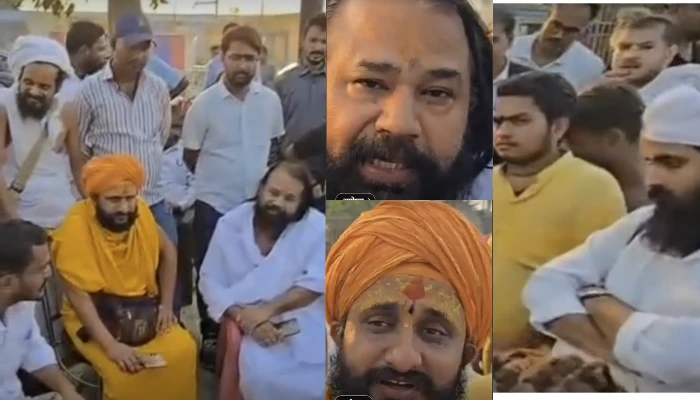
In Ayodhya, Uttar Pradesh, a Hindu temple known as Antaryami Math was demolished, and the idols of Hanuman Ji, Lord Shiva and other Hindu deities housed in its sanctum sanctorum went missing. The temple’s mahant was also assaulted and removed from the premises in an attempt to take possession of the temple land. The incident prompted protests by saints, who demanded an impartial investigation into the demolition, the missing idols and the assault on the mahant. According to a report published by Dainik Bhaskar, the temple stood on land recorded under Gata No. 100, which Mahant Antaryami had purchased. The temple housed idols of Hanuman Ji, Lord Shiva and other Hindu deities and was known to saints and local residents as Antaryami Math. A Hindu priest residing at the temple was assaulted and forced to leave the premises. The temple was subsequently demolished, and its idols went missing. The incident triggered protests by saints, who raised concerns about the occupation of the temple land and the harassment of religious figures. Mahant Hariram Das stated that his fellow disciple, Mahant Antaryami, had purchased the land on which the temple stood. He demanded the recovery of the missing idols, reconstruction of the temple and legal action against those responsible. He also said he would approach the Chief Minister and pursue legal action if necessary. Sant Ram Balak Das said revenue officials had failed to measure the disputed land despite a full day having passed. He said that land on which a temple stood was being described as a road. He demanded that the District Magistrate investigate the role of the concerned officials and take action against those involved in occupying the land. He also stated that the saints would decide their next course of action if the matter remained unresolved. Other saints demanded that officials examine the land records, conduct an impartial measurement of the disputed property, and investigate the temple's demolition and the disappearance of its idols.
Why it is Hate Crime ?
This case is being added to the tracker under the primary category: Attack on Hindu religious representations. The subcategory selected is: Attack on Temples. In Hinduism, a temple is the abode of the Deity. The Deity in the Temple is consecrated, thereby, making it a real, breathing entity. Hindus believe that not just the Deity but the temple premises itself are sacred to Hindus since Hindus hold the faith that the entire Temple space is an amalgamation of the divine energy of the deity. Given the central significance of Temples in Hindu Dharma, any attack against a Hindu Temple or its peripheral premises is an attack on the faith itself and is born out of animosity towards the faith, of which, the Temple is a central tenet. Any manner of attack against a Temple and/or its premises would therefore be considered a religiously motivated hate crime. The other subcategory for this case is: Encroachment or illicit takeover of temple land/land near temple. In Hinduism, a temple is the abode of the Deity. The Deity in the Temple is consecrated, thereby making it a real, breathing entity. Hindus believe that not just the Deity but the temple premises itself are sacred to Hindus since Hindus hold the faith that the entire Temple space is an amalgamation of the divine energy of the deity. Not only the Temple but the Temple premises in their entirety are considered sacred by Hindus. In several cases, the premises of the Temple and/or religious centre are illicitly taken over by institutions belonging to other faiths – like the Waqf board or the Church. Other times, the temple property, land or the property of religious centres are illicitly encroached upon by non-Hindu groups. Any illicit takeover or encroachment is a crime ab initio; however, when non-Hindu groups illicitly take over or encroach upon the sacred land of Hindus, it is an affront to the Hindu community and is therefore classified as a religiously motivated hate crime under this category. The other primary category selected in this case is: Attack not resulting in death. Within it, the sub-category selected here is: Attacked for Hindu identity. In several cases, Hindus are attacked merely for their Hindu identity without any perceived provocation. A classic example of this category of religiously motivated hate crime is a murder in 2016. 7 ISIS terrorists were convicted for shooting a school principal in Kanpur because they got ‘triggered’ seeing the Kalava on his wrist and the tilak that he had put. In this, the Hindu victim had offered no provocation except for his Hindu religious identity. The motivation for the murder was purely religious, driven by religious supremacy. Such cases where Hindus are targeted merely for their religious identity would be documented as a hate crime under this category. This case was included in the Hinduphobia Tracker because the demolition of a Hindu temple, the disappearance of its murtis and the assault on the priest residing there reflected a deliberate violation of a Hindu religious space in the course of occupying its land. For Hindus, a temple is far more than a physical structure. It is the Devalaya, the house of the Divine, where devotees worship, perform rituals and sustain their religious traditions. Demolishing a temple therefore destroys not merely a building but a sacred space that embodies generations of faith and devotion. It deprives devotees of a place of worship and strikes at the religious continuity that the temple preserves. The disappearance of the murtis further compounded this violation. Devotees do not regard consecrated murtis as ordinary objects or decorative idols, but as the sacred presence of the Deity. Their removal from the temple following its demolition represented a further disruption of worship and an assault on the sanctity of the shrine. In the context of the attempt to occupy the land, the demolition, followed by the disappearance of the murtis, reflected the removal of both the physical temple and its sacred presence. The assault on the priest added another dimension to the violation because it targeted not only an individual but also a person entrusted with sustaining the temple’s religious life and worship. A priest serves as a link between devotees and the sacred space, conducting rituals and preserving the continuity of religious practices. Assaulting him and forcing him out of the temple disrupted these practices and deprived the shrine of the person responsible for its religious service. More importantly, removing the priest cleared the way for the temple premises to be taken over, severing the connection between the sacred space, its religious caretaker and the community that worshipped there. This turned the harm into more than a personal assault: it struck at the temple's religious life and the devotees’ ability to worship at a place central to their faith. The sequence of land occupation, temple demolition, disappearance of the murtis and assault on the priest points to an intentional disregard for Hindu religious rights and the sanctity of the temple. The impact extended beyond the loss of property: it affected the community's place of worship, the presence of its revered deities and the person responsible for religious service there. At the time of documenting this case, the identity of the perpetrators remained unknown; however, the act of vandalising sacred idols demonstrated hostility towards Hindu religious representations and a place of Hindu worship. Therefore, the Hinduphobia Tracker included this case in its hate crime database. Disclaimer: The Hinduphobia Tracker records incidents based on when an event occurred or when the victim's ordeal began. None of the media sources covering this case specified the exact date the temple encroachment began. Therefore, for documentation purposes, we recorded the date as the date the incident was reported in the media: 26 October 2026.
Victim Details
Total Victim
1
Deceased
0
Gender
- Male 1
- Female 0
- Third Gender 0
- Unknown 0
Caste
- SC/ST 0
- OBC 0
- General 1
- Unknown 0
Age Group
- Minor 0
- Adult 1
- Senior Citizen 0
- Unknown 0


Case Status
Complaint filed


Perpetrators Details
Perpetrators
Unknown
Perpetrators Range
Unknown
Perpetrators Gender
unknown
 Sources



