Sacred Hindu religious idol of Nandi desecrated at 1000 year old Somanatheeswarar temple in Tiruvallur, Tamil Nadu
 Thiruvallur, Tamil Nadu, India
 3 October, 2026
Case Summary
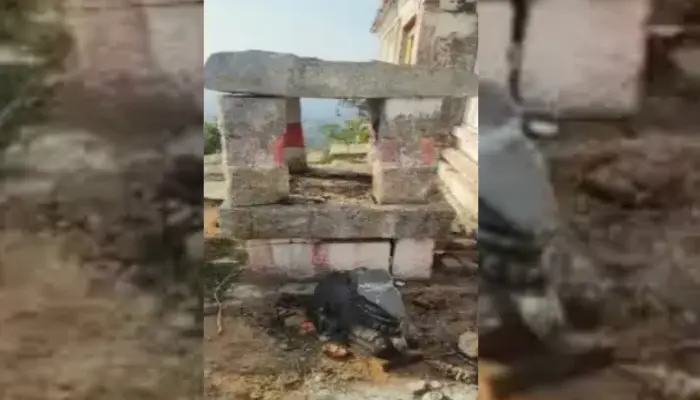
In Veliyagaram village, Pallipattu, Tiruvallur district, Tamil Nadu, the sacred Hindu religious idol of Nandi was desecrated. It was situated opposite the presiding deity, Lord Somanatheeswarar, at the 1,000-year-old Somanatheeswarar Hill Temple, where unidentified miscreants broke off its head. The Maragathavalli Sametha Somanatheeswarar Temple sits atop a high hill north of Veliyagaram village. The temple houses separate sanctums dedicated to Lord Somanatheeswarar and Goddess Maragathavalli. The shrines of Kala Bhairavar and Suryanar are also located northeast of the temple flagstaff. The vandalism took place on 4 October 2026, the night before devotees discovered the damage. The following morning, devotees who arrived at the temple for the worship rituals, known as Somavara Pooja, were shocked to find the Nandi statue desecrated. The incident alarmed devotees and prompted calls for police action against those responsible. On 26 October 2026, members of the Hindu Munnani organised a protest at the Pallipattu bus stand, condemning the destruction of the Nandi statue and demanding the arrest of the perpetrators. Kiran Kumar, the Bharatiya Janata Party's Northern Union President, led the demonstration. Hindu Munnani State Secretary Ravindran also participated in the protest. A total of 40 people, including five women, took part in the demonstration. The protesters called on the police to investigate the incident and arrest those responsible.
Why it is Hate Crime ?
This case has been added to the tracker under the primary category: Attack on Hindu religious representations. The subcategory selected is: Desecration of Hindu religious symbols. Icons and symbols or a religious representation of a spiritual ideal are widely revered in Hinduism. Iconography is of vital significance in the Hindu milieu. It helps connect people’s spiritual beliefs with the real world. Iconography within the Hindu faith takes several shapes and forms. Murtis are of most significance to Hindus, to which daily rituals, prayers and offerings are done. Besides the murtis, there are several other symbols which have deep significance in the Hindu faith – the Om and Swastika for example. Since these Hindu religious symbols hold paramount importance in Hinduism, any desecration of symbols, icons, murtis, religious representations and manifestations, is driven by animosity towards the faith itself which manifests itself through these murtis, icons and symbols. Therefore, any desecration of these Hindu religious symbols and representations is considered religiously motivated hate crimes under this category. This case has been added to the tracker because miscreants desecrated the sacred Nandi idol at the Somanatheeswarar Hill Temple by breaking off its head. Acts of violence against such sacred figures are a clear example of religiously motivated hate crimes targeting Hindus and their sacred places of worship. The desecration of the sacred Nandi idol through the breaking of its head constituted a grave violation of Hindu religious sanctity and an attack on a revered symbol of the Hindu faith. Nandi occupies an exceptionally significant position in Hinduism as the sacred bull and divine vehicle of Lord Shiva, embodying unwavering devotion, loyalty, righteousness and spiritual discipline. In Shiva temples, Nandi traditionally faces the Shiva lingam, representing the eternal bond between the devotee and the divine. The idol is far more than an ordinary stone sculpture; it holds profound religious significance and forms an integral part of Hindu worship and devotion. The destruction of its head desecrated this sacred representation and inflicted damage on an object that devotees approached with reverence and faith. Such an act violated the sanctity associated with Hindu religious worship and demonstrated a blatant disregard for the spiritual significance attached to sacred Hindu idols. The damage also disrupted the devotional environment of the temple and caused distress among worshippers who visited the shrine to offer prayers. The shock experienced by devotees following the discovery of the broken idol reflected the gravity of the incident and the importance of the idol within their religious lives. Beyond the destruction of the idol itself, the incident occurred within the historic Somanatheeswarar Hill Temple in Veliyagaram, a sacred Hindu institution dedicated to Lord Shiva, worshipped as Somanatheeswarar, and Goddess Maragathavalli. Believed to be approximately 1,000 years old, the temple represents a longstanding centre of Hindu worship and religious heritage. Its separate sanctums for Lord Somanatheeswarar and Goddess Maragathavalli, together with the shrines of Kala Bhairavar and Suryanar near the temple flagstaff, reflected the depth of its religious traditions and its importance to Hindu devotees. The desecration of the Nandi idol within this sacred setting constituted an affront to a figure central to the temple's devotional identity and violated the reverence associated with a historic Hindu place of worship. Damage to a revered idol within such a setting therefore struck at an important element of Hindu religious life and the preservation of its sacred heritage. The desecration of the sacred Nandi idol and the violation of the religious sanctity associated with the historic Somanatheeswarar Hill Temple represented a serious affront to Hindu religious beliefs, sacred traditions and the spiritual identity of the Hindu community. Accordingly, this case has been documented in the Hinduphobia Tracker's Hate Crime Database as an instance of religiously motivated hostility directed against Hinduism and the religious identity of the Hindu community. It is important to mention here that, though the last update stated that the miscreants were unknown, regardless, the action stemmed from hatred against Hinduism and resulted in the desecration of the sacred idol and would therefore be considered a religiously motivated hate crime.


Case Status
Unknown


Perpetrators Details
Perpetrators
Unknown
Perpetrators Range
Unknown
Perpetrators Gender
unknown
 Sources



