Minor Hindu girl deceived by Muslim man pretending to be Hindu; accused sexually exploited her for years and raped her four-year-old son
 Indore, Madhya Pradesh, India
 24 October, 2015
Case Summary
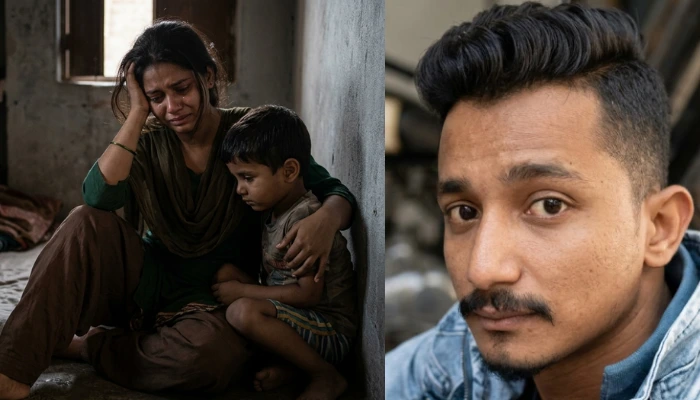
In Indore, Madhya Pradesh, a minor Hindu girl was lured into a relationship by a Muslim man named Junaid, who concealed his religious identity and posed as a Hindu named ‘Ravi’. To sustain the deception, the accused arranged for duplicate identity cards and other documents to portray himself as a Hindu. He sexually exploited the girl for several years, continuing the exploitation after she became an adult, under the pretext of marriage, and raped her four-year-old son. The accused also subjected the victim and her child to repeated physical assaults and threatened to kill her if she disclosed the abuse to anyone. According to media reports, the incident came to light in October 2026, when the victim was 26 years old. She revealed that her ordeal had begun in 2015, when she was a minor, approximately 14 or 15 years of age. She first met Junaid, an auto-rickshaw driver, while shopping at Rajwada. As she looked for an auto-rickshaw to return home, she became acquainted with him. Junaid introduced himself as Ravi, a resident of Narsingh Bazaar, gave her his phone number and asked her to contact him whenever she needed transport. He subsequently maintained contact with her over the phone while concealing his real name and religious identity. Junaid pretended to love the girl and lured her into a relationship under the pretext of marriage. Over the following years, he sexually exploited her while renting rooms in several areas of Indore, including Kalani Nagar, Chandan Nagar, Juni Risala and Mahawar Nagar. In 2021, when the victim became pregnant and pressured him to marry her, Junaid revealed that his real name was not Ravi but Junaid. She also stated that he had arranged for his identity cards and other documents to be altered to prevent others from discovering his deception. During the course of the relationship, Junaid subjected the victim and her four-year-old son to repeated physical assaults. He raped the child at their home, and the boy subsequently informed his mother about the sexual abuse while crying. Junaid also threatened to kill the victim if she disclosed the abuse to anyone. Unable to endure the abuse and threats, the victim approached Eklavya Gaur, the patron of the Hindu Rakshak organisation, for assistance. Gaur contacted officials over the phone, following which she was directed to approach the police. The incident fell under the jurisdiction of the Aerodrome police station. Following the victim's written complaint, the police registered a First Information Report (FIR) on the night of 25 October 2026 and arrested Junaid that same night. The accused was booked under Section 69 of the Bharatiya Nyaya Sanhita (BNS), 2023; Sections 3 and 5 of the Madhya Pradesh Freedom of Religion Act, 2021; and Sections 5(l) and 6 of the Protection of Children from Sexual Offences (POCSO) Act, 2012. The police were scheduled to initiate proceedings on 26 October 2026 to have the victim's statement recorded before the court. At the time of documentation, the available reports confirmed the accused's arrest, while the recording of the victim's statement remained a pending procedural step.
Why it is Hate Crime ?
This case is being added to the tracker under the primary category: Crimes against women in relationships and other sexual crimes. The subcategory selected is: Man pretends to be Hindu. The tertiary category selected is: Name Changed. When a non-Hindu man pretends to be a Hindu to deceive a Hindu woman into a relationship, the act is seen as triggered by malafide intentions. In some cases, the woman eventually accepts the man’s original religious identity and converts after the man’s identity is revealed. These cases could be argued as cases of religious brainwashing and a result of the pressure a woman feels after getting into a relationship with a man. The woman, it can be argued, also changed her religious identity because of the stigma she believes she might face if she chooses to walk out of a deceptive relationship. However, for the purpose of documenting hate crimes, the cases in this subcategory are limited to those where there is explicit violence aimed at religious conversion against the wishes of the victim (force-feeding beef, blackmailing with intimate videos, rape on refusal to convert, etc), or if the woman herself complains of the man’s religious deception. In such cases, it is established that the deception of the non-Hindu man had a specific aim of religious conversion or targeting of the victim due to her Hindu religious identity, therefore, making it a religiously motivated hate crime. In this case, a minor Hindu girl was lured into a relationship by a Muslim man who concealed his religious identity and posed as a Hindu. The accused sexually exploited her under the pretext of marriage, continuing the exploitation after she became an adult, and raped her four-year-old son. These circumstances, particularly the deliberate identity deception and subsequent exploitation, make the incident an example of a religiously motivated hate crime. First, the perpetrator's act of deception by posing as a Hindu demonstrated a deliberate effort to manipulate the minor Hindu girl's trust by concealing his religious identity. By hiding his true identity and posing as a Hindu named Ravi, Junaid established a relationship with the victim under false pretences. He also arranged for duplicate identity cards and other documents to sustain his fabricated identity and prevent the girl from discovering the truth. This constituted a deliberate violation of her right to make an informed choice about whom she wished to enter into a relationship with, as well as an infringement upon her personal and religious autonomy. Thus, the perpetrator's deliberate decision to hide his religious identity strongly underscored the religious motive behind this crime. In such instances, identity concealment is not just a deceptive tactic for personal reasons but a calculated strategy rooted in religious profiling and targeting. The accused circumvented the victim's religious boundaries by concealing his identity and presenting himself as a Hindu to gain her trust. This deception reflects a larger pattern in which Hindu women and minor Hindu girls are targeted through fabricated identities, demonstrating disregard for their religious beliefs and autonomy. In this case, the deliberate use of a false Hindu identity to establish the relationship underscored the religious dimension of the perpetrator's actions and supported the classification of the incident as a religiously motivated hate crime. The fact that the victim was a minor when she was lured into the relationship further aggravated the predatory nature of the offence. Given their young age and limited maturity, minors are particularly vulnerable to manipulation, coercion and exploitation and lack the capacity to fully recognise the implications of deliberate religious deception in relationships of this nature. The element of legally valid consent to sexual activity was absent while the victim was a child. The perpetrator exploited this age-related vulnerability by posing as a Hindu and concealing his actual religious identity to establish a relationship with her. His deliberate use of a fabricated identity to gain the trust of a minor Hindu girl and subsequently subject her to prolonged sexual exploitation further intensified the predatory dimension of the case and underscored the seriousness of the religiously motivated targeting. The perpetrator's sexual exploitation of the victim under the pretext of marriage, while concealing his Muslim identity and posing as a Hindu, further demonstrated the predatory nature of the offence. By manipulating the circumstances under which she entered the relationship, he disregarded her religious autonomy and bodily autonomy. His conduct demonstrated that the relationship was established and sustained through deliberate deception, making the sexual exploitation a violation of her ability to make an informed choice. The use of a fabricated Hindu identity to facilitate prolonged sexual exploitation, which continued after the victim became an adult, therefore constituted predatory targeting that violated her religious boundaries. The perpetrator's abuse extended beyond the victim to her four-year-old Hindu son, whom he raped. Subjecting the child to sexual violence after establishing a relationship with his mother through a fabricated identity demonstrated the severity of the abuse inflicted upon the family and a grave violation of the child's bodily autonomy and dignity. This further aggravated the nature of the crime and, when considered alongside the deliberate religious identity deception, reinforced the seriousness of the case. Furthermore, the perpetrator subjected the victim and her child to repeated physical assaults and threatened to kill her if she disclosed the abuse. These acts demonstrated an attempt to control and intimidate the victims, silence them and prevent them from seeking assistance. The violence and threats compounded the sexual exploitation and reinforced the pattern of coercion and abuse. Some might attempt to dismiss the victim's ordeal by questioning why she took so long to come forward. It is important to understand that women subjected to religious deception and sexual exploitation often face immense shame, societal stigma, victim-blaming and fear of social ostracism. The victim's pregnancy and the presence of a child further complicated her circumstances, potentially intensifying the social repercussions of disclosing the abuse. Such pressures can prevent victims from seeking help and prolong their ordeal. However, the delay in disclosure does not diminish the religious deception, entrapment, sexual violence and abuse she endured at the hands of the Muslim perpetrator. The prolonged duration of the ordeal does not negate the religious dimension of the deliberate identity deception, and the incident remains a case of religiously motivated predatory exploitation. Overall, the deliberate concealment of religious identity to establish a relationship with a minor Hindu girl, the subsequent sexual exploitation under false pretences, the rape of her four-year-old son, and the repeated physical assaults and threats constituted a grave pattern of abuse. The deliberate exploitation of the victim's religious trust and the predatory nature of the offence make the case eligible for inclusion in the Hinduphobia Tracker's hate crime database. Disclaimer: The Hinduphobia Tracker records incident dates based on when the victim's ordeal began, rather than when the incident was reported by the media or formally documented by the authorities. In this case, the victim's ordeal began in 2015, while the First Information Report (FIR) was filed and the accused was arrested on 25 October 2026. Hence, based on this information, 25 October 2015 has been selected as an indicative incident date for documentation purposes only. In this case, the female victim's age has been recorded as a minor, as her ordeal began when she was under 18. The victim count has been recorded as 2, accounting for both the female victim and her son.
Victim Details
Total Victim
2
Deceased
0
Gender
- Male 1
- Female 1
- Third Gender 0
- Unknown 0
Caste
- SC/ST 0
- OBC 0
- General 0
- Unknown 2
Age Group
- Minor 2
- Adult 0
- Senior Citizen 0
- Unknown 0


Case Status
Arrested


Perpetrators Details
Perpetrators
Muslim Extremists
Perpetrators Range
One Person
Perpetrators Gender
male
 Sources



