Hindu deities branded as “devils”; Christian youth threatens to destroy temples across Tamil Nadu
 Chennai, Tamil Nadu, India
 22 October, 2026
Case Summary
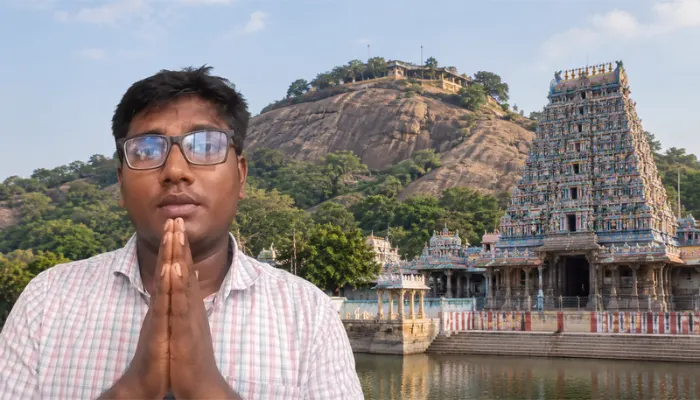
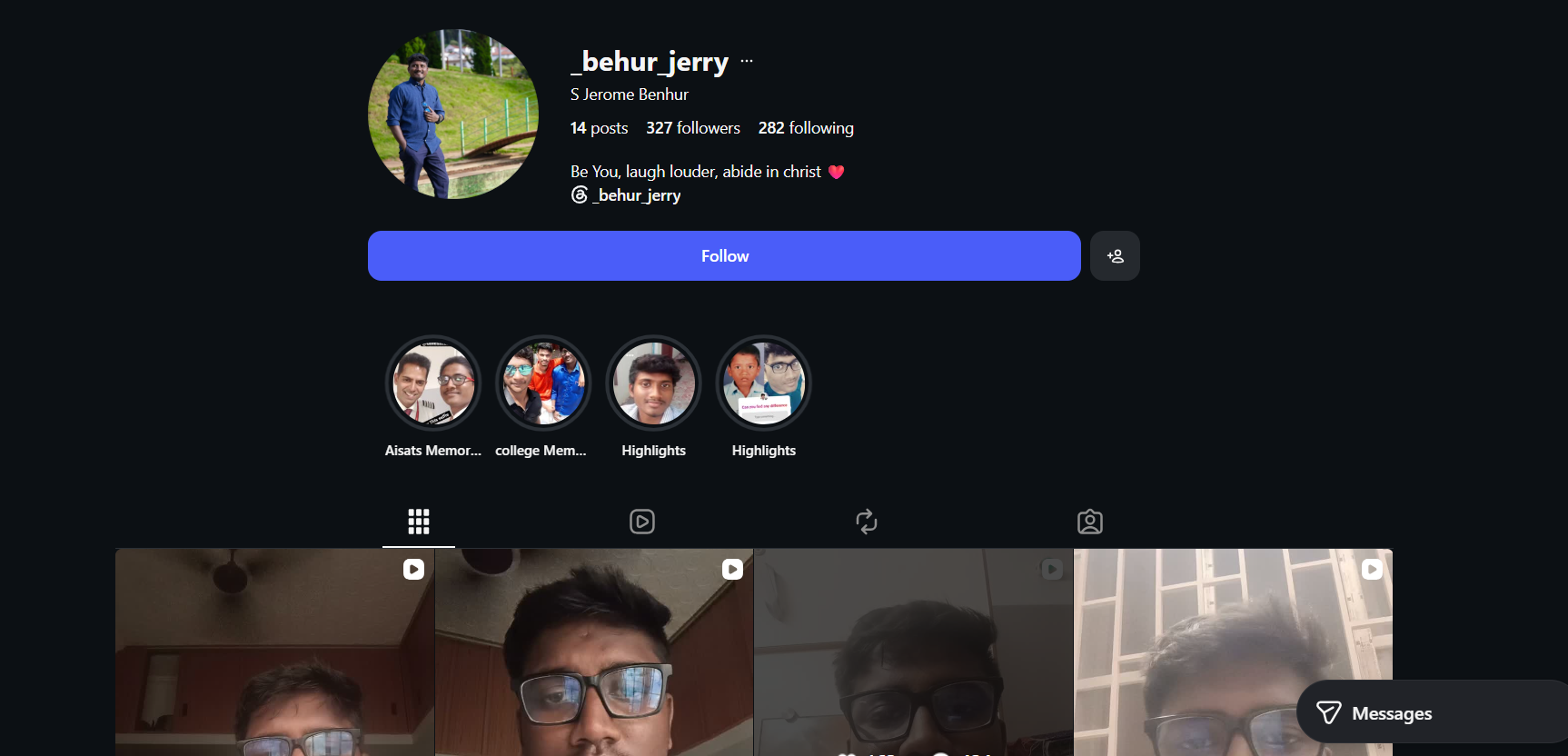
In Tamil Nadu, Christian social media creator Jerome Behur targeted Hindu religious beliefs, denigrating Hindu deities as “devils”. He also threatened to demolish Hindu temples across the state. The matter came to light when a video from his Instagram handle @behur_jerry, which has 327 followers, circulated on social media, in which he threatened to destroy the Murugan temple at Thirupparankundram hill amid the dispute over lighting the Karthigai Deepam. He rejected the hill’s identification as a sacred Hindu site, insisting that it should be called “Sikandar Hill” and declaring that it belonged exclusively to Muslims. He stated, “We will destroy the Murugan temple over there. We will knock it down.” He further threatened to prevent the lighting of the Deepam regardless of court orders, declaring that it would never be permitted on the hill. He concluded with a broader threat against Hindu religious institutions, stating, “We will destroy all Hindu temples. From now onwards, minorities will dominate Tamil Nadu. No one can stop that from happening.” The video sparked widespread outrage, with social media users urging the Tamil Nadu Police and Cyber Crime Cell to take action against the threats targeting Hindu temples and religious practices. Following the backlash, Jerome released an apology video in which he appeared to apologise to the RSS, Hindu Munnani, Hindus, Arjun Sampath and others. However, the controversy intensified when additional audio recordings of his conversations began circulating on social media, containing further derogatory remarks about Hindu deities and temples. In these recordings, Jerome discussed his religious views, his opposition to Hindu worship and his stated intention to continue abusing Hindu gods despite issuing an apology. In a telephone conversation with a Hindu individual, Jerome stated that pastors made even more derogatory remarks about Hindu religious beliefs during church meetings. He repeatedly referred to Hindu temples as “devil’s temples” and Hindu deities as “devils,” describing them as places of worship created for the devil. He also admitted that he had previously tagged JCD Prabhakar on social media and referred to Hindu gods as devils. Jerome said he would make even more such remarks if given a microphone and that he would repeat them if he met Prabhakar in person. He further stated, “I will help Hindus, but I will abuse Hindu gods.” He dismissed the possibility of facing consequences for his remarks and made derogatory statements about Hindu Munnani, asserting that its members could be persuaded to withdraw protests through payments from pastors. He also made statements asserting Christian control over Chennai, St Thomas Mount and the coastal areas of Tirunelveli and Thoothukudi, threatening those who spoke against Christianity in certain coastal areas. In the same conversation, Jerome discussed the presence of Christians in government and senior police positions, saying Christians were placed in influential posts to advance the Church's interests. He named officials including Amalraj and Davidson Devasirvatham while discussing senior police appointments and promotions. He asserted that Christian officials would support Christians and the Church in disputes involving Hindus. He also dismissed Hindu Munnani’s protests as financially motivated and reiterated his intention to continue making derogatory statements about Hindu deities. These remarks accompanied his broader statements about bringing institutions in Tamil Nadu under Christian control. In another recorded conversation with a woman, Jerome described the religious teachings he said he had received since childhood. He stated that Christians were taught not to visit Hindu temples or consume food offered at temples, and that Hindu gods and temples were associated with the devil. He contrasted Christianity with what he described as Tamil religious traditions, asserting that early Tamil people worshipped nature and that Hindu gods came later. He further stated that Christian government officials would favour Christians and support the Church in disputes involving Hindu organisations. Discussing religious conversion, he explained how Christian political representatives and officials could protect those engaged in proselytisation and initiate police action against Hindu groups opposing them. He again referred to Amalraj and Davidson Devasirvatham while discussing the Church’s influence over senior police appointments and promotions. Jerome also described how he would deliberately discriminate against Hindu religious functions if he became an Indian Police Service (IPS) officer. He stated that if a Hindu temple required 500 police personnel, he would deploy only 300, suggesting that inadequate security and a possible stampede would reduce attendance at the following year’s event. In contrast, he said that if a church function required 1,000 police personnel, he would deploy 1,500 to ensure greater safety and encourage more Christians to attend. He explicitly stated that he would not remain impartial in matters involving Hindu temples. He also asserted that the media was under Christian control and reiterated that he had been taught from the age of four or five that Hindu temples were built by Satan and that Tamil Nadu should not be considered a land of temples. He said these teachings shaped his views throughout his childhood, and he grew up learning the Bible and church teachings. When discussing his apology, Jerome said he apologised because he did not want the controversy to hinder his future career. Despite the apology, he reiterated his intention to abuse Hindu deities, stating that he would help Hindus but continue insulting their gods. The controversy therefore extended beyond his initial threat to demolish the Murugan temple at Thirupparankundram. His subsequent statements included repeated denigration of Hindu gods as demonic, the portrayal of Hindu temples as places associated with Satan, threats against Hindu religious institutions, and an expressed intention to discriminate against Hindu temple functions if he entered public service.
Case Images
Why it is Hate Crime ?
This case is being added to the tracker under the primary category: Hate Speech against Hindus. Within this, the subcategory selected is: Anti-Hindu slurs, mocking faith. Anti-Hindu slurs and the deliberate mocking of the Hindu faith owing to religious animosity involve the use of derogatory terms, stereotypes, or offensive references to religious practices, symbols, or figures. One of the common anti-Hindu slurs used against Hindus is “cow-worshipper” and “cow piss drinker”. The intention of using this term is to demean and mock Hindus as a group and their religious beliefs, since Hindus consider the cow holy. Additionally, some symbols and the slurs attached to them have a historical context that exacerbates the insult, hate, stereotyping, dehumanisation and oppression against Hindus. Cow worship has been used for centuries to denigrate Hindus, insult their faith and oppress Hindus specifically as a religious group. There has been overwhelming documentation about how cow slaughter has been used to persecute Hindus, with cow meat being thrown in temples and places of worship. There has also been overwhelming documentation that cow meat (beef) has been force-fed to Hindus to either forcefully convert them to Islam or denigrate their faith. Apart from cow worship, the Swastika – which holds deep religious significance for the Hindus – has also been misinterpreted and distorted to be used as a slur against Hindus. Similarly, the worship of the Shivling has been used by supremacist ideologies and religions to denigrate Hindus owing to religious animosity. Such slurs and denigration stem from inherent animosity and hate towards Hindus and their faith; therefore, it is categorised as hate speech targeted at Hindus specifically owing to their religious identity. The other subcategory selected is: Violent Threats. Violent threats, explicit, implicit or implied, is the most dangerous form of hate speech since it goes beyond discriminatory and prejudicial language to express the intent of causing harm to an individual or a group of people based on their religious identity and faith. There could be several different kinds of threats that are issued to Hindus based on religious animosity. An explicit threat would mean the direct threat of violence towards an individual Hindu, a group of Hindus or Hindus at large. Physical violence, death threats, threats of destruction of property belonging to Hindus and threats of genocide would mean explicit threats against Hindus for their religious identity. Implicit threats may not be a direct threat but implied through the use of symbols or actions – for example – in the Nupur Sharma case, other than explicit threats, there were also implicit threats when Islamists took to the streets to burn and beat her effigies. It implies that they want to do the same to Nupur Sharma; therefore, it is considered an implicit threat. Violent threats can be delivered in person, through letters, phone calls, graffiti, or increasingly through social media and other online platforms. It would be important to understand that a threat – explicit or implicit, online or offline – to an individual who happens to be a Hindu does not qualify as a religiously motivated threat. Such a threat, while vile and dangerous, could be owing to non-religious reasons and/or personal animosity. To qualify as a religiously motivated threat, it would need to exhibit an indication that the individual is being targeted for religious reasons and/or owing to his/her religious identity as a Hindu. The hate crime aspect of this incident is the sustained hostility directed toward Hindu religious identity, beliefs and practices. The conduct was not just a disagreement between religious communities but involved the denigration of Hindu deities, contempt toward Hindu places of worship and hostility toward the observance of Hindu religious traditions. When sacred beliefs are repeatedly presented as evil and religious institutions are treated as legitimate targets for destruction, the expression becomes a direct attack on the dignity and religious identity of the Hindu community. Hindu Dharma encompasses diverse traditions of worship, philosophical schools, sacred narratives and devotional practices. Hindu deities are not merely figures of cultural symbolism; they are revered by devotees as embodiments of divine power, protection, knowledge and spiritual truth. Describing Hindu gods as demonic therefore carries a religious significance that goes beyond ordinary criticism. It reverses the reverence accorded to these deities and presents Hindu devotion as something associated with evil. This form of denigration targets the very objects of faith around which Hindu religious life is organised. Temples play an equally vital role in Hindu religious practice. They are places for prayer, ceremonial worship, festivals, pilgrimage, and the transmission of religious traditions through generations. As a result, hostility toward Hindu temples affects more than just structures or property; it demonstrates disrespect for the community's right to keep sacred spaces and practice its religion. Threatening such institutions fosters an atmosphere of fear in which Hindu sacred facilities are seen as targets for hate rather than locations needing respect and protection. People have the right to follow their own religious convictions and disagree with others' opinions. However, this freedom does not include insulting another community's revered figures or treating its religious institutions with contempt. People can address theological disputes without embarrassing worshipers or endangering the places where they practice their religion. When religious expression repeatedly relies on demonising another faith, it contributes to hostility towards the people whose identity is inseparable from those beliefs. Threats against places of worship also intimidate people beyond the immediate target. Temples serve entire communities, including devotees who gather for daily worship, festivals and significant life events. Threatening their destruction can communicate that Hindu religious institutions and the people who depend on them are unwelcome or vulnerable. Such intimidation undermines the sense of security required for religious practice and risks normalising hatred towards Hindu sacred spaces. The expressed willingness to discriminate between Hindu and Christian religious gatherings raises a separate concern about equality in the exercise of public responsibilities. Public officials are expected to provide security impartially, without favouring or disadvantaging people based on religion. Deliberately unequal treatment of religious gatherings would compromise that obligation and place Hindu devotees at an unjustified disadvantage when exercising their right to worship. Religious prejudice becomes especially consequential when it is linked to an intention to use institutional authority to obstruct or disadvantage a particular religious community. The conduct's greater relevance stems from the link between insulting words, malicious intentions toward sacred Hindu institutions, and the proposed restriction of religious activity. These aspects reinforce one another: disparaging a faith reduces respect for its adherents, threatening its places of worship produces fear, and declaring a desire to impede its observances jeopardises the community's capacity to practise religion freely. Taken together, these forms of enmity cannot be reduced to a simple disagreement over religious belief. Religious plurality implies that people be able to practise their beliefs without fear of being threatened or degraded because of their religious identity. The right to practice Christianity does not require disparaging Hinduism, and respect for Hindu religious freedom does not necessitate adherence to Hindu views by others. Though the backlash resulted in him apologising, the intent behind the action could only possibly be that of provoking Hindus and showing disrespect towards their faith. Since such callous behaviour can only stem from a profound contempt for the Hindu religion, this case deserves to be recorded in this hate tracker. Disclaimer: The Hinduphobia Tracker records incidents based on when the event occurred. The source material does not specify the exact date the videos and audio recordings containing anti-Hindu remarks were first published or circulated. Therefore, we recorded 23 October 2026 as the indicative incident date for documentation purposes.


Case Status
Unknown


Perpetrators Details
Perpetrators
Christian Extremists
Perpetrators Range
One Person
Perpetrators Gender
male
 Sources



