Sacred idol of Lord Shiva vandalised at Hindu temple in Saharanpur, Uttar Pradesh
 Saharanpur, Uttar Pradesh, India
 24 October, 2026
Case Summary
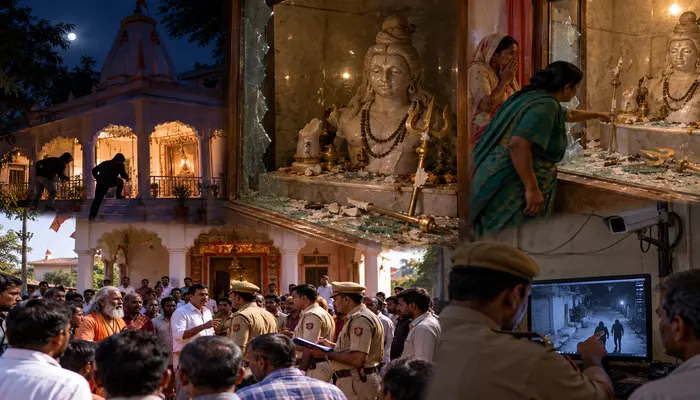
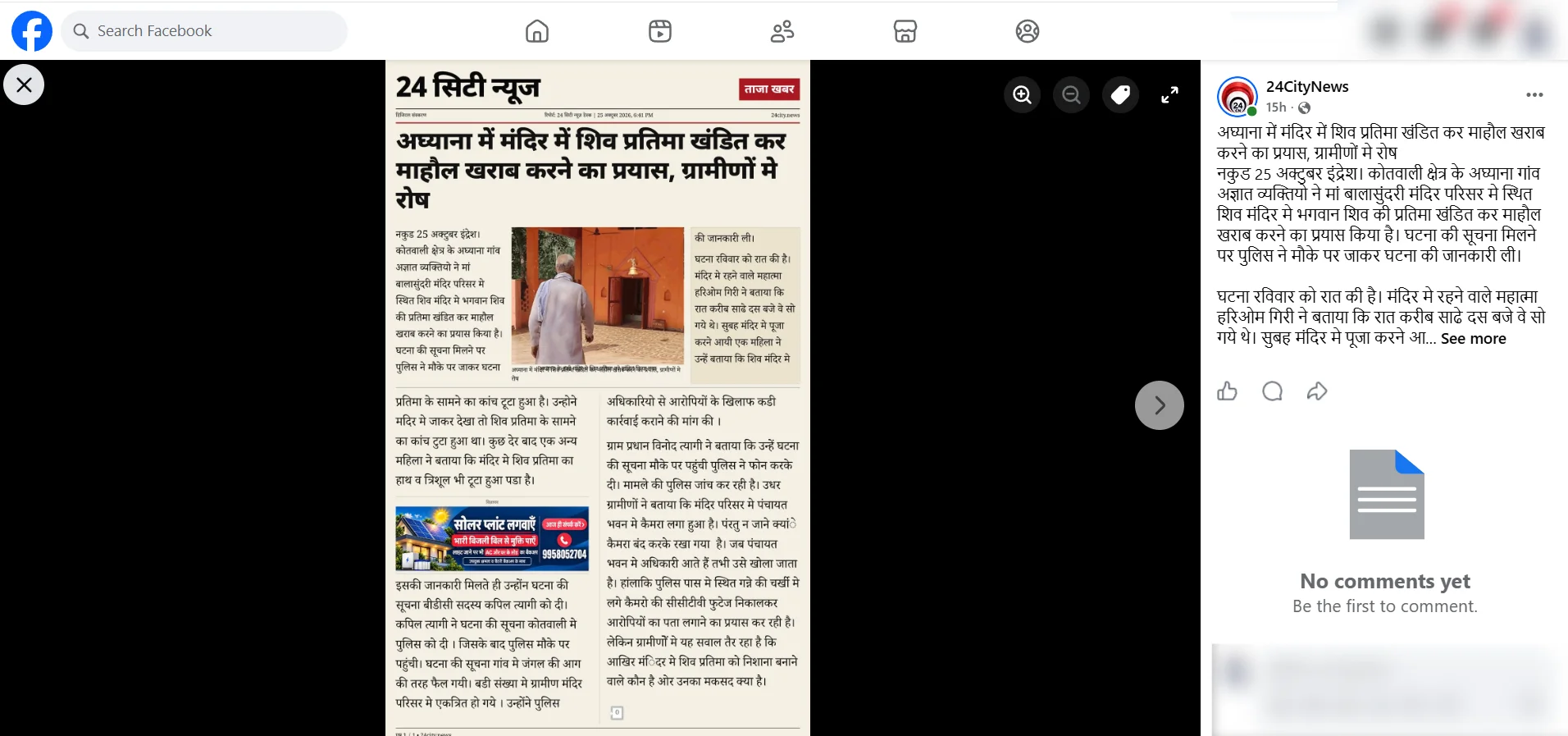
In Saharanpur, Uttar Pradesh, an idol of Lord Shiva was vandalised by unidentified miscreants at the Maa Balasundari Temple in Adhyana village, triggering outrage among the local Hindu community. According to media reports, the incident took place in the early hours of 25 October 2026 (Sunday), which coincided with Chaturdashi (the fourteenth lunar day in the Hindu calendar). Mahatma Hari Om Giri, the temple priest who resided on the premises, stated that he had gone to sleep at around 10:30 pm on 24 October 2026. The vandalism came to light early the following morning when a woman arrived to clean the temple and offer prayers. She noticed that the glass panel in front of the idol of Lord Shiva had been broken. She informed the priest, who inspected the temple and confirmed the damage. Shortly afterwards, another woman informed him that the idol’s hand and trident had also been vandalised. As news of the incident spread, members of the local Hindu community, including members of the Brahmin community, expressed outrage. A large number of villagers gathered at the temple and demanded strict action against those responsible. Kapil Tyagi, a member of the Bharatiya Janata Party, informed the police, following which personnel from the Nakur police station arrived at the scene and initiated an investigation. A complaint was lodged against unidentified miscreants. Village head Vinod Tyagi stated that the police contacted him after arriving at the scene. As part of the investigation, the police examined closed-circuit television (CCTV) footage from cameras installed near a panchayat building in an attempt to identify the perpetrators. However, villagers raised concerns that the CCTV camera at the panchayat building was generally kept switched off and was activated only when officials visited the premises, raising doubts about whether it could help identify those responsible. The incident was believed to have occurred at around 4 am on 25 October 2026, although the precise time of the vandalism remained unconfirmed. The damage to the idol of Lord Shiva and His trident prompted villagers to demand that the perpetrators be identified and strict action be taken against them.
Case Images
Why it is Hate Crime ?
The primary category selected in this case is: Attack on Hindu religious representations. The subcategory selected is: Desecration of Hindu religious symbols. Icons and symbols or a religious representation of a spiritual ideal are widely revered in Hinduism. Iconography is of vital significance in the Hindu milieu. It helps connect people’s spiritual beliefs with the real world. Iconography within the Hindu faith takes several shapes and forms. Murtis are of most significance to Hindus, to which daily rituals, prayers and offerings are done. Besides the murtis, there are several other symbols which have deep significance in the Hindu faith – the Om and Swastika for example. Since these Hindu religious symbols hold paramount importance in Hinduism, any desecration of symbols, icons, murtis, religious representations and manifestations, is driven by animosity towards the faith itself which manifests itself through these murtis, icons and symbols. Therefore, any desecration of these Hindu religious symbols and representations is considered religiously motivated hate crimes under this category. The other subcategory selected is: Attack on Temples. In Hinduism, a temple is the abode of the Deity. The Deity in the Temple is consecrated, thereby, making it a real, breathing entity. Hindus believe that not just the Deity but the temple premises itself are sacred to Hindus since Hindus hold the faith that the entire Temple space is an amalgamation of the divine energy of the deity. Given the central significance of Temples in Hindu Dharma, any attack against a Hindu Temple or its peripheral premises is an attack on the faith itself and is born out of animosity towards the faith, of which, the Temple is a central tenet. Any manner of attack against a Temple and/or its premises would therefore be considered a religiously motivated hate crime. This incident was a clear example of a religiously driven hate crime, as a sacred idol of Lord Shiva was vandalised by unidentified miscreants at a Hindu temple. The attack on a sacred Hindu representation demonstrated hostility towards Hindu religious symbols and the religious sentiments of the Hindu community. In Hinduism, idols of deities serve as sacred representations through which devotees express their devotion and connect with the divine. Lord Shiva is one of the principal Hindu deities, revered as the destroyer of evil and ignorance and associated with supreme consciousness. His idols occupy an important place in Hindu worship and are treated with profound reverence. The vandalism of Lord Shiva’s idol therefore constituted the desecration of a sacred Hindu religious symbol, directly hurting the religious sentiments of Hindu devotees. Such acts reflect contempt for Hindu beliefs and traditions, demonstrating hostility towards the religion and the community for whom these sacred representations hold deep spiritual significance. Furthermore, the vandalism took place inside the Maa Balasundari Temple, making the incident an attack not only on a sacred Hindu idol but also on the sanctity of a Hindu place of worship. Hindu temples and the idols enshrined within them are deeply interconnected, forming an integral part of the religious and spiritual environment in which devotees offer prayers, perform rituals and express their devotion. The sanctity of a temple is inseparable from the sacred representations it houses, and the desecration of an idol within its premises constitutes a violation of that sanctity. Vandalising an idol of Lord Shiva inside a Hindu temple therefore amounted to the desecration of both a sacred religious symbol and its place of worship. Such acts of desecration demonstrate blatant hostility towards Hinduism, its sacred traditions and the religious spaces central to the Hindu community. At the time of documenting this case, the identity of the perpetrators remained unknown; however, the act of vandalising a sacred idol inside a Hindu temple demonstrated hostility towards Hindu religious representations and a place of Hindu worship. Therefore, this case was included in the Hinduphobia Tracker's hate crime database.


Case Status
Complaint filed


Perpetrators Details
Perpetrators
Unknown
Perpetrators Range
Unknown
Perpetrators Gender
unknown
 Sources



