Hindu sentiments outraged: Five-decade-old Hanuman idol removed from religious shrine in Prayagraj, Uttar Pradesh
 Prayagraj (Allahabad), Uttar Pradesh, India
 22 October, 2026
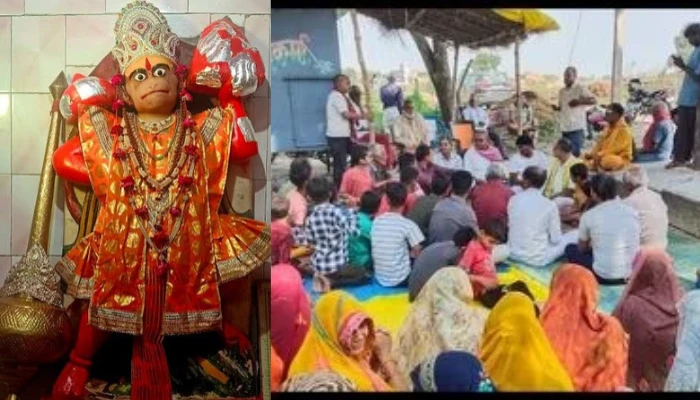
Case Summary
In Ramdaspur village in Prayagraj district, Uttar Pradesh, two women removed a sacred idol of Lord Hanuman that villagers had worshipped for nearly 50 years from its longstanding place of worship. The removal sparked protests by local Hindu residents, who demanded the idol's restoration and administrative intervention. According to local accounts, the Hanuman idol had remained at the site for nearly five decades and had become an integral part of the village’s religious life. Generations of Hindu devotees had worshipped the idol, and villagers regarded the site as religiously significant, where they intended to build a temple. The removal of the idol sparked anger among residents, who objected to displacing a sacred object central to their religious traditions for decades. After the incident, villagers gathered to protest and demanded that authorities restore the idol to its original location. Residents emphasised the Hanuman idol's religious significance and called for administrative intervention to address the matter. They also demanded a transparent inquiry into the circumstances surrounding its removal.
Why it is Hate Crime ?
The primary category selected in this case is: Attack on Hindu religious representations. The sub-category this case falls under is: Desecration of Hindu religious symbols. Icons and symbols or a religious representation of a spiritual ideal are widely revered in Hinduism. Iconography is of vital significance in the Hindu milieu. It helps connect people’s spiritual beliefs with the real world. Iconography within the Hindu faith takes several shapes and forms. Murtis are of most significance to Hindus, to which daily rituals, prayers and offerings are done. Besides the murtis, there are several other symbols which have deep significance in the Hindu faith – the Om and Swastika for example. Since these Hindu religious symbols hold paramount importance in Hinduism, any desecration of symbols, icons, murtis, religious representations and manifestations, is driven by animosity towards the faith itself which manifests itself through these murtis, icons and symbols. Therefore, any desecration of these Hindu religious symbols and representations is considered religiously motivated hate crimes under this category. This case was included in the Hinduphobia Tracker because the removal of a sacred Hanuman murti disrupted a longstanding tradition of Hindu worship in Ramdaspur and deeply hurt the religious sentiments of the Hindu devotees. In Sanatan Dharma, a murti is not merely a physical object representing a deity. It serves as a focal point of devotion through which worshippers offer prayers, perform rituals and seek divine blessings. Lord Hanuman is revered for His unwavering devotion, courage, strength and selfless service. For devotees, His sacred murti represents a spiritual connection with the deity, and its presence at a place of worship carries significance beyond its physical form. The removal of the Hanuman murti therefore affected more than the site's appearance; it interrupted the community's established means of expressing devotion at that location. Although the site had not yet been developed into a formal temple, its religious significance did not depend on a temple structure. The villagers' longstanding devotion to the murti had established the site as a place of worship, and its removal disregarded the religious importance it held for the community. The removal of the Hanuman murti therefore had direct religious consequences for the Hindu devotees. It disrupted an established place of worship, disregarded the significance of a sacred religious representation and interfered with a longstanding devotional practice. The act disregarded both the sacred religious representation and the devotees' faith attached to it. There could be no other reason than an inherent animosity against Hinduism that led the accused to commit the offence. Since disrespect for the Hindu religion is the primary purpose behind this incident, this case has been added to the tracker. Disclaimer: Hinduphobia Tracker records incidents based on the date the crime occurred, not the date the media reported it. In this case, media reports did not specify the exact date on which the crime occurred. Therefore, we selected the date the media reported the incident, 23 October 2026, as the indicative incident date for documentation purposes only.


Case Status
Unknown


Perpetrators Details
Perpetrators
Unknown
Perpetrators Range
From 2 To 5
Perpetrators Gender
female
 Sources



