Hindu deities targeted in derogatory social media posts; complaint filed in Balrampur, Uttar Pradesh
 Balrampur, Uttar Pradesh, India
 23 October, 2026
Case Summary
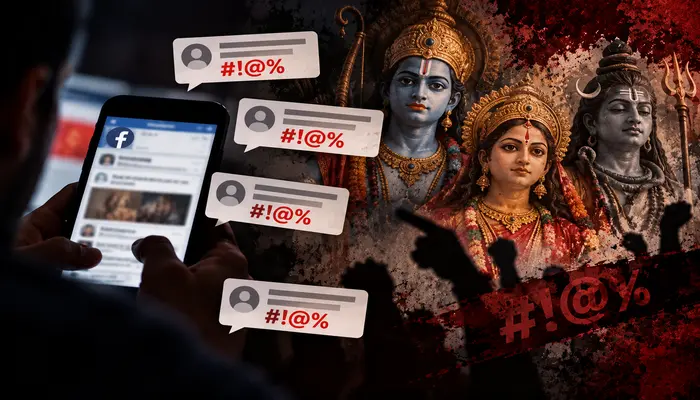
In Balrampur, Hindu religious sentiments were insulted after derogatory comments were made against Hindu gods and goddesses on social media. According to reports, Pankaj Tiwari, district president of the Rashtriya Adhikar Morcha, submitted a complaint to the in-charge inspector of Kotwali Dehat police station regarding objectionable and inflammatory comments against Hindu deities and society on social media. The complaint named several accounts and pages, including Ramsundar Bhushan, The Dalit Voice, Aadesh Sabar Mantraon Ka Gyan and Kuldeep Kumar, in connection with the objectionable posts on platforms including Facebook. Tiwari stated that such posts hurt religious and social sentiments and could promote hostility within society. He urged the police to investigate the posts and the accounts responsible and take legal action against them. Inspector-in-charge Girjesh Tiwari confirmed that the police had received the complaint and stated that an investigation was underway, with further action to be determined by the facts and evidence gathered.
Why it is Hate Crime ?
This case is being added to the tracker under the primary category: Hate Speech against Hindus. The subcategory selected is: Anti-Hindu slurs, mocking faith. Anti-Hindu slurs and the deliberate mocking of the Hindu faith owing to religious animosity involve the usage of derogatory terms, stereotypes, or offensive references to religious practices, symbols, or figures. One of the common anti-Hindu slurs used against Hindus is “cow-worshipper” and “cow piss drinker”. The intention of using this term is to demean and mock Hindus as a group and their religious beliefs since Hindus consider the cow holy. Additionally, some symbols and the slurs attached to them have a historical context that exacerbates the insult, hate, stereotyping, dehumanisation and oppression against Hindus. Cow worship has been used for centuries to denigrate Hindus, insult their faith and oppress Hindus specifically as a religious group. There has been overwhelming documentation about how cow slaughter has been used to persecute Hindus with cow meat being thrown in temples and places of worship. There has also been overwhelming documentation where cow meat (beef) has been force-fed to Hindus to either forcefully convert them to Islam or denigrate their faith. Apart from cow worship, the Swastika – which holds deep religious significance for the Hindus – has also been misinterpreted and distorted to use as a slur against Hindus. Similarly, the worship of the Shivling has been used by supremacist ideologies and religions to denigrate Hindus owing to religious animosity. Such slurs and denigration stem out of inherent animosity and hate towards Hindus and their faith, therefore, it is categorised as hate speech targeted at Hindus specifically owing to their religious identity. The hate crime aspect in this case stemmed from the targeting of Hindu deities through objectionable and inflammatory social media content. Hindus across generations have revered these deities through prayer, devotional practices, temple worship and the preservation of religious traditions. Their names, images and representations are not merely cultural symbols but sacred objects of devotion that embody important aspects of Hindu religious belief. Deliberately directing derogatory and inflammatory content at Hindu deities therefore strikes at the core of the Hindu faith and the religious sentiments of its followers. Attacks directed at revered religious figures can communicate hostility towards the beliefs and practices associated with them, particularly when the content is designed to provoke, humiliate or disparage devotees on account of their faith. Hindu religious identity is closely connected to reverence for deities and the freedom to worship them without being subjected to targeted religious hostility. Deliberately insulting these sacred figures therefore undermines the dignity accorded to Hindu religious beliefs and conveys contempt towards the community for whom those beliefs hold spiritual significance. In recent times, social media has increasingly become a platform for anti-Hindu hate, with derogatory memes, videos, and messages targeting Hindu religious symbols, practices, and deities. Such content is recognised as part of a broader pattern of Hinduphobia and religious hate crimes online. This deliberate targeting of revered religious icons firmly establishes this act as a religiously motivated hate crime; therefore, it is being categorised under the hate crime database. Disclaimer: The Hinduphobia Tracker records incidents based on when an event occurred or when the victim's ordeal began. It is important to clarify that the report does not specify the exact date when the accused posted the offensive content. Therefore, for documentation purposes, we have recorded the date based on when the incident was reported in the media, 24 October 2026.


Case Status
Complaint filed


Perpetrators Details
Perpetrators
Others
Perpetrators Range
From 2 To 5
Perpetrators Gender
unknown
 Sources



