Hindu man stripped, brutally assaulted and humiliated by police over his affiliation with Rashtriya Swayamsevak Sangh (RSS)
 Jaipur, Rajasthan, India
 9 October, 2026
Case Summary
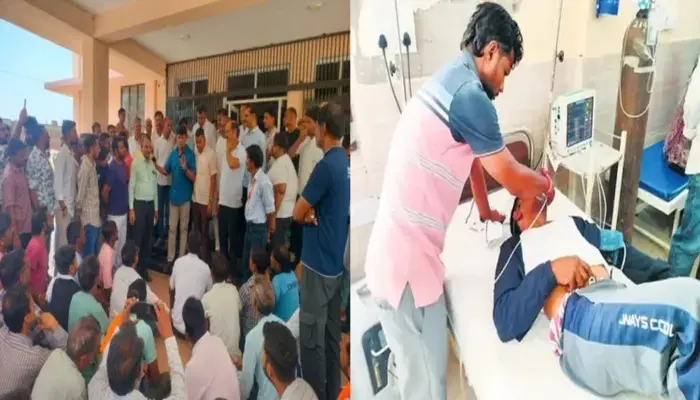
In Jaipur rural, Rajasthan, a Hindu man named Krishna Avtar, a pracharak of the Rashtriya Swayamsevak Sangh (RSS), was stripped, brutally assaulted and humiliated by Station House Officer (SHO) Umrao Singh and other police personnel. Avtar was targeted for his association with the RSS, a Hindu organisation. Furthermore, Umrao Singh also made denigrating remarks against the RSS, claiming the RSS has ruined the country. According to an FIR registered on a complaint by Anurag Aagiwal, at around 9 pm on 10 October 2026, police personnel on patrol stopped the victim while he was walking towards Phulera. He was taken to the Narena police station following an altercation. At the station, he was subjected to abusive and humiliating remarks about the RSS and his family background. When he introduced himself to Station House Officer (SHO) Umrao Singh as an RSS pracharak, the SHO became angry and instructed the personnel to strip him, saying, “Aaj iski pracharaki utar do” (Today, strip him of his pracharaki). Assistant Sub-Inspector Omkar Singh and police personnel Ajay, Ramesh, Kuldeep, Mahipal and Vinod then stripped and brutally assaulted him, including on his private parts, leaving him unconscious. During the assault, the personnel also insulted the RSS, claiming that “Sangh ne desh ko barbaad kar diya hai” (The RSS has ruined the country). Following the assault, Avtar’s condition deteriorated, and he was taken to a Community Health Centre before being referred to SMS Hospital in Jaipur due to the seriousness of his condition. The FIR was registered under relevant provisions of the Bharatiya Nyaya Sanhita (BNS) concerning unlawful assembly, voluntarily causing hurt, wrongful restraint and confinement, intentional insult intended to provoke a breach of peace, and criminal intimidation. On 11 October 2026, RSS volunteers gathered outside Narena police station, raised slogans against the police administration and staged a sit-in demanding action against the personnel involved. BJP Rajasthan state chief spokesperson Ramlal Sharma, former MLA Nirmal Kumawat and BJP Jaipur District Rural South president Rajesh Gurjar also joined the protest. Following the incident and the subsequent protest, Superintendent of Police Hanuman Sahay suspended SHO Umrao Singh, ASI Omkar Singh and four other police personnel. Although the FIR named seven people, six police personnel were suspended. Complainant Anurag Aagiwal demanded a fair and detailed investigation, including the preservation and examination of CCTV footage, police records and medical documents. He also sought clarification regarding the grounds for bringing Avtar to the station and whether the officials present had attempted to stop the assault or secure timely medical assistance. Investigating Officer Anupam Mishra stated that the investigation was in its initial stages and that Avtar’s statement was being recorded.
Why it is Hate Crime ?
This case has been added to the tracker under the primary category of - Attack not resulting in death. Within it, the sub-category selected here is - Attacked for supporting/being part of perceived Hindu party/org or working for Hindu community. In several cases, Hindus are attacked specifically or tangentially for their association with parties or organisations perceived to be pro-Hindu and/or for working in favour of the Hindu community. One of the classic cases was the attack against a Bharatiya Janata Party Yuva Morcha (BJYM) worker Praveen Nettaru. Nettaru was attacked and hacked to death for his association with Hindu organizations and his work for the Hindu community. He was murdered by PFI, a terror organization which aimed to commit a genocide of Hindus, target Hindu leaders specifically and turn India into an Islamic Nation. In such cases, it is possible that the immediate trigger for the violence is non-religious – either according to the perpetrator or the police. However, there are surrounding circumstances from which the conclusion can be reached that the victim was attacked for his association with a Hindu organization. In a similar case, Rinku Sharma was attacked by radicals. He was a member of Bajrang Dal and regularly worked for the Hindu community. While the police cited a different non-religious trigger for the attack, it is true that he was associated to a Hindu organization and the family of Rinku Sharma specifically attributed his gruesome murder to him working for Bajrang Dal and raising Jai Shree Ram slogans. Such cases are intrinsically driven by religious hate and would therefore be documented as a hate crime under this category. The other primary category selected here is - Hate speech against Hindus. Within it, the sub-category selected is - Anti-Hindu slurs, mocking faith. Anti-Hindu slurs and the deliberate mocking of the Hindu faith owing to religious animosity involve the usage of derogatory terms, stereotypes, or offensive references to religious practices, symbols, or figures. One of the common anti-Hindu slurs used against Hindus is “cow-worshipper” and “cow piss drinker”. The intention of using this term is to demean and mock Hindus as a group and their religious beliefs since Hindus consider the cow holy. Additionally, some symbols and the slurs attached to them have a historical context that exacerbates the insult, hate, stereotyping, dehumanisation and oppression against Hindus. Cow worship has been used for centuries to denigrate Hindus, insult their faith and oppress Hindus specifically as a religious group. There has been overwhelming documentation about how cow slaughter has been used to persecute Hindus with cow meat being thrown in temples and places of worship. There has also been overwhelming documentation where cow meat (beef) has been force-fed to Hindus to either forcefully convert them to Islam or denigrate their faith. Apart from cow worship, the Swastika – which holds deep religious significance for the Hindus – has also been misinterpreted and distorted to use as a slur against Hindus. Similarly, the worship of the Shivling has been used by supremacist ideologies and religions to denigrate Hindus owing to religious animosity. Such slurs and denigration stem out of inherent animosity and hate towards Hindus and their faith, therefore, it is categorised as hate speech targeted at Hindus specifically owing to their religious identity. This case has been added to the tracker because the Hindu man, Krishna Avtar, was targeted because of his association with the Rashtriya Swayamsevak Sangh (RSS). The assault was not merely an instance of physical violence but an act of identity-based hostility directed at him because he served as an RSS pracharak. The Station House Officer’s instruction to strip him of his "pracharaki" identity directly connected the violence to his organisational affiliation. The perpetrators’ hostility towards the RSS, expressed through insults and denigrating remarks, further established that Avtar’s association with the organisation was a central factor in the attack. The incident therefore reflected hostility towards the identity and cause he represented, rather than violence directed at him solely as an individual. The Rashtriya Swayamsevak Sangh (RSS) is a Hindu organisation that works for the Hindu cause and promotes Hindu cultural identity, values and social organisation. Its work is closely associated with the preservation and promotion of Hindu identity and interests. Avtar’s position as a pracharak connected him directly to this Hindu organisation and its work. The hostility directed at him because of this association therefore carried significance beyond a personal dispute. By targeting him in his capacity as an RSS functionary and denigrating the organisation he represented, the perpetrators directed their hostility towards a person associated with an organisation working for the Hindu cause. This connection makes the incident relevant to the assessment of anti-Hindu hate crimes. The deliberate humiliation inflicted on Avtar further demonstrated the identity-based nature of the attack. The instruction to strip him of his pracharaki identity was specifically directed at his role within the RSS and sought to degrade him on that basis. The physical assault, including blows to his private parts, compounded this humiliation and demonstrated the severity of the violence used against him. The combination of targeted degradation, physical abuse and anti-RSS remarks established a clear connection between his organisational affiliation and the hostility he faced. His association with the RSS was not incidental to the incident; it was central to understanding why he was singled out for such treatment. The denigrating remarks directed at the Rashtriya Swayamsevak Sangh (RSS) further reinforced the identity-based nature of the attack. The personnel insulted the organisation, claiming that “Sangh ne desh ko barbaad kar diya hai” (The RSS has ruined the country). This statement expressed hostility towards the organisation Avtar represented and accompanied the physical violence inflicted on him because of his association with it. Such remarks were not incidental to the incident; they reinforced the perpetrators’ contempt for the RSS and contextualised the assault as an expression of hostility towards its members and the cause it represented. The use of degrading language against the organisation, combined with the deliberate targeting and humiliation of its pracharak, demonstrated how verbal denigration and physical violence converged in the incident. It is important to note here that Avtar was taken to the Narena police station due to an altercation. The officers could have followed due legal procedures or pursued appropriate charges in connection with the altercation. Instead, they stripped, assaulted and humiliated him after he identified himself as an RSS pracharak. The SHO’s instruction to strip him of his pracharaki identity, alongside the denigrating remarks against the RSS, demonstrated hostility towards the organisation and Avtar’s association with it. Rather than limiting their actions to addressing the altercation, the personnel subjected him to violence that specifically targeted his organisational affiliation. This conduct demonstrated prejudice against the RSS and showed how hostility towards a Hindu organisation translated into the abuse of police authority and violence against one of its functionaries. The incident constituted a hate crime because Avtar was attacked on account of his association with the RSS, a Hindu organisation working for the Hindu cause. The SHO’s instruction targeting his pracharaki identity, the denigrating remarks against the RSS and the subsequent physical assault collectively established the connection between his affiliation and the violence inflicted on him. The attack was therefore not simply an instance of police brutality; it involved hostility directed at the victim because of the organisation he represented. The use of violence and humiliation to target him in this capacity made the incident an expression of identity-based hostility against a person associated with a Hindu organisation.
Victim Details
Total Victim
1
Deceased
0
Gender
- Male 1
- Female 0
- Third Gender 0
- Unknown 0
Caste
- SC/ST 0
- OBC 0
- General 1
- Unknown 0
Age Group
- Minor 0
- Adult 1
- Senior Citizen 0
- Unknown 0


Case Status
Complaint registered


Perpetrators Details
Perpetrators
State and Establishment
Perpetrators Range
From 5 to 10
Perpetrators Gender
male
 Sources



