Hindu students confined, threatened and harassed by Muslim principal for requesting Dussehra leave in Bengaluru, Karnataka
 Bengaluru, Karnataka, India
 13 October, 2026
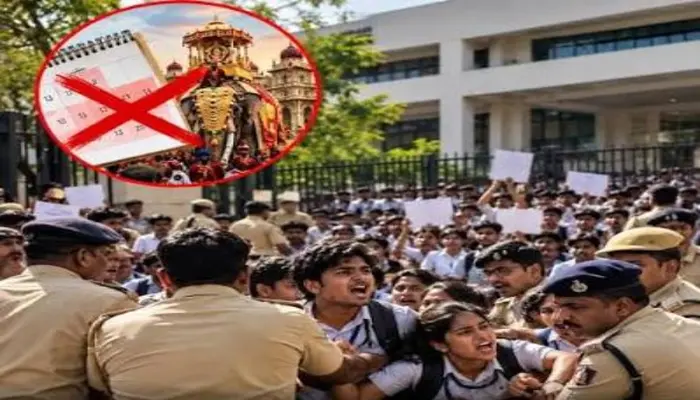
Case Summary
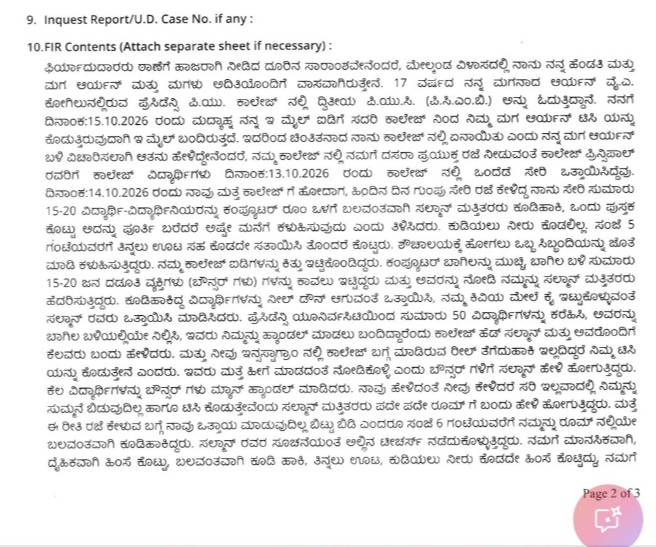
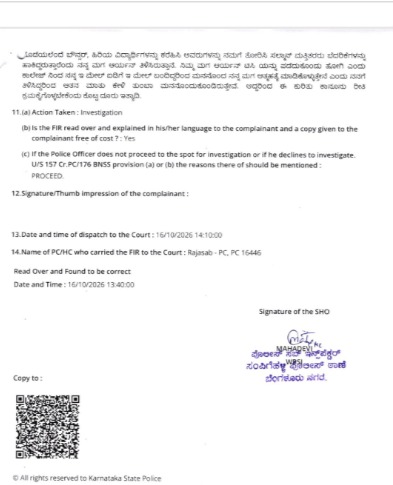
Hindu students were confined, threatened and subjected to physical and mental harassment after requesting Dasara (Dussehra) leave from their Muslim principal, Salman, at Presidency PU College in Bengaluru, Karnataka. According to reports, on October 13, 2026, around 15 to 20 Hindu students of Presidency PU College on Kogilu Road approached the Muslim Principal, Salman, requesting leave for the Hindu festival of Dasara (Dussehra). However, the college administration refused to grant them leave. On 14 October 2026, when the Hindu students arrived at the college, they were taken to a computer classroom, where their identity cards were confiscated, and they were made to remain from morning until evening. According to complaints filed by the students’ parents, bouncers were brought to the college to intimidate the students and pressure them into deleting photographs and videos related to the college that they had uploaded on social media regarding the incident. The students were forced to kneel for several hours and were denied food and drinking water during their confinement. Despite pleading with folded hands and promising not to request Dasara leave again, they were not released until the evening. The college administration subsequently emailed transfer certificates to the students, effectively requiring them to seek admission elsewhere. Following complaints from the parents, police registered two separate cases against principal Salman under provisions relating to criminal intimidation and the Juvenile Justice (Care and Protection of Children) Act. As of October 18, 2026, the police investigation into the incident was ongoing.
Case Images
Why it is Hate Crime ?
The primary category selected for this case is: Restriction/ban on Hindu practices. The subcategory selected is: Administration restricting religious practices. In several cases, it is seen that the administration/state disallows a religious practice owing to prejudicial orders and concerns, targeted specifically against the Hindu community. Such restriction/prohibition would be considered documented as a hate crime because the orders are often a result of pressure by groups that harbour animosity towards Hinduism and Hindus. Often, the restriction by the authorities is driven by bias, hostility, or prejudice against the specific community being stopped from holding a religious practice, by pressure groups that harbour animosity towards Hindus, intrinsic to their faith. Since practices are intrinsic to the faith of the Hindus, such prejudicial restriction is considered a curtailing of the fundamental rights of the Hindu community. In several cases, for example, the authorities ban a Hindu religious practice due to pressure from groups opposed to the religion. In other instances, the prohibition is selectively enforced against one religious group (Hindus) while others are allowed to proceed. There are still other cases where the authorities preemptively restrict a religious practice by Hindus because those who hold animosity towards Hindus may get “provoked”, leading to them being violent, thereby assuaging the sentiments of those who hold animosity towards Hindus by curtailing the religious rights of Hindus. Such acts and orders are prejudiced, indicating discriminatory motives owing to the capitulation to groups that harbour animosity towards Hindus and therefore would be categorised as a religiously motivated hate crime since the original pressure leading to the order itself is a result of hatred/bias/prejudice/religious hate against Hindus. The other primary category selected here is - Attack not resulting in death. Within it, the sub-category selected here is - Attacked for Hindu identity. In several cases, Hindus are attacked merely for their Hindu identity without any perceived provocation. A classic example of this category of religiously motivated hate crime is a murder in 2016. 7 ISIS terrorists were convicted for shooting a school principal in Kanpur because they got ‘triggered’ seeing the Kalava on his wrist and tilak that he had put. In this, the Hindu victim had offered no provocation except for his Hindu religious identity. The motivation for the murder was purely religious, driven by religious supremacy. Such cases where Hindus are targeted merely for their religious identity would be documented as a hate crime under this category. The incident targeted Hindu students who sought to observe Dussehra, an important Hindu religious festival, and subjected them to intimidation, confinement and punitive treatment. Their request was not an attempt to evade their academic responsibilities but to secure time to participate in a significant religious and cultural observance. Instead of addressing the request through ordinary administrative procedures, the college administration responded with coercive measures that humiliated the Hindu students and pressured them to abandon their demand. The severity of this response distinguished the incident from a routine disagreement over the academic calendar and directly affected students seeking to exercise their religious freedom. Dasara, also known as Dussehra or Vijayadashami, holds profound religious significance in Hindu tradition. The festival celebrates the victory of Dharma over Adharma and is widely associated with Lord Ram's victory over Ravana, as well as the triumph of divine power over evil. Across India, Hindus observe the occasion through prayers, temple visits, religious ceremonies, family gatherings and community celebrations. For many Hindu families, participation in these observances is an important expression of faith and a means of passing religious and cultural traditions to younger generations. Denying students meaningful opportunities to participate in the festival therefore affects more than their leisure time; it interferes with their ability to observe an important occasion in their religious and cultural lives. The college administration's response was disproportionate to the students' request. Rather than resolving the matter through dialogue or established disciplinary procedures, they subjected the students to intimidation and humiliation. The involvement of bouncers, the confiscation of identity cards, the forced kneeling and the denial of food and drinking water transformed a disagreement over festival leave into an episode of coercive treatment. The students were ultimately compelled to plead with the administration and promise not to request Dasara leave again. This response placed pressure on them to relinquish their request to observe their religious festival and demonstrated a disregard for their dignity and freedom of religious observance. The actions reflected religious animosity towards Hinduism, as the students were humiliated and punished for seeking to observe a Hindu religious festival. By subjecting them to coercive treatment in response to their request for Dasara leave, the college administration displayed hostility towards their religious observance and disregarded the significance of their Hindu faith. The treatment was not merely an administrative response to a disagreement over holidays; it targeted the students' attempt to exercise a religious practice and pressured them to abandon it. The administration's response had consequences beyond the immediate confrontation: it sent a message to the wider student community that collectively seeking accommodation for Dasara could expose students to intimidation and punitive action. Such treatment discourages Hindu students from asserting their religious needs in educational institutions and undermines their ability to participate freely in important religious occasions. Within the Hinduphobia Tracker framework, the incident warrants examination as a case of anti-Hindu targeting because the coercion and punitive measures followed a collective request to observe a major Hindu festival. The confinement, intimidation and educational consequences went far beyond a simple refusal of leave and directly affected students seeking to exercise their religious freedom. Such conduct was rooted in religious animosity towards the Hindu student and their faith, therefore this case has been added to the tracker.
Victim Details
Total Victim
20
Deceased
0
Gender
- Male 0
- Female 0
- Third Gender 0
- Unknown 20
Caste
- SC/ST 0
- OBC 0
- General 0
- Unknown 20
Age Group
- Minor 0
- Adult 0
- Senior Citizen 0
- Unknown 20


Case Status
Complaint filed


Perpetrators Details
Perpetrators
Muslim Extremists
Perpetrators Range
One Person
Perpetrators Gender
male
 Sources



