Hindu woman found dead; mother says Muslim in-laws pressured her to convert to Islam, prevented her from visiting temple
 Begusarai, Bihar, India
 21 May, 2021
Case Summary
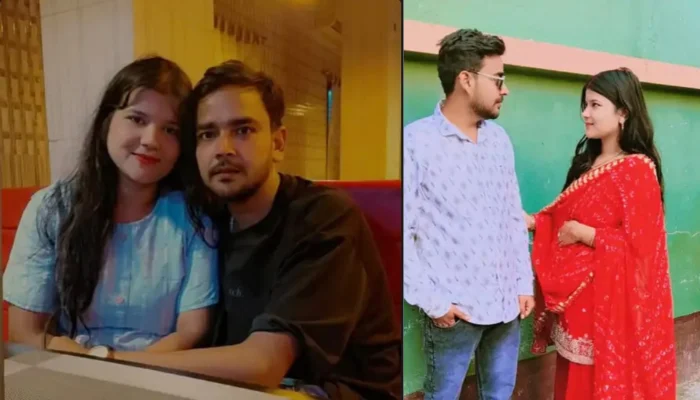
In Begusarai, Bihar, a Hindu woman was found dead in her Muslim in-laws' house. The mother of the deceased said that she was pressured to convert to Islam by her Muslim husband’s family. They also prevented her from visiting a Durga temple during Dussehra. Hours after making a distress call to her mother and asking to be taken home, she was found dead at her in-laws' house. The victim was a 25-year-old named Ankita Kumari, a resident of Munger's Kasim Bazar area. She met Mohammad Aarzu, son of Aslam and a resident of Badi Baliya in Begusarai, in 2021 while she worked as a nurse at a hospital. The two entered into a relationship. Ankita’s family opposed it, following which she left home with Aarzu on 29th May 2021. After Ankita disappeared, her mother Draupadi Devi lodged a kidnapping case at Kasim Bazar Police Station. A few days later, Ankita and Aarzu appeared before a court. Ankita, an adult, said she wanted to live with Aarzu of her own choice. She then moved in with him in Badi Baliya. The couple later had a daughter in 2023. Ankita continued to follow the Hindu faith after living with Aarzu. Her mother stated that Aarzu’s elder brother Mohammad Armaan Alam, his wife, his sister and some associates began pressuring Ankita to change her religion and accept Islam. The family also demanded cash and other goods from Ankita’s parents as dowry. Ankita faced physical assault when she resisted the conversion pressure and the dowry demands. The religious pressure became particularly evident during Dussehra. Ankita wanted to visit the Durga temple in Badi Baliya and offer prayers to Maa Durga. She asked Aarzu to take her there. Aarzu refused and told her that if members of the Muslim community saw them there, it would create an uproar. A dispute followed over Ankita’s wish to perform her Hindu worship. On the night of 19th October, Ankita contacted her mother several times while crying. At around 9 PM, she spoke about the problems she was facing in her in-laws' home. Her mother stated that Aarzu assaulted Ankita again at around 11 PM. At approximately 11:30 PM, Ankita called once more and pleaded to be taken away. She told her mother, “He beats me every day for dowry and assaults me. Now I will not live with him; otherwise, one day he will kill me. Take me away from here.” Draupadi Devi assured her that the family would arrive the next morning with a vehicle. At around 2 AM, Aarzu called Ankita’s family and informed them that she had hanged herself. Draupadi Devi stated that Ankita had not died by suicide. She said Aarzu, Armaan and other members of the family first assaulted Ankita, strangled her to death and then hung her body from a ceiling fan to make the death appear to be suicide. Ankita’s mother also gave police information about Aarzu’s previous cases. She stated that he had earlier gone to jail in connection with the elopement of another Hindu girl. Another case involving the elopement of a Hindu girl was pending before the Baliya Munsif Court. Baliya Police also registered a separate case against Aarzu under the Arms Act in 2025. Following Ankita’s death, Baliya Police registered an FIR based on Draupadi Devi’s application. The body was sent for post-mortem examination and was later handed over to the family. Baliya Police Station in-charge Shailendra Kumar stated that police were examining the conversion pressure, dowry harassment and circumstances of Ankita’s death through technical and scientific methods. Police were also conducting raids to arrest the persons named in the case.
Why it is Hate Crime ?
The primary category selected in this case is Crimes against women in relationships and other sexual crimes. The selected sub-category is: Forced conversion after marriage. In such cases, a non-Hindu man marries a Hindu woman, and the force/pressure to convert to any Abrahamic faith, like Islam, begins after marriage. In such cases, typically, two patterns emerge. First, when the relationship is consensual, and the religious identity of the perpetrator is known to the Hindu woman in the relationship. The marriage could be under the Special Marriages Act, where neither parties are required to convert their religion for the marriage to be considered legitimate. While the victim in such cases enters matrimony assuming that religious identity is not a barrier, the non-Hindu man starts to pressure the woman to convert her religion after marriage. The second is when the woman gets into a marriage with the man, pretending to share her faith. Later, when the truth is revealed, the man starts pressuring the woman to convert her religion and give up her religious identity. In both situations, there is application of force by the perpetrator, including the denial of the woman’s religious rights. Some of the means by which the woman is forced/pressured to convert include force-feeding beef, being forced to read the Kalma, being forced to wear a hijab, forced to undergo Halala, etc. There are several instances where, after marriage, the woman voluntarily converts to Islam. Such cases are often argued to be a result of religious brainwashing, however, for the purpose of documenting religiously motivated hate crimes, in the absence of the victim complaining of forced conversion, such cases do not form a part of the database. The other sub-category is: Suicide for being forced to or pressured to convert. When Hindu women are in a relationship with a non-Hindu men, there are cases where the woman faces pressure/threats/violence to convert and change her religious identity by the non-Hindu man. Such relationships may be consensual with the religious identity of the non-Hindu man known to the victim. Somewhere along the relationship, the non-Hindu man starts pressurizing the Hindu woman to convert. In some of these cases, unable to bear the pressure/threat/violence being mounted by the non-Hindu partner to convert, the Hindu woman commits suicide. In such cases, often, threats are also given to the family members of the Hindu woman. Since such cases are driven by specific religious motivations and against the religious identity of the victim, leading to the woman committing suicide, these cases are categorised as a hate crime. The case highlights how religious conversion can become a means of control when a Hindu woman is pressured to abandon her faith against her will. Here, the Muslim accused did not conceal his religious identity. Instead, he presented a facade of acceptance, leading the Hindu woman to believe that her faith would not be a barrier to their relationship. Based on this understanding, she married the accused, however, the coercion to abondon her faith and accept Islam began soon. Marriage to a person from another religion does not mean consenting to conversion, nor does it give a spouse or his family the right to dictate a woman’s religious identity. Pressuring someone to embrace another religion while subjecting them to intimidation and violence undermines their freedom of conscience and turns a personal choice into a demand for submission. Ankita’s wish to visit a Durga temple during Dussehra demonstrates the importance of her right to practise Hinduism after marriage. A Hindu woman should not have to suppress her faith or give up religious observances to avoid conflict at home. Restricting her worship because of fear of a community’s reaction places social pressure above individual religious freedom and denies her the autonomy to maintain her Hindu identity. The case also highlights the vulnerability of women whose religious choices become a source of domestic conflict. An interfaith marriage does not diminish a woman’s right to retain her religion, seek support from her family or live without coercion. Religious freedom must extend into the marital home, where no spouse or relative should be permitted to make a woman’s dignity, safety or acceptance conditional on abandoning her faith. Ankita’s death can also not be viewed in isolation as it gives the case a grave dimension, especially in light of her mother’s testimony that Ankita had confided in her about the pressure and harassment she faced from her in-laws to convert to Islam. Her mother also stated that Ankita was prevented from visiting a Durga temple during Dussehra, despite her desire to offer prayers to Maa Durga. The allegations point to a situation in which the pressure to abandon her Hindu faith extended to restricting her ability to practise her religion. The events in the hours before Ankita’s death make these allegations even more serious. She reportedly contacted her mother repeatedly while crying, described the abuse she was experiencing and pleaded to be taken home, warning that her husband might one day kill her. Her final distress call, made just hours before she was found dead, raises grave questions about the circumstances surrounding her death and cannot be viewed in isolation from the religious coercion and domestic abuse described by her mother. In most such cases, the accused deliberately lure Hindu girls or women into romantic relationships by either hiding their religious identity or pretending to be Hindu or assuring that the victim's religion would not be a hinderance. Once trust is gained, they push for marriage and later compel the girl to convert to Islam. After the conversion is complete and the girl is fully isolated from her family, community, and original faith, the relationship is often abruptly broken off. These girls are not treated as genuine partners, but rather as instruments for fulfilling a religious agenda. The purpose here is not emotional or personal but strategic. The ultimate goal is to alienate the victim from her Hindu faith and assimilate her into a different religious identity. Once that goal is achieved, the victim is frequently discarded, as her "use" in this ideological mission is considered complete. This pattern stems from a supremacist interpretation of Abrahamic religious doctrine, where those who do not follow the same faith are viewed as inferior, impure, or needing to be corrected. In such a worldview, conversion is not an invitation—it is an obligation. The non-believer is not respected as different, but is dehumanised until they conform. As a result, Hindus are often targeted not for personal reasons but because of their religious identity. The violence, manipulation, and betrayal involved in these cases are not isolated acts of cruelty—they are manifestations of an underlying ideological hostility towards Hinduism, its traditions, and its followers. This is why such cases must be recognised and documented as religiously motivated hate crimes. The victims are not just exploited individuals—they are Hindus targeted for being Hindu. Disclaimer: The Hinduphobia Tracker records the date an incident occurred, not the date it was reported in the media. In this case, the exact incident date is not available. Therefore, 22 May 2021, the date on which the incident was reported in the media, has been selected as the indicative incident date for documentation purposes only. Disclaimer: Perpetrator count is taken as four for tracking purposes, as the exact number of the accused’s brother’s friends involved in the incident is unknown.
Victim Details
Total Victim
1
Deceased
1
Gender
- Male 0
- Female 1
- Third Gender 0
- Unknown 0
Caste
- SC/ST 0
- OBC 0
- General 0
- Unknown 1
Age Group
- Minor 0
- Adult 1
- Senior Citizen 0
- Unknown 0


Case Status
Complaint registered


Perpetrators Details
Perpetrators
Muslim Extremists
Perpetrators Range
From 2 To 5
Perpetrators Gender
both
 Sources



