Maa Durga and Durga Puja targeted in repeated derogatory remarks by Communist party leader; in Kolkata, West Bengal
 Kolkata, West Bengal, India
 18 October, 2026
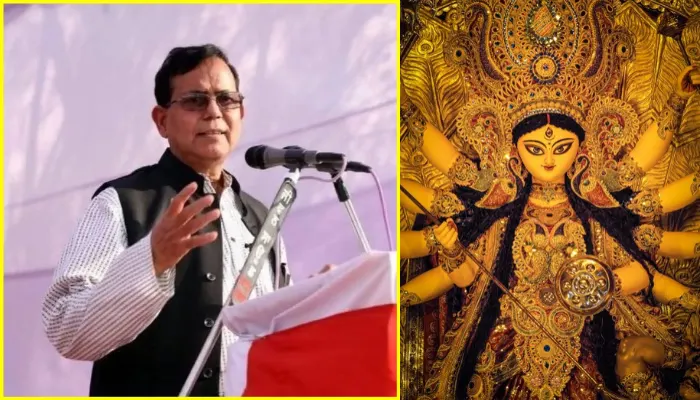
Case Summary
In Kolkata, West Bengal, CPI (M) state secretary Mohammad Salim repeatedly made derogatory remarks about Maa Durga and the Hindu festival of Durga Puja. This prompted Hindus to object that the comments insulted the Goddess and hurt their religious sentiments. BJP spokesperson Saptarshi Chowdhury later approached Tala Police Station over Salim’s repeated comments about Maa Durga, Durga Puja, and Hindu society, after which police registered an FIR and began an investigation. The complaint was filed on 19th October 2026. Chowdhury made it clear that the objection was not confined to one isolated statement. He said Salim had been making one comment after another about Maa Durga and that his repeated statements concerning Hindus had caused distress within the community. Chowdhury also objected to what he described as repeated attempts to divide Hindus into Bengali, Tamil, Gujarati, Bihari, Odia and Uttar Pradesh identities, stressing that Hindus formed one community. One statement at the centre of the controversy concerned a government advertisement that depicted the Durga idol with an extra hand. Salim mocked the mistake, saying the BJP and the state government still hadn't decided how many hands the Durga idol had, adding that “even atheists know that Durga has ten hands.” His reference to Maa Durga became part of the broader series of statements that led to the police complaint. Salim also targeted how Durga Puja and Sharad Utsav were being organised. He said the government was turning a public festival into a government festival and attempting to change Sharad Utsav into a Navratri festival. He referred to the expenditure on painting roads, bringing pandal materials from Gujarat, and hiring contractors. Chowdhury specifically pointed to Salim’s remarks about Maa Durga, Sharad Utsav, Navratri, and Hindu society while explaining why he approached the police. The FIR therefore arose from a cumulative series of statements concerning Maa Durga and Hindu religious observances, rather than merely from Salim’s criticism of one government decision. ABP Ananda recorded the complaint as concerning derogatory comments about Durga Puja, injury to Hindu religious sentiments and the creation of hostility between communities. Police confirmed that they had converted the complaint into an FIR and begun an investigation. Salim’s public interventions concerning Hindu religious practices predated the present FIR. In August 2026, he criticised the Vishwa Hindu Parishad after it asked Durga Puja organisers to preserve traditional practices and keep non-vegetarian food away from the immediate vicinity of Puja pandals. Salim said the VHP had assumed the authority to decide how Bengalis would celebrate Durga Puja and accused it of trying to damage the festive character of the celebration. He also described the broader approach as “religious purification”. In March 2026, Salim also criticised political programmes centred on Hindu temples. Referring to the Ram Temple in Ayodhya and temple projects announced in West Bengal, including the Mahakal Temple, Jagannath Temple and a proposed Durga Angan, he accused the BJP and TMC of using religion for electoral purposes. He described the BJP as having opened a “mall” in the name of religion and the TMC as opening “small shops” of religion, while maintaining that governments should not engage in religious activity. The same speech also referred to plans for a Babri Masjid-style mosque, suggesting his argument was against political mobilisation through religious institutions in general. His position on the public expression of religion had also attracted attention earlier. At the India Today Conclave East in October 2018, Salim discussed Ram Navami and Muharram processions and said that the Left had no problem with religion when it remained confined to “temples, mosques and homes”, adding that “problems start when it is taken to the streets.” He maintained that religious processions had increasingly been used for electoral purposes. In 2021, while discussing BJP rath yatras in West Bengal, Salim described the rath yatra as essentially a Hindu affair that could alienate Muslims and said the BJP was using it for polarisation. During the same period of political conflict over the slogan “Jai Shri Ram”, he condemned its use to heckle Mamata Banerjee at a government programme, characterising the episode as undesirable and objectionable. These interventions formed part of his broader public criticism of Hindu religious symbols and practices when he considered them politically deployed. The present case, however, differs from those earlier political interventions because the 19th October 2026 complaint specifically centred on repeated comments about Maa Durga, Durga Puja and Hindus themselves. Chowdhury said Hindus had become distressed by the cumulative statements and specifically objected to Salim’s treatment of Maa Durga. CPI(M) central committee member Sujan Chakraborty rejected this interpretation, maintaining that Salim’s criticism targeted the government and dismissing the charges about Sharad Utsav and Hinduism. Separately, after 19 people died in the Chorebagan Sarbojanin Durga Puja stampede, Salim expressed condolences to the bereaved families, sought treatment for the injured and criticised shortcomings in emergency transport and police arrangements. Those statements concerned the administration’s handling of the tragedy and differed from the remarks about Maa Durga and Durga Puja that prompted the FIR. Salim’s documented public record shows repeated interventions on Ram Navami processions, Jai Shri Ram, Hindu rath yatras, the Ram Temple, Mahakal and Jagannath temple projects, Durga Puja customs, Navratri, Maa Durga, and the public expression of Hindu religious practices. Not every one of those earlier statements was treated in its original context as hate speech against Hindus; several were framed by Salim as criticism of political use of religion. The present FIR is narrower and specifically concerns the accusation that his repeated remarks about Maa Durga, Durga Puja and Hindu society crossed from political criticism into derogatory treatment of the Hindu faith and hurt Hindu religious sentiments.
Why it is Hate Crime ?
The primary category selected for this case is: Hate speech against Hindus. The subcategory selected is: Anti-Hindu slurs, mocking faith. Anti-Hindu slurs and the deliberate mocking of the Hindu faith owing to religious animosity involve the use of derogatory terms, stereotypes, or offensive references to religious practices, symbols, or figures. One of the common anti-Hindu slurs used against Hindus is “cow-worshipper” and “cow piss drinker”. The intention of using this term is to demean and mock Hindus as a group and their religious beliefs, since Hindus consider the cow holy. Additionally, some symbols and the slurs attached to them have a historical context that exacerbates the insult, hate, stereotyping, dehumanisation and oppression against Hindus. Cow worship has been used for centuries to denigrate Hindus, insult their faith and oppress Hindus specifically as a religious group. There has been overwhelming documentation about how cow slaughter has been used to persecute Hindus, with cow meat being thrown in temples and places of worship. There has also been overwhelming documentation that cow meat (beef) has been force-fed to Hindus to either forcefully convert them to Islam or denigrate their faith. Apart from cow worship, the Swastika – which holds deep religious significance for the Hindus – has also been misinterpreted and distorted to be used as a slur against Hindus. Similarly, the worship of the Shivling has been used by supremacist ideologies and religions to denigrate Hindus owing to religious animosity. Such slurs and denigration stem out of inherent animosity and hate towards Hindus and their faith, therefore, it is categorised as hate speech targeted at Hindus specifically owing to their religious identity. This case qualifies for inclusion because the central religious marker is Maa Durga herself, not merely a political disagreement over festival administration. Maa Durga is one of the most revered manifestations of Shakti in Hindu Dharma and represents divine power, protection and the destruction of evil. Durga Puja is therefore not simply a cultural celebration; it is an intensely devotional period centred on worship of the Goddess. Repeatedly bringing Maa Durga herself into sarcastic or disparaging commentary can cross from criticism of governments into mockery of something Hindus hold sacred, particularly when Hindus themselves object that the Goddess has become the object of ridicule. The complaint filed in Kolkata specifically centred on repeated comments concerning Maa Durga, Durga Puja and the Hindu community. The significance of the remark that “even atheists know that Durga has ten hands” lies in the manner in which a sacred Hindu representation was used as the vehicle for political ridicule. Criticism of an incorrect government advertisement is legitimate political speech. However, repeatedly invoking Maa Durga in derisive political exchanges risks reducing a revered deity to a rhetorical prop. For devotees, Durga's iconography is not decorative imagery. Her form, weapons and multiple arms carry theological meaning connected with Shakti and divine protection. Treating such iconography casually or mockingly can therefore be experienced as contempt for the faith it represents. The same concern extends to the repeated treatment of Durga Puja, Sharad Utsav and Navratri as objects of derision or political point-scoring. Hindu festivals carry ritual, devotional, and civilisational meaning that extends far beyond government sponsorship or party politics. People can criticise politics without repeatedly framing the religious observance itself in language that makes devotees feel their festival and religious identity are being belittled. The fact that the objection arose from a series of comments rather than a single isolated sentence matters because repeated disparagement can create a cumulative atmosphere of contempt, even when individual remarks may seem less severe when read separately. Maa Durga also holds exceptional significance in Bengal. Her worship during Sharadiya Durga Puja is deeply embedded in Bengali Hindu religious life, family traditions and community worship. Mockery involving the Goddess therefore does not strike at an abstract theological concept; it touches a living form of worship practised collectively by millions of Hindus. When devotees repeatedly hear their deity, festival and religious customs used contemptuously or dismissively, the injury is directed at a core expression of their Hindu identity. The broader issue is the distinction between criticising political use of religion and mocking religion itself. Salim has previously framed several of his interventions as criticism of governments, political parties and the public use of religion. That distinction matters. But when the language repeatedly shifts from government policy to Maa Durga, Hindu festivals, and Hindu society itself, the religious object of the speech becomes harder to separate from the political target. This is why the complaint focused not simply on criticism of the state government, but on the repeated treatment of Maa Durga and Hindu religious observances. Taken together, the case concerns the repeated use of Maa Durga and Hindu religious observances in disparaging political commentary, culminating in Hindus publicly objecting that their Goddess and faith were being insulted. Within the Tracker's framework, the religious significance of Maa Durga, the cumulative nature of the remarks, and the direct reaction from Hindu devotees make the episode relevant as mockery of the Hindu faith rather than a purely secular political dispute.


Case Status
Complaint filed


Perpetrators Details
Perpetrators
Muslim Extremists
Perpetrators Range
One Person
Perpetrators Gender
male
 Sources



