Hindu death ceremony disrupted by Muslim youths in Kanpur; Hindu attendees assaulted and stones pelted at the gathering
 Kanpur, Uttar Pradesh, India
 17 October, 2026
Case Summary
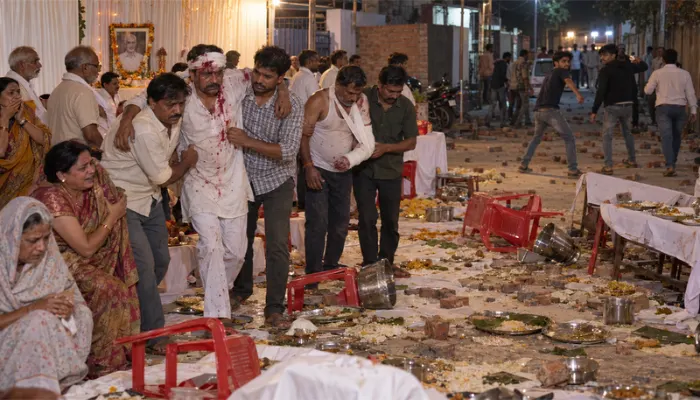
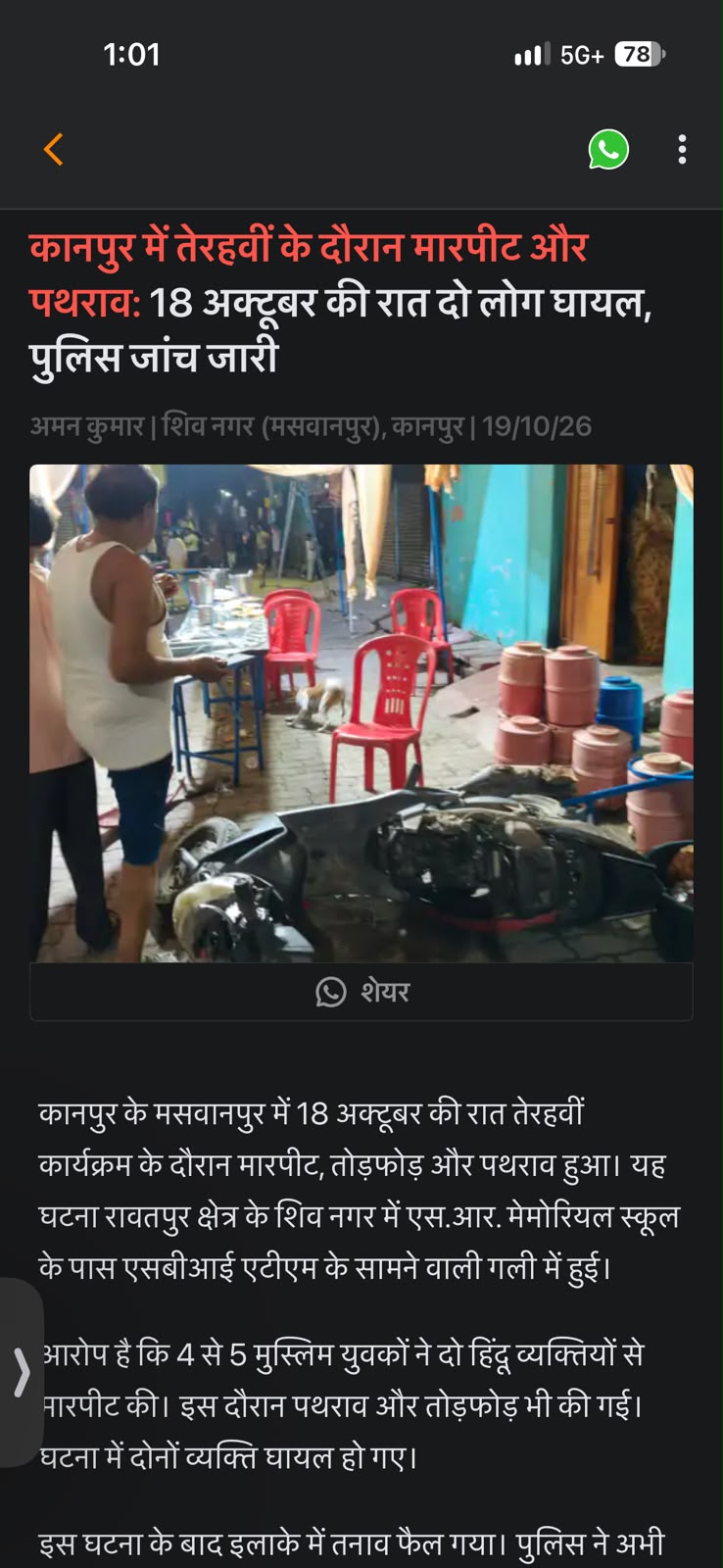
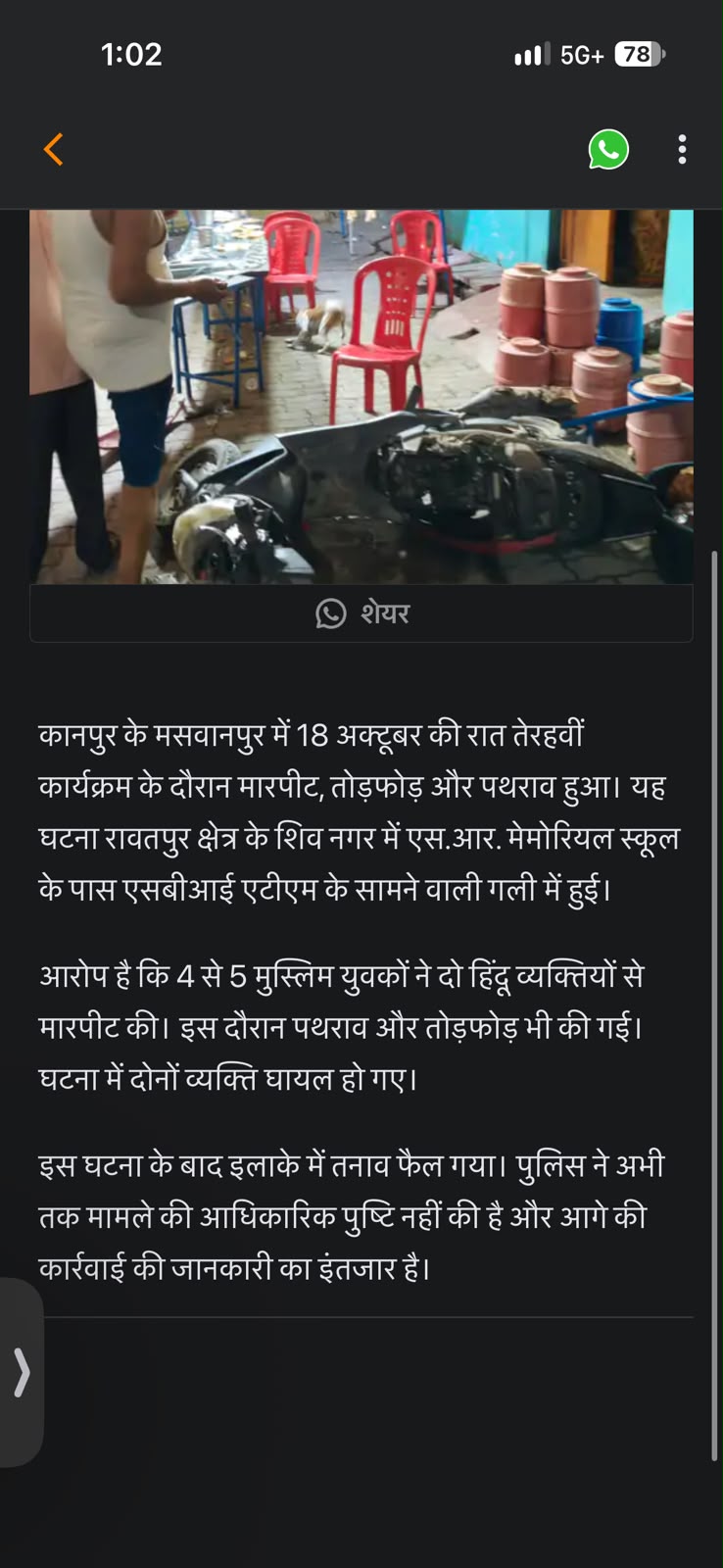
In Kanpur, Uttar Pradesh, a Hindu family's Terahvi ceremony (the thirteenth-day mourning ritual observed following a death) was violently disrupted by a group of four to five Muslim youths on the night of 18 October 2026. The attackers hurled bricks and stones at those attending the ceremony, injuring two Hindu men and damaging the food arrangements and other arrangements made for the gathering. The incident took place in Shiv Nagar, Maswanpur, in a lane opposite an SBI ATM near S.R. Memorial School, under the jurisdiction of Rawatpur Police Station. The Hindu family was conducting the Terahvi ceremony and the customary feast in memory of the deceased when the Muslim perpetrators arrived and violently disrupted the ceremony. According to a victim present at the ceremony, the attackers damaged the food arrangements and pelted those gathered with bricks and stones. He further stated that Muslim women accompanying the group also brought stones to the spot. Two Hindu men, both sons of the deceased, sustained injuries during the attack. The sudden violence caused panic among the family members and other Hindu residents attending the mourning ceremony and sparked tension in the locality. A video of the incident, recorded after the attack, subsequently went viral. In the video, one of the Hindu victims, who was also assaulted by the Muslim perpetrators, displayed the injuries he had sustained and demanded a medico-legal examination and action against those responsible. He explained that he and his family had invited local residents, including the Muslim individuals involved in the attack, to attend the Terahvi ceremony organised following his father's death. However, instead of attending the ceremony peacefully, the individuals entered the gathering and assaulted those present, disrupting the family's mourning ceremony. Expressing his anguish over the incident, he stated, “No one should practise brotherhood. This is what we got for it.” He also voiced dissatisfaction with the police response at that stage. On 20 October 2026, the Police Commissionerate Kanpur Nagar issued a statement confirming that a case had been registered at Rawatpur Police Station under the relevant sections on the basis of a complaint received. The police stated that CCTV footage from the surrounding area was being examined and that the Muslim perpetrators had been taken into custody. Further legal proceedings were being undertaken based on the facts gathered during the investigation. The incident involved the disruption of a Hindu family's Terahvi ceremony, an important mourning ritual observed on the thirteenth day following a death. The attackers damaged the food and other arrangements made for the ceremony, pelted Hindu mourners with bricks and stones and assaulted two members of the deceased's family, leaving both injured. The attack also created tension in the locality. The police subsequently registered a case, took the opposite party into custody and initiated an examination of CCTV footage as part of the investigation.
Case Images
Why it is Hate Crime ?
The first primary category selected for this case is: Attack not resulting in death. The subcategory selected is: Attacked for Hindu identity. In several cases, Hindus are attacked merely for their Hindu identity without any perceived provocation. A classic example of this category of religiously motivated hate crime is a murder in 2016. 7 ISIS terrorists were convicted for shooting a school principal in Kanpur because they got ‘triggered’ seeing the Kalava on his wrist and tilak that he had put. In this case, the Hindu victim had offered no provocation except for his Hindu religious identity. The motivation for the murder was purely religious, driven by religious supremacy. Such cases where Hindus are targeted merely for their religious identity would be documented as a hate crime under this category. The other primary category selected for this case is: Attack on Hindu religious representations. The subcategory selected is: Defiling religious customs. Sanatan Dharma is not a religion of one book, which is to say that while it has religious scriptures that form the central tenets of the faith, there are several traditions followed through thousands of years, mostly passed from generation to generation orally. There are several such customs and traditions that are followed by various Hindus and Hindu sects. Defiling these traditions and customs is a breach of an individual or group’s religious practices. Such practices can range from dietary restrictions like not eating non-vegetarian food for a certain period of the year, not eating non-vegetarian food at all, not eating beef since the cow is considered holy in Hinduism, the sanctity of religious customs followed in the house (like many ISCKON devotees), etc. Any malicious action leading to the breach of such traditions or defilement of these traditions owing to animosity towards the faith or for the sake of activism stems not only from the lack of faith in the religion itself but also from disregard for the faith of the devotees who follow the customs/traditions and implicit bias against the faith and the tradition itself. Since these specific traditions are central to the faith of the devotees of that specific sect of Hindus, any non-compliance with these traditional rules would be considered a religiously motivated hate crime. The attack on the Hindu family and other attendees during the Terahvi ceremony constituted a clear example of a religiously driven hate crime, as Hindu participants were subjected to violence by Muslim perpetrators after being invited to attend the ceremony. Terahvi, observed on the thirteenth day following a death, holds considerable religious and cultural significance in Hinduism. It is an important Hindu death ritual during which family members, relatives and members of the community gather to perform religious rites and offer prayers for the departed soul, seeking its peaceful onward journey and liberation. The ceremony is deeply embedded in Hindu religious and cultural life and is observed with solemnity and reverence. It provides an occasion for the bereaved family and community to come together, remember the deceased and fulfil their religious obligations towards the departed. Such gatherings are sacred occasions for Hindus, making the attack on Hindu attendees during this religious observance a demonstration of hostility towards their religious identity and practices. The circumstances surrounding the incident further demonstrate the communal hatred driving the attack. The two Hindu sons of the deceased had invited local residents, including the Muslim individuals who subsequently participated in the violence, to attend their father's Terahvi ceremony. If the invitees did not wish to participate in the Hindu religious observance, they could simply have declined the invitation. Instead, the Muslim group arrived and subjected the Hindu attendees to violence. Bricks and stones were hurled at the mourners, two Hindu men were assaulted and injured, and the food arrangements and other preparations made for the ceremony were vandalised. The fact that the perpetrators attacked Hindu attendees at a gathering organised to honour the deceased and fulfil religious obligations towards the departed soul demonstrates deep-seated religious hostility towards the Hindu community and its religious customs. The attack was not merely an assault on individuals; it was an act of violence directed at Hindu participants assembled for an important religious and cultural observance. Furthermore, the disruption of the Terahvi ceremony itself amounted to the desecration of a sacred Hindu custom. By vandalising the food arrangements and other preparations and subjecting mourners to physical violence, the perpetrators deliberately disrupted a solemn gathering held in memory of the deceased. Their actions demonstrated complete disregard for the religious sentiments of the Hindu community and the grief of the bereaved family, which had assembled to perform the customary rites for their departed family member. Attacking Hindu mourners during such a sacred and emotionally significant occasion showcases profound religious hostility and contempt for Hindu religious and cultural practices. The violence not only targeted the attendees but also desecrated an important Hindu mourning observance. Overall, since the incident meets the parameters of a hate crime, it is being included in the hate crime database of the Hinduphobia Tracker. Disclaimer: The Hinduphobia Tracker has recorded the perpetrator count as '5' for documentation purposes. The available account identified four to five Muslim youths as participating in the attack, while women were also stated to have joined the stone-pelting. Since the total number of Muslim women involved could not be ascertained, they have not been added separately to the perpetrator count. Therefore, the count has been recorded as five, based on the maximum number of Muslim male perpetrators specifically identified in the available information. Although multiple Hindu attendees were targeted during the attack, only two Hindu victims, both sons of the deceased, were specifically identified as having sustained injuries. Henceforth, an indicative victim count of two has been recorded. This represents a conservative estimate for documentation purposes only.
Victim Details
Total Victim
2
Deceased
0
Gender
- Male 2
- Female 0
- Third Gender 0
- Unknown 0
Caste
- SC/ST 0
- OBC 0
- General 0
- Unknown 2
Age Group
- Minor 0
- Adult 2
- Senior Citizen 0
- Unknown 0


Case Status
Arrested


Perpetrators Details
Perpetrators
Muslim Extremists
Perpetrators Range
From 2 To 5
Perpetrators Gender
both
 Sources



