Hindu deities, scriptures and sages targeted in objectionable Facebook posts in Jashpur, Chhattisgarh
 Jashpur, Chhattisgarh, India
 14 October, 2026
Case Summary
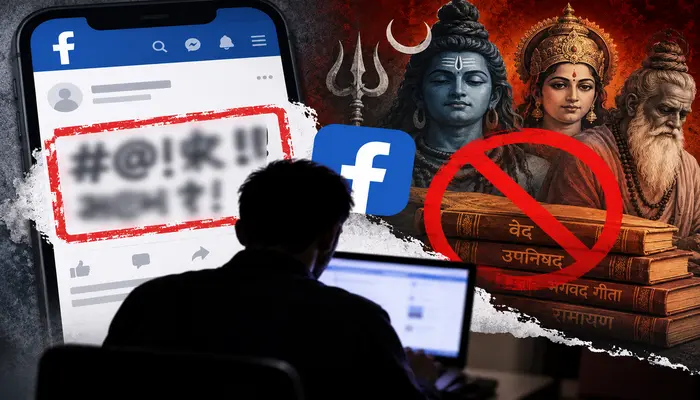
Objectionable content about Hindu deities, religious scriptures and revered sages was posted on Facebook by Hemant Kumar Bedi. According to reports, the derogatory comments were posted by Hemant Kumar Bedi (52), a resident of the Kunkuri area of Jashpur district, Chhattisgarh. The post included the statement, “Raavan nhi, rishi-muniyo ko jalaon” (“Don't burn Ravana, burn the sages”), along with other objectionable comments about Hindu religious figures and scriptures. Bedi worked as a teacher at Kudmura Middle School in Bagicha block. On 17 October 2026, Karnail Singh, the 54-year-old district president of the Vishwa Hindu Parishad (VHP), filed a written complaint at Kunkuri police station. Singh stated that he had seen the Facebook post on 15 October 2026 and that its content had hurt the religious sentiments of Hindus. The police registered a case against Bedi under Sections 199 and 299 of the Bharatiya Nyaya Sanhita (BNS) and initiated an investigation. When a police team arrived to serve him a notice under Section 35(3) of the Bharatiya Nagarik Suraksha Sanhita (BNSS), Bedi attempted to flee but was apprehended. During questioning, he admitted to sharing the post from his Facebook account. The police seized the Vivo mobile phone and SIM card used to publish the content, arrested him and produced him before a court, which remanded him to judicial custody. As of the date of writing this report, the investigation remained ongoing.
Why it is Hate Crime ?
This case is being added to the tracker under the primary category: Hate Speech against Hindus. The subcategory selected is: Anti-Hindu slurs, mocking faith. Anti-Hindu slurs and the deliberate mocking of the Hindu faith owing to religious animosity involve the usage of derogatory terms, stereotypes, or offensive references to religious practices, symbols, or figures. One of the common anti-Hindu slurs used against Hindus is “cow-worshipper” and “cow piss drinker”. The intention of using this term is to demean and mock Hindus as a group and their religious beliefs since Hindus consider the cow holy. Additionally, some symbols and the slurs attached to them have a historical context that exacerbates the insult, hate, stereotyping, dehumanisation and oppression against Hindus. Cow worship has been used for centuries to denigrate Hindus, insult their faith and oppress Hindus specifically as a religious group. There has been overwhelming documentation about how cow slaughter has been used to persecute Hindus with cow meat being thrown in temples and places of worship. There has also been overwhelming documentation where cow meat (beef) has been force-fed to Hindus to either forcefully convert them to Islam or denigrate their faith. Apart from cow worship, the Swastika – which holds deep religious significance for the Hindus – has also been misinterpreted and distorted to use as a slur against Hindus. Similarly, the worship of the Shivling has been used by supremacist ideologies and religions to denigrate Hindus owing to religious animosity. Such slurs and denigration stem out of inherent animosity and hate towards Hindus and their faith, therefore, it is categorised as hate speech targeted at Hindus specifically owing to their religious identity. The incident constituted a religiously motivated hate crime because the content specifically targeted Hindu religious figures, sacred texts and revered traditions through hostile and derogatory expressions. The statement, “Raavan nhi, rishi-muniyo ko jalaon” (“Don't burn Ravana, burn the sages”), was particularly significant because it singled out Hindu sages and seers as targets of hostility. Sages and seers occupy a revered position in Hinduism as spiritual teachers, repositories of religious knowledge and figures associated with the transmission of sacred teachings across generations. The statement therefore did not merely express disagreement with a religious idea or practice; it directed a hostile message towards figures who hold deep religious and cultural significance for Hindus. By presenting revered sages as targets for burning, the statement invoked the destruction of figures central to Hindu religious tradition, treating them with contempt rather than acknowledging their sacred standing. The nature of the content further established its religious focus because the objectionable remarks extended beyond sages and seers to Hindu deities and religious scriptures. These elements are closely interconnected within Hindu religious life. Deities are worshipped and revered by devotees, while scriptures preserve religious teachings, philosophical traditions and accounts of sacred figures. Sages and seers, in turn, are associated with the transmission and preservation of this religious knowledge. The targeting of all these elements within the same social media content therefore represented hostility directed at multiple fundamental aspects of Hinduism, rather than an isolated disagreement concerning one religious figure. This breadth of targeting was relevant to the classification of the incident because it indicated contempt towards the wider Hindu religious tradition and the figures and texts through which that tradition is expressed and preserved. The use of Facebook to disseminate the content was also significant because it made the expression of hostility public and capable of reaching an audience beyond a private conversation. Religious figures and sacred traditions serve as important markers of collective identity, and hostile content directed at them affects members of the religious community even when they are not individually named. In recent times, social media has increasingly become a platform for anti-Hindu hate, with derogatory memes, videos, and messages targeting Hindu religious symbols, practices, and deities. Such content is recognised as part of a broader pattern of Hinduphobia and religious hate crimes online. This deliberate targeting of revered religious icons firmly establishes this act as a religiously motivated hate crime; therefore, it is being categorised under the hate crime database. Taken together, the targeting of Hindu sages, deities and scriptures, particularly the hostile statement about burning sages, provided the basis for treating the incident as a religiously motivated hate crime. The content singled out revered elements of Hinduism for contemptuous and hostile treatment, making Hindu religious identity central to the nature of the incident.


Case Status
Arrested


Perpetrators Details
Perpetrators
Others
Perpetrators Range
One Person
Perpetrators Gender
male
 Sources



