Hindu law students sexually harassed, pressured to convert to Islam, offer Namaz and chant “Pakistan Zindabad” by Muslim professor; pictures of accused posing with AIMIM chief goes viral
 Nagpur, Maharashtra, India
 15 October, 2026
Case Summary
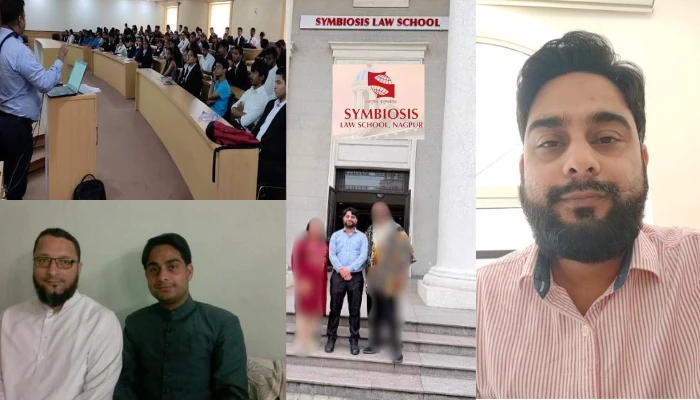
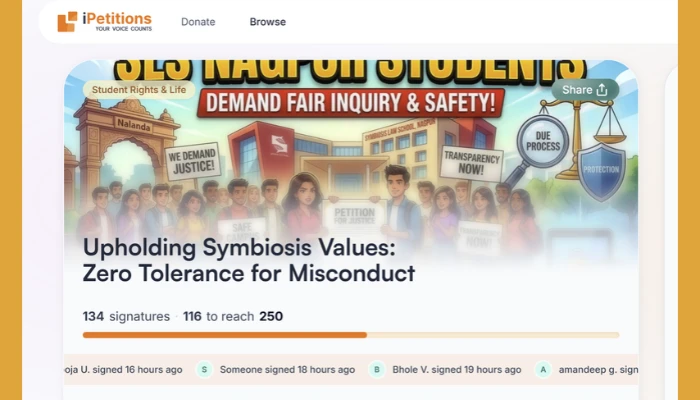
In Nagpur, Maharashtra, Hindu female students of Symbiosis Law School were sexually harassed and pressured to convert to Islam, offer Namaz, read the Quran and chant “Pakistan Zindabad” by Muslim Assistant Professor Dr Ahmar Afaq. The accused sexually exploited 15 to 20 Hindu female students, sent them obscene messages, made sexual advances and pressured them to adopt Islamic religious practices. The matter came to light after a Hindu student showed her father sexually explicit messages sent to her by the accused. The victim’s father approached the Vishwa Hindu Parishad (VHP), which raised the matter with the college administration and met the Nagpur Police Commissioner. The accused sent obscene messages to female students, made sexual advances and pressured them to adopt Islamic practices, including offering Namaz, reading the Quran and converting to Islam. He took female students to restaurants, lured them into inappropriate activities and arranged meetings with individuals described in reports as having a jihadi mentality. His conduct involved sexual advances alongside pressure on Hindu female students to participate in Islamic religious practices and abandon their existing religious identity. The victim lodged a complaint, after which the Symbiosis Law School administration took cognisance of the matter and constituted a high-level committee to investigate and recommend action. The accused was placed on leave and barred from visiting the campus or participating in academic activities until the inquiry was completed. Symbiosis Law School Nagpur Director Dr Sukhvinder Singh Dari confirmed that the accused had been directed to stay away from the campus and academic activities pending the inquiry's outcome. The university administration also extended the inquiry to similar complaints concerning the accused's previous employment at a university in Hyderabad. Notably, this was not the first time that such serious charges were levelled against the accused. The court noted that a similar case with similar charges against Ahmar Afaq was already pending before the High Court. On Saturday, 17 October 2026, approximately 15 to 17 people representing various organisations gathered at the Symbiosis Law School campus at around 11.30 am. Deputy Commissioner of Police (Zone 5) Nityanand Jha said police facilitated discussions between the protesters and the university administration. Following these discussions, the varsity placed the accused on leave. Tensions escalated again at around 6.45 pm that evening, when approximately 15 to 20 people, including the complainant and her father, arrived at the university. Local media reports stated that the victim’s father confronted the accused, who then became violent and attacked him. The victim’s father retaliated by slapping the accused. Meanwhile, the university's internal inquiry committee held an open-house session attended by 100 to 120 students. Following police intervention, a delegation of six to seven people met the Symbiosis Law School administration to discuss the matter. Amid the controversy, social media users drew attention to an old Facebook photograph of the accused posing with Asaduddin Owaisi, chief of the All India Majlis-e-Ittehadul Muslimeen (AIMIM). The photograph prompted questions about possible political patronage. The VHP subsequently submitted a memorandum to the Nagpur City Police Commissioner demanding stringent action against the accused and his immediate dismissal from the college. The VHP also sent a copy of the memorandum to the Chief Minister of Maharashtra. The VHP later launched an online petition titled Upholding Symbiosis Values: Zero Tolerance for Misconduct to demand institutional accountability and measures to ensure student safety. The representation raised concerns about sexually explicit and religiously sensitive communications by the accused. It demanded that the college administration disclose the action taken, ensure the safety of the student concerned, preserve relevant evidence and conduct a free and fair inquiry. The representation also questioned the recruitment, appointment, background verification, and institutional role of Saqib Rasool Bhat, who served as a faculty member in International Law and was understood to be on probation. The signatories highlighted Bhat's close professional association with the accused and called for a broader institutional review to examine the nature and extent of that association. Further, the representation raised concerns about Bhat's previous academic and public activities, including ideological and political activism that the signatories considered inconsistent with the university's expectations of neutrality, inclusivity and a responsible academic environment. It also highlighted communications and views that students perceived as hostile to India or inconsistent with the university's institutional ethos. The petitioners demanded scrutiny of these matters alongside the concerns surrounding the accused's conduct and institutional influence. Symbiosis Law School, Nagpur, had also faced controversy in May 2025, when the university suspended final-year student Isha Kumari after she was found in a hotel room with Rejaz M. Sydeek, an independent journalist from Kerala described as a Maoist sympathiser. Authorities arrested Sydeek and booked him under the Unlawful Activities (Prevention) Act (UAPA) over an Instagram post concerning Operation Sindoor. Sydeek had condemned Operation Sindoor, conducted by the Indian Armed Forces against terror camps in Pakistan and Pakistan-occupied Jammu and Kashmir. He had also criticised the crackdown on Naxalites. The incident drew further attention to controversies surrounding the institution and how it handles student-related matters.
Case Images
Why it is Hate Crime ?
This case is being added to the tracker under the primary category: Predatory Proselytisation. The subcategory selected is: Harassment, threat, coercion for conversion. Harassment covers a wide range of behaviours of an offensive nature. It is commonly understood as behaviour that demeans, humiliates, and intimidates a person, including threats and coercion. In this case, harassment and threats are rooted in discriminatory grounds that nullify a person’s rights or infringe on their freedom to exercise those rights because of the victim’s religious identity. Verbal and physical threats and psychological or physical harassment are often used against Hindu victims because they choose to practice their professed religion. Religious harassment also includes forced and involuntary conversions by harassment, threats or coercion. Coercion includes intimidatory tactics like force-feeding a Hindu victim beef to convert to another religion, forceful circumcision, etc. In several cases, non-Hindu perpetrators or those who harbour specific animosity towards Hinduism harass victims simply based on their religious identity. Such cases often also include harassment to ensure the Hindu victim abandons his/her professed religion and adopts the religion of the perpetrator. Such cases where Hindu victims are harassed to convert to the perpetrator’s religion are rooted in animosity towards the victim’s religious identity and are therefore documented as religiously motivated hate crimes. The other subcategory selected is: Proselytisation by grooming, brainwashing, manipulation or subtle indoctrination. The tertiary category selected is: Pattern of targeting Hindus and Rape and sexual assault/harassment. Religious brainwashing essentially means the often subtle and forcible indoctrination to induce someone to give up their religious beliefs to accept contrasting regimented ideas. Religious grooming or brainwashing also involves propaganda and manipulation. It involves the systematic effort, driven by religious malice and indoctrination, to persuade “non-believers’ to accept allegiance, command, or doctrine to and of a contrasting faith. Cases of such grooming or brainwashing are far more nuanced than direct threats, coercion, inducement and violence. In such cases, it is often seen that there is repeated, subtle and continual manipulation of the victim to induce disaffection towards their own faith and acceptance of the contrasting faith of the perpetrator. While subtle indoctrination is widely acknowledged as predatory, an element which is often understated in such conversions or the attempts at such conversion is the role of loyalty and trust which might develop between the perpetrator and the victim. Fiduciary relationships are often abused to affect such religious conversion. For example, an educator transmitting religious doctrine of a competing faith to a Hindu student. The Hindu student is likely to accept what the teacher is transmitting owing to the existence of the fiduciary relationship. The exploitation of the fiduciary relationship to religiously indoctrinate victims would also be included in this category. Since the underlying animosity towards the victim’s faith forms the basis of predatory proselytisation, such cases are considered religiously motivated hate crimes. This case has been added to the Hinduphobia Tracker because Muslim professor Dr Ahmar Afaq sexually harassed Hindu female students while pressuring them to convert to Islam and adopt Islamic religious practices. His conduct combined sexual exploitation with religious coercion, making the case more than one of sexual misconduct by a professor. The pressure to offer Namaz, read the Quran and convert to Islam exposed a religious dimension to the harassment: alongside sexually inappropriate conduct, the Hindu students were subjected to pressure to abandon their existing religious allegiance and embrace Islam. In Hindu Dharma, religious identity is expressed through worship, rituals, spiritual discipline and adherence to one's faith. The pressure exerted on these Hindu students to adopt Islamic practices and convert was not simply an invitation to explore another religion. It reflected hostility towards their existing Hindu identity and an attempt to replace it with an Islamic religious allegiance. Such conversion-oriented conduct arises when perpetrators view the Hindu faith as something to be rejected, displaced or overcome, rather than respected as the students' own religious identity. The objective of pressuring Hindu students to convert was to bring them away from their faith and into another religious fold. When this pressure was combined with sexual harassment, it exposed a disturbing intersection of personal exploitation and religious domination. The professor's position of authority made the conduct particularly serious. An educator occupies a position built upon academic trust, institutional authority and access to students. Students are expected to engage with faculty members within an environment where their education and personal dignity are protected. A professor who uses that position to sexually harass students and pressure them to change their religion abuses the very trust that the institution places in him. The students were not dealing with a stranger on equal terms; they were subject to a faculty member whose position gave him access to them. The combination of sexual advances and religious pressure made the conduct especially predatory because it brought personal exploitation and interference with religious freedom into the same relationship. Further, the meetings outside the institution and the involvement of multiple Hindu female students further underscored a pattern rather than reducing it to an isolated episode of sexual misconduct. The concern was not merely that the professor behaved inappropriately, but that sexual exploitation and religious pressure operated together against Hindu students. The fact that 15 to 20 Hindu female students were involved made the matter more serious. Furthermore, a case involving similar charges was also pending against the accused before the High Court. This context strengthened the argument that it formed part of a wider pattern of targeting Hindu students. The pending case, by itself, proves the broader concerns surrounding the accused's conduct. Such acts are carried out by Muslim perpetrators due to indoctrination by Islamic theology, which advocates that all non-Muslims (referred to as kafirs) are inferior and subject to subjugation unless they convert to Islam or live under Islamic rule (dhimmitude). These ideas are not mere abstractions; they manifest in actions where non-Muslims, especially Hindus in India, are seen as targets for religious domination, coercion, or humiliation. This theological framework fosters an "us versus them" mindset, in which any assertion of Hindu identity or religious freedom is seen not only as undesirable but as a threat to Islamic supremacy. As a result, perpetrators who are shaped by such teachings feel justified, even morally obligated, to harass, suppress, or violently attack Hindus, particularly when Hindus assert their religious rights or resist conversion. As a result, Muslim perpetrators invoke such doctrines to justify coercive attempts to convert non-Muslims, particularly Hindus, portraying conversion as a means of abandoning Kufr (a state of disbelief in Islam or disbelief in Islam) and attaining salvation. Such acts, therefore, are not isolated but driven by a broader ideological hostility towards Hindus as non-believers and reflect an attempt to impose religious dominance. In this case, Afaq sexually harassed Hindu female students while pressuring them to convert to Islam, offer Namaz and read the Quran. The combination of sexual exploitation and religious coercion demonstrates that his conduct extended beyond sexual predation to an attempt to influence and change the students' religious allegiance. The demand that Hindu female students chant “Pakistan Zindabad” further strengthened the communal and ideological character of the incident. The slogan carries historical and civilisational significance for Hindus because Pakistan emerged from the Partition of India, which was shaped by the two-nation theory that treated Hindus and Muslims as separate nations. Pakistan was established as a state founded on Islamic identity, in contrast to the civilisational and religious traditions of a Hindu-majority India. Pressuring Hindu students in India to chant “Pakistan Zindabad” alongside demands to convert to Islam and adopt Islamic practices linked religious coercion with an expression of political allegiance to Pakistan. In this context, the slogan was not an isolated demand detached from the other conduct; it was part of the wider pressure imposed on Hindu students to adopt an identity and allegiance contrary to their own. Its use alongside conversion-oriented demands reinforced the communal dimension of the incident and the targeting of Hindu students in their religious and national context. Taken together, the sexual harassment of Hindu female students, pressure to convert to Islam and adopt Islamic practices, the demand to chant “Pakistan Zindabad”, and the exploitation of educational authority establish why this case was added to the Hinduphobia Tracker. Afaq sexually harassed Hindu students while also pressuring them to abandon their faith, combining sexual exploitation with coercive proselytisation and conduct carrying a wider communal and ideological significance. Disclaimer: The Hinduphobia Tracker records the incident date as when the victim’s ordeal began, not when the media reported it. The media reported the matter on 17 October 2026, but the available sources do not specify the exact date the incident began. Therefore, 16 October 2026, the date the online petition concerning the incident was created, was selected as the indicative incident date for documentation purposes only. The number of victims recorded in the Tracker was taken as 20 (twenty), as the available information identified 15 to 20 Hindu female students as victims of the incident. We therefore used the higher figure of 20 for documentation purposes.
Victim Details
Total Victim
20
Deceased
0
Gender
- Male 0
- Female 20
- Third Gender 0
- Unknown 0
Caste
- SC/ST 0
- OBC 0
- General 0
- Unknown 20
Age Group
- Minor 0
- Adult 20
- Senior Citizen 0
- Unknown 0


Case Status
Complaint filed


Perpetrators Details
Perpetrators
Muslim Extremists
Perpetrators Range
One Person
Perpetrators Gender
male
 Sources



