100-year-old idol of Hindu deity vandalised and thrown into well by unidentified miscreants in Banda, Uttar Pradesh
 Uttar Pradesh, India
  14 October, 2026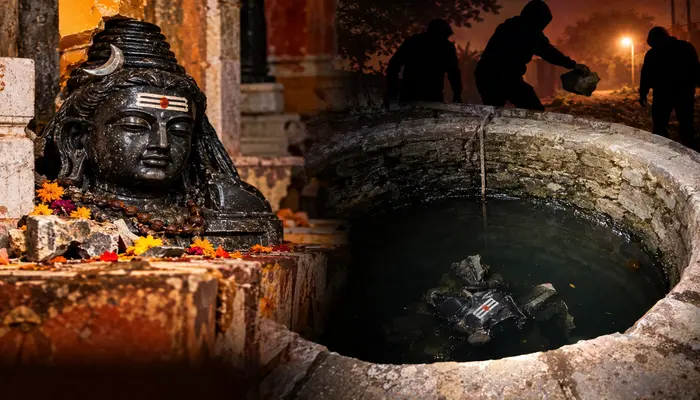
Case Summary
In Korrahi village, under the Bisanda police station area of Banda district, Uttar Pradesh, a 100-year-old idol of Lord Shiva at the Kodua Baba was vandalised by unidentified miscreants who threw it into a nearby well. The incident occurred late on Thursday night, 15 October 2026. On Friday morning, 16 October 2026, villagers arriving to offer prayers discovered that the idol was missing and found broken pieces scattered at the site. The incident sparked outrage among the local Hindu community, whose members gathered at the spot. Police arrived and assured villagers that a new idol would be installed and that an investigation would be conducted to identify the perpetrators and take action against them. The idol remained inside the water-filled well, and its retrieval was being considered. Villagers expressed anger over the lack of police patrolling during Navratri, stating that the village was sensitive and that incidents of this nature occurred there during the festival every year. They demanded increased security and the arrest of those responsible. Circle Officer Krishnakant Tripathi stated that the matter was under investigation and that the situation in the village had remained peaceful.
Why it is Hate Crime ?
The primary category selected in this case is: Attack on Hindu religious representations. The subcategory selected is: Desecration of Hindu religious symbol. Icons and symbols or a religious representation of a spiritual ideal are widely revered in Hinduism. Iconography is of vital significance in the Hindu milieu. It helps connect people’s spiritual beliefs with the real world. Iconography within the Hindu faith takes several shapes and forms. Murtis are of most significance to Hindus, to which daily rituals, prayers and offerings are done. Besides the murtis, there are several other symbols which have deep significance in the Hindu faith – the Om and Swastika for example. Since these Hindu religious symbols hold paramount importance in Hinduism, any desecration of symbols, icons, murtis, religious representations and manifestations, is driven by animosity towards the faith itself which manifests itself through these murtis, icons and symbols. Therefore, any desecration of these Hindu religious symbols and representations is considered religiously motivated hate crimes under this category. The incident constituted a hate crime because it involved the deliberate desecration of a sacred idol of a Hindu deity, Lord Shiva. Lord Shiva is one of the principal deities in Hinduism, and his idol at the Kodua Baba site had been worshipped by generations of Hindu devotees for nearly a century. The act of breaking the idol and throwing it into a well went beyond ordinary property damage, as it directly affected an object of religious reverence and interfered with the community’s ability to practise its faith at a site of established religious significance. The destruction of a sacred representation of a Hindu deity constituted an attack on an important expression of Hindu religious identity and demonstrated disregard for the religious sentiments of the devotees who worshipped there. Hindu temple idols hold profound religious significance and are deeply revered as sacred manifestations through which devotees offer worship, prayers and devotion. They are central to Hindu religious practice and are not merely objects of artistic or cultural value. Therefore, vandalising these sacred representations amounted to an affront to Hindu faith and sentiments, constituting deliberate disrespect towards objects held sacred by the Hindu community and reflecting hostility towards Hinduism and its traditions. The manner in which the idol was desecrated further strengthened the religious significance of the incident. Rather than merely damaging the structure or removing the idol from its place, the perpetrators broke it into pieces and disposed of it in a water-filled well. Such conduct was consistent with a deliberate act of desecration that deprived devotees of their sacred object and disrupted worship at the site. The idol’s longstanding presence and its importance to the local Hindu community made its destruction particularly significant, as it affected a place of worship embedded in the community’s religious life and traditions. The act therefore had consequences beyond the physical destruction of an object, striking at a shared religious symbol through which devotees expressed their faith and maintained their connection with a sacred place. The incident also had a collective impact on the local Hindu community. The idol had been worshipped by generations of devotees, making it a shared religious symbol rather than an object of significance to a single individual. Its desecration provoked widespread anger among villagers and raised concerns about the protection of Hindu places of worship. Deliberate attacks on sacred objects can intimidate devotees, undermine their sense of security in practising their faith and create apprehension about the vulnerability of religious sites. In this case, the destruction of an established object of Hindu worship affected the community’s religious environment and prompted demands for stronger security and accountability. Taken together, the deliberate destruction of a revered Hindu idol, its disposal in a well, the longstanding religious significance of the site and the incident’s occurrence during Navratri provided grounds for treating the case as a religiously motivated hate crime against Hindu religious property. At the time of writing this report, the identities of the perpetrators remain unknown. However, the vandalism of the sacred idols of Hindu deities inside a Hindu temple constitutes an act of religious desecration. The case is therefore being included in the Hinduphobia Tracker's hate crime database.


Case Status
Unknown


Perpetrators Details
Perpetrators
Unknown
Perpetrators Range
Unknown
Perpetrators Gender
unknown
 Sources




