Hindu students harassed for wearing sacred Bhavani mala during Navratri observances at Anurag University in Hyderabad, Telangana
 Hyderabad, Telangana, India
  14 October, 2026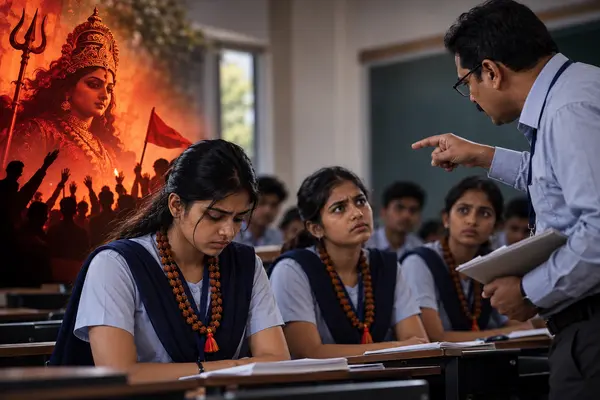
Case Summary
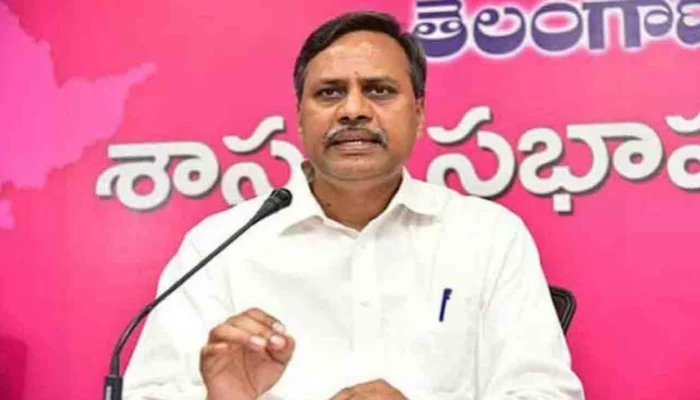
In Hyderabad, Telangana, Hindu students at Anurag University, run by BRS MLA Palla Rajeshwar Reddy, were targeted while observing Navratri and wearing the sacred Bhavani Mala as part of their religious practice. Students stated that professors and lecturers subjected devotees wearing the Mala to insulting and disparaging remarks, interfering with their ability to observe the Hindu religious tradition with dignity inside the university. The matter concerned Anurag University in Venkatapur, Ghatkesar region, where students observing the Bhavani Mala tradition raised objections to the treatment they faced during Navratri. The students said the problem had continued for several days and that those participating in the religious observance were being singled out because of the practice they followed. According to the students, lecturers made insulting remarks concerning the Bhavani Mala and the Hindu devotees observing the associated religious discipline. The students objected to the conduct and questioned why they were being subjected to such treatment while peacefully practising their faith on campus. The issue subsequently prompted Hindu devotees and students to gather and raise their concerns publicly. Speakers condemned the treatment of the students and questioned why the university authorities had not intervened despite the difficulties those observing the religious tradition faced. The students maintained that their grievance concerned their right to follow Navratri observances and wear the Bhavani Mala without humiliation or interference. They asked the university administration to ensure Hindu students could continue their religious practices with dignity and respect.
Case Images
Why it is Hate Crime ?
The primary category selected for this case is: Attack on Hindu religious representation. The subcategory selected is: Restriction on expression of Hindu identity. An example of the state-affected prejudicial and targeted orders against the Hindu community would be a government denying the right of a Hindu or a group of Hindus to hold a religious procession owing to the animosity of non-Hindu groups. Denial of the religious right of Hindus to assuage the non-Hindu group, which harbours animosity to a point where it could lead to violence against Hindus, is not only a failure of law and order but is a prejudicial order against Hindus, denying them their fundamental rights to express their religious identity. An example of a hate crime against Hindus by a non-Hindu would be a non-Hindu institution forcing its Hindu employees to abandon religious symbols that a Hindu would wear as an expression of faith owing to inherent prejudice against the faith professed by the victim, or a non-Hindu group of people restricting a Hindu group from constructing a place of worship simply because the demography of the area in which the temple is being built is dominated by non-Hindus. Such actions are driven by religious animosity and/or prejudice against Hindus and their faith and would therefore be categorised as a hate crime. An example of the state-affected prejudicial and targeted orders against the Hindu community would be a government denying the right of a Hindu or a group of Hindus to hold a religious procession owing to the animosity of non-Hindu groups. Denial of the religious right of Hindus to assuage the non-Hindu group, which harbours animosity to a point where it could lead to violence against Hindus, is not only a failure of law and order but is a prejudicial order against Hindus, denying them their fundamental rights to express their religious identity. An example of a hate crime against Hindus by a non-Hindu would be a non-Hindu institution forcing its Hindu employees to abandon religious symbols that a Hindu would wear as an expression of faith owing to inherent prejudice against the faith professed by the victim, or a non-Hindu group of people restricting a Hindu group from constructing a place of worship simply because the demography of the area in which the temple is being built is dominated by non-Hindus. Such actions are driven by religious animosity and/or prejudice against Hindus and their faith and would therefore be categorised as a hate crime. The other category selected is: Attack not resulting in death. Under this, the subcategory selected is: Attacked for Hindu identity. In several cases, Hindus are attacked merely for their Hindu identity without any perceived provocation. A classic example of this category of religiously motivated hate crime is a murder in 2016. 7 ISIS terrorists were convicted for shooting a school principal in Kanpur because they got ‘triggered’ seeing the Kalava on his wrist and tilak that he had put. In this, the Hindu victim had offered no provocation except for his Hindu religious identity. The motivation for the murder was purely religious, driven by religious supremacy. Such cases where Hindus are targeted merely for their religious identity would be documented as a hate crime under this category. The other primary category selected in this case is: Predatory Proselytisation. The subcategory selected is: Proselytisation by grooming, brainwashing, manipulation or subtle indoctrination. Religious brainwashing essentially means the often subtle and forcible indoctrination to induce someone to give up their religious beliefs to accept contrasting regimented ideas. Religious grooming or brainwashing also involves propaganda and manipulation. It involves the systematic effort, driven by religious malice and indoctrination, to persuade “non-believers’ to accept allegiance, command, or doctrine to and of a contrasting faith. Cases of such grooming or brainwashing are far more nuanced than direct threats, coercion, inducement and violence. In such cases, it is often seen that there is repeated, subtle and continual manipulation of the victim to induce disaffection towards their own faith and acceptance of the contrasting faith of the perpetrator. While subtle indoctrination is widely acknowledged as predatory, an element which is often understated in such conversions or in the attempts at such conversion is the role of loyalty and trust which might develop between the perpetrator and the victim. Fiduciary relationships are often abused to affect such religious conversion. For example, an educator transmitting religious doctrine of a competing faith to a Hindu student. The Hindu student is likely to accept what the teacher is transmitting owing to the existence of the fiduciary relationship. The exploitation of the fiduciary relationship to religiously indoctrinate victims would also be included in this category. Since the underlying animosity towards the victim’s faith forms the basis of predatory proselytisation, such cases are considered religiously motivated hate crimes. This case qualifies as a religiously motivated hate crime because Hindu students were targeted through the Bhavani Mala, a visible sacred symbol worn as part of their Navratri observance. The Mala is not an ordinary accessory; it represents devotion, religious discipline and identification with Goddess Bhavani during a sacred Hindu period. Targeting students because they wore it therefore directly attacked both their religious expression and the symbol through which that faith was manifested. The Bhavani Mala carries deep devotional significance within Hindu practice, especially during Navratri, when devotees undertake disciplined worship of the Goddess. Insulting students for wearing the Mala stripped the symbol of its sacred meaning and turned it into a basis for humiliation. The contempt was therefore directed not merely at individual students but at a recognised Hindu religious representation. The conduct also interfered with the students’ right to openly express their Hindu identity. Hindu religious expression is not confined to temples; wearing sacred beads, tilaks, threads, or other markers is part of everyday practice. When students are mocked or humiliated for displaying such symbols, they are effectively pressured to conceal their faith to avoid further targeting. The university setting makes this particularly serious because students should be able to pursue education without being made to feel that visible Hindu identity is unacceptable. Such treatment creates a chilling effect: devotees may stop wearing sacred symbols not because their beliefs have changed, but because the environment makes religious expression burdensome. The incident's religious nature was further demonstrated by the teacher’s intervention, which focused on the Hindu student’s auspicious mala rather than any breach of discipline or disruption. The students wore a visible marker of their Hindu faith, and the teacher repeatedly harassed them for it. Such treatment had directly affected the child’s ability to express his Hindu religious identity and had made a sacred practice the subject of reprimand. It was further important to note that the victims were school children, which means they were minors or still teenagers. This made them particularly vulnerable to an adult authority figure's influence. Because of their young age, the Hindu students depended on their teacher at school and were expected to follow her instructions. When a teacher required them to remove a sacred Hindu symbol, the power imbalance placed greater pressure on the children than it would have between adults of equal standing. Such an instruction had interfered with their ability to maintain a visible expression of his Hindu faith while attending school and had created pressure to suppress an important aspect of his religious identity. The psychological significance of such conduct had also been considerable because the students had described experiencing mental distress. When a child is made to associate a sacred symbol with reprimand or humiliation, it affects more than his physical appearance. It risked creating an impression that openly expressing his Hindu faith was unacceptable in a place where he should have been able to maintain his religious identity. Such treatment could therefore weaken a child’s confidence in expressing his faith openly. Many children gradually discontinue visible religious practices, not because they have abandoned their beliefs, but because they fear becoming the next target of abuse or disciplinary action. This weakens their confidence to practise their religion openly and gradually distances them from their religious and cultural traditions. In turn, such alienation makes children increasingly vulnerable to external ideological or religious influences, including future attempts at proselytisation, because they have been conditioned to perceive their own religious identity as a source of disadvantage rather than pride. Here, it is important to mention that in 2022, a massive controversy erupted in Karnataka, which took a national form, after Muslim women insisted that they should be allowed to wear burqas and hijabs in their schools and classrooms. At that time, the argument that was given by several politicians, social commentators, Hindu activists and even the Judiciary was that schools have the right to enforce uniform rules, since wearing uniforms brings harmony and equality in the classroom, and therefore, schools not allowing girls to wear hijabs in the classroom is not religious discrimination, but merely an enforcement of widely accepted uniform norms. The pseudo-seculars and leftist groups may argue that a similar line of reasoning should be applied in this case. However, most uniform codes focus on standardising clothing and accessories such as shoes, belts, and hair. A religious mala does not change the uniform's appearance. This religious symbol is benign and causes no disruption or harm, raising serious concerns about the motivations behind such enforcement. When an institution imposes restrictions specifically targeting Hindu religious symbols, it reflects institutional prejudice against Hinduism. This form of targeted suppression echoes broader patterns where Hindu practices are curtailed under the guise of neutrality or discipline, often to appease other religious groups. The actions of the teacher amount to religious discrimination and are consistent with the framework of a hate crime, where Hindus are penalised solely for adhering to their Hindu religious practices. Overall, the cumulative facts demonstrate that Hindu students were specifically subjected to interference because of their visible religious identity. The repeated harassment for wearing the sacred mala constituted direct interference with the peaceful expression of his Hindu faith. Since the incident involved the targeting of Hindu students and affected a minor’s ability to openly express his religious identity within a school environment, it was added to the Hinduphobia Tracker as a religiously motivated hate crime. Disclaimer: The Hinduphobia Tracker records incident dates based on when the victim’s ordeal or discriminatory conduct began, not when the matter was reported. In this case, the exact date on which Hindu students at Anurag University began facing harassment for wearing the Bhavani Mala during Navratri could not be ascertained. Therefore, 15th October 2026, the date the matter came to public attention through the available material, has been selected as the indicative incident date for documentation purposes.


Case Status
Unknown


Perpetrators Details
Perpetrators
Unknown
Perpetrators Range
Unknown
Perpetrators Gender
unknown
 Sources




