Hindu religious event defiled in Ahmedabad; Muslim youths enters Garba pandal by pretending to be Hindus
 Ahmedabad, Gujarat, India
  16 October, 2026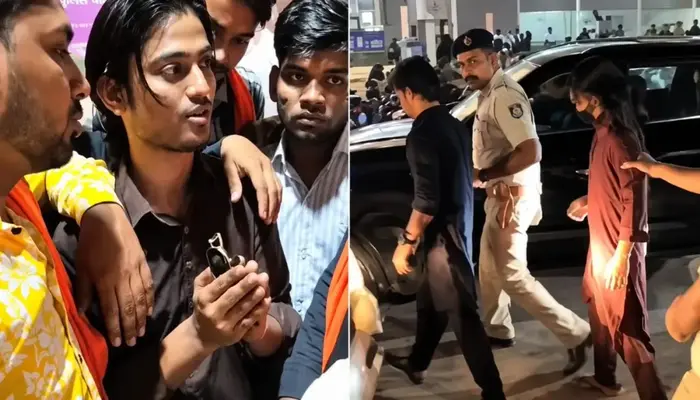
Case Summary
In the Vatva area of Ahmedabad, Gujarat, two Muslim youths, identified as Salman and Kabir, concealed their religious identities and pretended to be Hindus to enter a Garba pandal during Navratri. According to reports, a garba event was organised at the Dwarkesh Farms in Ahmedabad. Reports indicated that the Garba event was being organised with restrictions on participation by non-Hindus. During this time, a Muslim youth, Salman, had entered the premises using the name Rahul, while another Muslim youth, Kabir, accompanied him. Bajrang Dal activists present at the scene became suspicious and began questioning them. Upon confirming their Muslim identity, they were handed over to the police. Following the incident, the two youths were handed over to the police, who took them to the police station for further investigation. A video of the incident also circulated on social media, showing one of the youths speaking with folded hands before police personnel escorted them away.
Why it is Hate Crime ?
This case has been added to the tracker under the primary category of - Attack on Hindu religious representation. Within it, the sub-category selected here is - Defiling religious customs. Sanatan Dharma is not a religion of one book, which is to say that while it has religious scriptures that form the central tenets of the faith, there are several traditions followed through thousands of years, mostly passed from generation to generation orally. There are several such customs and traditions that are followed by various Hindus and Hindu sects. Defiling of these traditions and customs is a breach of an individual or group’s religious practices. Such practices can range from dietary restrictions like not eating non-vegetarian food for a certain period of the year, not eating non-vegetarian food at all, not eating beef since the cow is considered holy in Hinduism, the sanctity of religious customs followed in the house (like many ISCKON devotees), etc. Any malicious action leading to the breach of such traditions or defilement of these traditions owing to animosity towards the faith or for the sake of activism stems not only from the lack of faith in the religion itself but also from disregard for the faith of the devotees who follow the customs/traditions and implicit bias against the faith, the tradition itself. Since these specific traditions are central to the faith of the devotees of that specific sect of Hindus, any non-compliance with these traditional rules would be considered a religiously motivated hate crime. The other sub-category selected here is - Breaking rules of places of worship. Sanatan Dharma is not a religion of one book, which is to say that while it has religious scriptures that form the central tenets of the faith, there are several traditions followed through thousands of years, mostly passed from generation to generation orally. One of these oral traditions or written traditions is the rules of specific temples. Certain temples have rules which are traditional rules, dependent on the worship of the presiding deities. These rules and traditions have been followed for thousands of years whether they find scriptural mention or not. Such traditions are based on the nature and rules of worship of the presiding deity of that temple. Any non-compliance of these traditions owing to animosity towards the faith or for the sake of activism stems not only from the lack of faith in the presiding deity but also disregard for the faith of the devotees of that deity/temple and implicit bias against the faith, the tradition and the deity itself. Since these specific traditions are central to the faith of the devotees of that specific temple and presiding deity, any non-compliance with these traditional rules would be considered a religiously motivated hate crime. Sanatan Dharma is not a religion of one book, which is to say that while it has religious scriptures that form the central tenets of the faith, there are several traditions followed through thousands of years, mostly passed from generation to generation orally. One of these oral traditions or written traditions is the rules of specific temples. Certain temples have rules which are traditional rules, dependent on the worship of the presiding deities. These rules and traditions have been followed for thousands of years whether they find scriptural mention or not. Such traditions are based on the nature and rules of worship of the presiding deity of that temple. Any non-compliance of these traditions owing to animosity towards the faith or for the sake of activism stems not only from the lack of faith in the presiding deity but also disregard for the faith of the devotees of that deity/temple and implicit bias against the faith, the tradition and the deity itself. Since these specific traditions are central to the faith of the devotees of that specific temple and presiding deity, any non-compliance with these traditional rules would be considered a religiously motivated hate crime. This case was included in the Hinduphobia Tracker because it involved the deliberate concealment of religious identity to gain entry into a Hindu religious and cultural gathering during Navratri. The incident took place at a Garba pandal organised at Dwarkesh Farms in the Vatva area of Ahmedabad, Gujarat, Garba during Navratri is not merely a recreational dance event. It is closely associated with the worship of Goddess Durga and the celebration of her nine forms over the nine nights of Navratri. The dances, devotional songs and rituals performed during Garba form part of a religious tradition through which devotees express their reverence for the Goddess. Although Garba events may also serve as public cultural gatherings, their religious significance remains central to their observance. A Garba pandal established for Navratri therefore provides a setting for collective Hindu worship and the expression of religious identity. Deliberately misrepresenting one's identity to gain entry into such a gathering goes beyond an ordinary breach of event regulations, as it constitutes a deceptive intrusion into a space organised around the religious practices and traditions of the Hindu community. Salman's use of the Hindu name to conceal his religious identity and gain entry into the Garba venue demonstrated a deliberate disregard for Hindu religious customs and the sanctity of a gathering organised during Navratri. By misrepresenting his identity to enter a celebration dedicated to the worship of Goddess Durga, he showed disrespect towards the religious traditions and boundaries observed by the Hindu community. Such conduct undermined the rules governing their religious gathering and disregarded the significance of the occasion for Hindu devotees. Religious communities have the right to preserve their religious customs and organise their observances in accordance with their established practices. Deliberately circumventing a gathering's entry rules through the misrepresentation of religious identity constitutes a violation of the trust on which such arrangements depend. In this case, the concealment of identity demonstrated disregard for the customs governing the gathering and for the Hindu community's right to conduct its religious observances according to its traditions. The religious context made the deception particularly significant, as it concerned participation in a celebration dedicated to Goddess Durga rather than entry into an ordinary social venue. The fact that the individuals involved were Muslims and that Salman used the name Rahul to conceal his religious identity underscored that the act was rooted in religious animosity. If he genuinely respected Hindu religious traditions and the significance of Navratri, there would have been no need to hide his identity to enter the gathering. His deliberate concealment demonstrated disregard for Hindu customs and the religious boundaries maintained by the community celebrating the occasion. The issue was not simply that a Muslim individual attended a Hindu religious event, but that he misrepresented his identity to gain entry, showing disrespect for the traditions and arrangements governing the gathering. The incident was relevant to the Hinduphobia Tracker because the deception involved a Hindu religious gathering and demonstrated disregard for the customs associated with Navratri worship. Deliberately concealing one's religious identity to circumvent entry rules at such a gathering constitutes disrespect towards Hindu religious traditions and the community observing them. Therefore, this case has been added to the hate crime database. Disclaimer: The Hinduphobia Tracker records incidents based on when an event occurred or when the victim's ordeal began. It is important to clarify that none of the media sources covering this case has specified the exact date when the incident occurred. Therefore, for documentation purposes, we have recorded the date based on when the incident was reported in the media, 16 October 2026.


Case Status
Arrested


Perpetrators Details
Perpetrators
Muslim Extremists
Perpetrators Range
From 2 To 5
Perpetrators Gender
male
 Sources




