Hindu woman deceived into relationship, pressured to convert to Islam and hurled with casteist abuse by Muslim man pretending to be Hindu
 Meerut, Uttar Pradesh, India
  12 October, 2026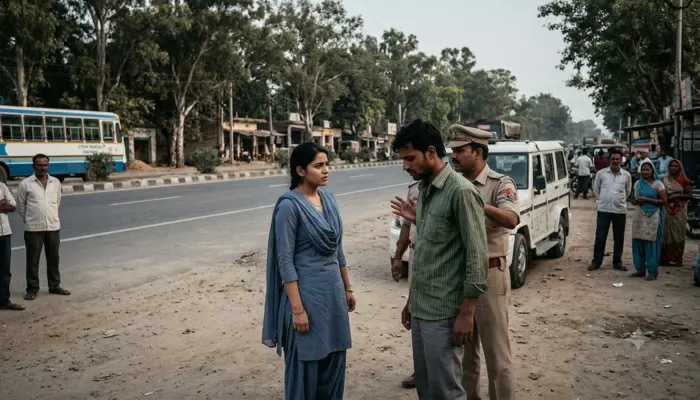
Case Summary
In Daurala, Meerut district, Uttar Pradesh, a Hindu woman was lured into a relationship by a Muslim man who concealed his religious identity and introduced himself as Rajat, pretending to be Hindu. He promised to marry her, sexually exploited her under the pretext of marriage, and, when the question of marriage arose, pressured her to convert to Islam. The victim was also gang-raped by him and two of his friends. They physically assaulted her when she objected to the sexual exploitation and hurled casteist abuse at her. The woman lived in Shivaji Puram, near Soot Mill Chauraha, Aligarh, Uttar Pradesh. She first met the Muslim man at a fair, where he introduced himself as Rajat and developed a friendship with her. He then lured her into a relationship and promised to marry her. The Muslim man subsequently rented a room in Aligarh, where they began living together. According to the details contained in her complaint, the man and two of his friends subjected her to gang rape, and the three men continued sexually exploiting her for approximately one month. Whenever she objected, she was beaten, and casteist words were used against her. A few days before the highway incident, the man took the woman to his residence in Mansoorpur, Muzaffarnagar district, on the pretext of marrying her. There, he continued sexually exploiting her and pressured her to convert to Islam when the question of marriage arose. On 13 October 2026, at approximately 1.00 pm, an incident of physical assault took place near Sakauti Stand on the Delhi–Dehradun Highway, in the Daurala area of Meerut district. Aadesh Chaudhary, the provincial head of the Yuva Bajrang Dal, was passing along the highway when he saw the man slapping the woman in public. The woman had asked the man to show his Aadhaar card to establish his actual identity, but he refused, leading to an argument that escalated into physical violence. The man continuously slapped and assaulted her, causing a commotion at the location. When Aadesh Chaudhary intervened, the man boarded a roadways bus and left the scene. Chaudhary then spoke to the woman, who told him about the man's identity and the circumstances of their relationship. Chaudhary then arranged for the woman to call the man and ask him to return to Sakauti. The man returned to the location, and the police were informed. The Daurala police arrived at the scene and took both the woman and the man to Daurala Police Station for questioning. Inspector Suman Kumar Singh, the officer in charge of Daurala Police Station, stated during the initial inquiry that the two had previously been friends. The police informed the families of both parties and began examining the circumstances of the incident. On the night of 13 October 2026, the woman underwent counselling at Daurala Police Station. On 14 October 2026, her family members arrived at the police station, and she sought formal action against the man and his two friends. She submitted a written complaint describing the relationship, the concealment of religious identity, the promise of marriage, the rented accommodation in Aligarh, the gang rape, continuing sexual exploitation, physical violence, casteist abuse, the journey to Mansoorpur and the pressure to change religion. Following the complaint, the police began proceedings against the three accused. Inspector Suman Kumar Singh said a case was being registered based on the woman's complaint and that strict action would be taken against the accused. Circle Officer Shiv Thakur of Daurala said the matter was under investigation and that further action would depend on the findings.
Why it is Hate Crime ?
The primary category selected in this case is: Crimes against women in relationships and other sexual crimes. The first subcategory selected is: Man pretends to be Hindu. The tertiary category selected is: Name Changed. When a non-Hindu man pretends to be a Hindu to deceive a Hindu woman into a relationship, the act is seen as triggered by malafide intentions. In some cases, the woman eventually accepts the man’s original religious identity and converts after the man’s identity is revealed. These cases could be argued as cases of religious brainwashing and a result of the pressure a woman feels after getting into a relationship with a man. The woman, it can be argued, also changed her religious identity because of the stigma she believes she might face if she chooses to walk out of a deceptive relationship. However, for the purpose of documenting hate crimes, the cases in this subcategory are limited to those where there is explicit violence aimed at religious conversion against the wishes of the victim (force-feeding beef, blackmailing with intimate videos, rape on refusal to convert, etc), or if the woman herself complains of the man’s religious deception. In such cases, it is established that the deception of the non-Hindu man had a specific aim of religious conversion or targeting of the victim due to her Hindu religious identity, therefore, making it a religiously motivated hate crime. The other subcategory selected is: Forced conversion before marriage. In such cases, a non-Hindu man is in a relationship with a Hindu woman when the pressure to convert her religion begins to manifest. In such cases, typically, two patterns emerge. First, when the relationship is consensual, and the religious identity of the perpetrator is known to the Hindu woman in the relationship, however, at some point during the relationship, the non-Hindu man starts to force the victim to convert her religion and give up her Hindu religious identity. The second is when the woman gets into a marriage with the man pretending to share her faith. Later, when the truth is revealed, the man starts pressuring the woman to convert her religion and give up her religious identity. In both the situations, the methods used to force the victim to convert her religion often revolve around force-feeding beef, forcing her to wear hijab, forcing her to read the Kalma or even pressurizing the victim to do ‘Nikah’, which is marriage under Islamic law, with a prerequisite being conversion to Islam. Cases where a Hindu woman consensually converts to Islam in a relationship will be left out of the hate crime database, even though it could be argued in several cases that the conversion was a result of religious brainwashing. The other subcategory selected is: Assault or threat upon refusal to convert. When Hindu women are in a relationship with non-Hindu men, there are cases where the woman faces threats or assault after she refuses to convert and change her religious identity owing to pressure/force by the non-Hindu man. Such relationships may be consensual with the religious identity of the non-Hindu man known to the victim. Somewhere along the relationship, the non-Hindu man starts pressurizing the Hindu woman to convert to Islam and upon her refusal, assaults or threatens the victim. Such cases are driven by specific religious motivations and against the religious identity of the victim and are therefore qualified as hate crimes. Cases where the Hindu woman converts to Islam and does not file a complaint about the force or threat, are not considered a part of the hate tracker, even though, it may be argued that the woman was brainwashed or threatened to convert to Islam. The other primary category selected is: Hate speech against Hindus. The subcategory selected is: Anti-Hindu slurs, mocking faith. Anti-Hindu slurs and the deliberate mocking of the Hindu faith owing to religious animosity involve the usage of derogatory terms, stereotypes, or offensive references to religious practices, symbols, or figures. One of the common anti-Hindu slurs used against Hindus is “cow-worshipper” and “cow piss drinker”. The intention of using this term is to demean and mock Hindus as a group and their religious beliefs since Hindus consider the cow holy. Additionally, some symbols and the slurs attached to them have a historical context that exacerbates the insult, hate, stereotyping, dehumanisation and oppression against Hindus. Cow worship has been used for centuries to denigrate Hindus, insult their faith and oppress Hindus specifically as a religious group. There has been overwhelming documentation about how cow slaughter has been used to persecute Hindus with cow meat being thrown in temples and places of worship. There has also been overwhelming documentation where cow meat (beef) has been force-fed to Hindus to either forcefully convert them to Islam or denigrate their faith. Apart from cow worship, the Swastika – which holds deep religious significance for the Hindus – has also been misinterpreted and distorted to use as a slur against Hindus. Similarly, the worship of the Shivling has been used by supremacist ideologies and religions to denigrate Hindus owing to religious animosity. Such slurs and denigration stem out of inherent animosity and hate towards Hindus and their faith, therefore, it is categorised as hate speech targeted at Hindus specifically owing to their religious identity. This case represented a clear instance of religiously driven hate crime, as sexual violence and pressure to convert were linked to the Hindu victim’s relationship with a Muslim man who concealed his religious identity. The perpetrator used their friendship to lure her into a relationship, where he sexually exploited her and, along with two friends, subjected her to gang rape, and then pressured her to convert to Islam whenever she discussed marriage. The combination of sexual violence, religious identity deception, marriage coercion and casteist abuse demonstrated sustained religious hostility towards the Hindu victim. To begin with, the man introduced himself as “Rajat”, a Hindu name, while concealing his Muslim identity. This concealment became the case's central religious marker because the relationship developed under an identity the woman later understood to be false. For the Hindu woman, such deception undermined her ability to make an informed personal choice. The religious dimension lay in the misrepresentation of identity, not merely in the fact that the two individuals belonged to different religious communities. Of particular significance, the promise of marriage formed the basis of the relationship. The woman stated that the man befriended her, promised to marry her and subsequently lived with her in rented accommodation. In the context of concealing religious identity, the promise of marriage became significant because it shaped her trust and expectations for their future together. This affected the Hindu woman's autonomy and personal choices, which had been undermined through deliberate religious-identity deception. This act involved manipulating trust and expectations about marriage, rather than simply the existence of an interfaith relationship. More directly concerning religious freedom, the man pressured the woman to convert to Islam when the question of marriage arose. This was the clearest religious marker directly involving religious conversion. The complaint described pressure to change religion in connection with the proposed marriage, demonstrating that the woman's freedom of conscience and right to retain her own religious identity had been insulted and disrespected. The concern centred on the fact that a Hindu woman was pressured to abandon her faith as a condition associated with a relationship or marriage. Such pressure interfered with her religious autonomy and personal dignity. Furthermore, the casteist abuse hurled at the Hindu woman added another religious dimension to the woman’s humiliation and mistreatment. She stated that derogatory caste-related words were used against her when she objected to the treatment she experienced. It can be argued that a caste-specific slur is aimed at her micro identity of belonging to the Dalit section of the Hindu community and not her Hindu identity itself. However, in Abrahamic religions, the micro identities of caste, region, and language are secondary. It is the religious identity that drives the animosity of the perpetrator against the Hindu victim. In this case, while the accused hurled caste abuses at the victim, the animosity was driven by his animosity towards Hinduism and Hindus. Most gravely, the man repeatedly sexually exploited her and gang-raped her with two of his friends. Considered alongside the concealment of religious identity, promise of marriage and pressure to convert to Islam, the sexual violence formed part of a deeply troubling account of exploitation. The combination of these acts revealed the seriousness of the woman’s vulnerability, the violation of her personal autonomy and the pressure placed on her religious identity. Collectively, the concealment of religious identity, the promise of marriage, the pressure to convert to Islam, the casteist abuse and the sexual violence portrayed a disturbing pattern of exploitation that displayed the targeting of the woman's personal dignity, religious autonomy and safety. The convergence of these acts highlighted the significance of how religious identity had been used as a means of deception, coercion and control, particularly in the context of the pressure to abandon her existing faith. Accordingly, this case has been documented in the Hinduphobia Tracker's Hate Crime Database as an instance of religiously motivated hostility directed against Hinduism and the religious identity of the Hindu community. Disclaimer: The Hinduphobia Tracker records incidents based on when an event occurred or when the victim's ordeal began. Media reports covering this case did not specify the exact date the relationship and associated offences began. Therefore, for documentation purposes, we have recorded the date as 13 October 2026, the earliest date mentioned in the reports, when the assault on the woman occurred on the Sakauti Highway. This has been used for documentation purposes only.
Victim Details
Total Victim
1
Deceased
0
Gender
- Male 0
- Female 1
- Third Gender 0
- Unknown 0
Caste
- SC/ST 1
- OBC 0
- General 0
- Unknown 0
Age Group
- Minor 0
- Adult 0
- Senior Citizen 0
- Unknown 1


Case Status
Complaint filed


Perpetrators Details
Perpetrators
Muslim Extremists
Perpetrators Range
One Person
Perpetrators Gender
male
 Sources




