Hindu woman pressured to convert to Islam, forced to observe namaz and roza, pressured to eat beef and assaulted for visiting a temple by Muslim man
 Patna, Bihar, India
  11 October, 2014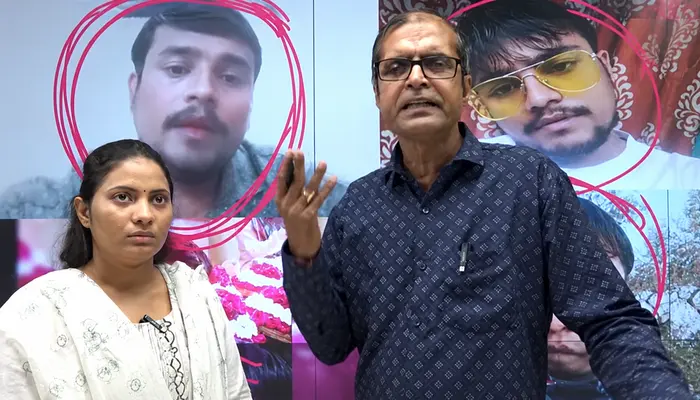
Case Summary
In Patna, Bihar, a Hindu woman named Chandni was pressured to convert to Islam by a Muslim man named Mohammad Imtiaz, with whom she had been in a live-in relationship for years. She was forced to observe namaz and roza and was pressured to eat beef in connection with promises of marriage. The woman was also beaten when she visited a Hindu temple. The Hindu woman, Chandni, had been married before, but the marriage ended unsuccessfully, leaving her to raise her daughter on her own. She then met Imtiaz, a friend of her former husband. Imtiaz then took her with him and promised to marry her, provide for her, and give her a secure life. Trusting his assurances, she entered into a live-in relationship with him. However, whenever she asked about marriage, he avoided the question and instead asked when she would convert to Islam. The relationship continued for 11 years, during which she experienced prolonged distress and abuse. During the relationship, Chandni’s identity documents were changed. Her surname was changed from Kumari to Khatun, and the new name appeared across her documents. She also said that Imtiaz entered his father’s name on her Permanent Account Number (PAN) card. Chandni also recounted an incident from the time she lived in a rented house in Goria Math. During a relative’s wedding, she visited her marital family’s home and, at around 12.30 am, caught Imtiaz with a woman named Suruti. She said she was no longer living with him at the time and subsequently had to vacate her rented accommodation. She further described being confined inside a house in Phulwari Sharif for periods of approximately two months. The accused also prevented her from wearing clothes because he thought she might otherwise escape from the house. Although Chandni separated from Imtiaz about a year ago, the harassment continued. She stated that he beat her whenever he encountered her on the road. Recalling one incident, she said she had returned from work and was taking her ill child to a doctor when Imtiaz was standing on the road below her residence. While she was carrying the child, he grabbed her and assaulted her. Chandni also disputed a news report that described her as having been caught with a boyfriend. She maintained that she had been taking her child to the doctor and said a reporter had been paid to publish a misleading report about her. Chandni also described the impact of the violence on her children, stating that her young sons witnessed the assaults and repeatedly pleaded with their father to stop beating her. She further reported that one of the children’s hands had been burnt. Chandni said she submitted a written complaint about the incident to the Deputy Superintendent of Police (DSP) associated with Gandhi Maidan and received an acknowledgement, but no further action was taken on her complaint. To seek protection, Chandni approached Phulwari police station, Kotwali police station, the women’s helpline, and the DSP associated with Gandhi Maidan. She submitted applications several times and was required to complete bond-related formalities; despite these steps, the harassment and assaults continued. She also recounted being told by police that there was no assault case in the circumstances she had described and that Imtiyaz would be released. Chandni further described threats made by Imtiaz. When her advocate telephoned him, he threatened to beat her. According to Chandni, her advocate recorded the conversation on her phone. Imtiaz repeatedly telephoned her, verbally abused her and threatened to drive her to the point of suicide. She said a recording of this threat was on her own phone. During the conversation with her advocate, Imtiaz also referred to his connections with influential people and the High Court, claiming that others would be unable to take action against him. The harassment extended to Chandni’s rented home, where Imtiaz entered the property, damaged her belongings and broke the camera installed there. She was beaten and sustained an injury to her shoulder. According to her, he repeatedly asserted that nobody could take action against him and challenged her to do whatever she could. She added that people who offered to help her were drawn into false accusations, with Imtiaz suggesting that she was involved with those who supported her. Chandni also spoke about Imtiaz’s interactions with other women. He had travelled to Delhi with other women and posted pictures on social media showing hotel visits or stays. She maintained that he targeted Hindu women and described these incidents as part of the circumstances that had undermined her trust in him. Appealing to the authorities for intervention, Chandni sought justice and protection from Imtiaz, making it clear that she did not wish to continue the relationship. She said she wanted to live and raise her children independently, but feared continued assaults, threats and harassment. She urged the authorities to ensure her safety and put an end to the violence and intimidation at her rented residence.
Why it is Hate Crime ?
The primary category selected in this case is: Crimes against women in relationships and other sexual crimes. The subcategory selected is: Forced conversion before marriage. The tertiary categories selected are: Forced to follow non-Hindu religious practices and Forced to eat beef. In such cases, a non-Hindu man is in a relationship with a Hindu woman when the pressure to convert her religion begins to manifest. In such cases, typically, two patterns emerge. First, when the relationship is consensual and the religious identity of the perpetrator is known to the Hindu woman in the relationship, at some point during the relationship, the non-Hindu man starts to force the victim to convert her religion and give up her Hindu religious identity. The second is when the woman gets into a marriage with the man pretending to share her faith. Later, when the truth is revealed, the man starts pressuring the woman to convert her religion and give up her religious identity. In both the situations, the methods used to force the victim to convert her religion often revolve around force-feeding beef, forcing her to wear hijab, forcing her to read the Kalma or even pressurizing the victim to do ‘Nikah’, which is marriage under Islamic law, with a prerequisite being conversion to Islam. Cases where a Hindu woman consensually converts to Islam in a relationship will be left out of the hate crime database, even though it could be argued in several cases that the conversion was a result of religious brainwashing. The other subcategory selected is: Assault or threat upon refusal to convert. When Hindu women are in a relationship with non-Hindu men, there are cases where the woman faces threats or assault after she refuses to convert and change her religious identity owing to pressure/force by the non-Hindu man. Such relationships may be consensual with the religious identity of the non-Hindu man known to the victim. Somewhere along the relationship, the non-Hindu man starts pressurizing the Hindu woman to convert to Islam and upon her refusal, assaults or threatens the victim. Such cases are driven by specific religious motivations and against the religious identity of the victim and are therefore qualified as hate crimes. Cases where the Hindu woman converts to Islam and does not file a complaint about the force or threat, are not considered a part of the hate tracker, even though, it may be argued that the woman was brainwashed or threatened to convert to Islam. The other subcategory selected is: Brainwashed and/or groomed. The tertiary category selected is: Pattern of targeting Hindus. In our database, we have not added incidents where women have converted to another religion of their free will and no allegations of forced/involuntary conversion have been made. However, there are certain cases of conversion where the consent itself is a result of the brainwashing or grooming of a minor by the non-Hindu perpetrator trying to victimise a woman for her Hindu religious identity. The phenomenon of grooming points to non-Hindu perpetrators identifying their Hindu victims’ vulnerabilities and exploiting them over months and sometimes years, to extract the supposed ‘consent’ in order to convert their religion. In most cases of grooming, the victims are minors or the grooming started when the victim was a minor. In other cases of grooming, the non-Hindu perpetrator brainwashes and grooms a minor victim to extract their trust and then proceeds to rape them repeatedly with the intent of converting them to their faith. It is pertinent to understand here that when the victim is a minor, the ‘consent’ to convert or enter into a romantic relationship with an adult itself is redundant – addressed by POCSO. While every case of conversion of a minor and incidents of establishing a physical relationship with a minor by an adult is a crime, for the purpose of this database, a case would be considered a hate crime only if there is a distinct religious angle to the grooming. For example, in the UK, if a Hindu minor is targeted by Pakistani grooming gangs, it would be considered a hate crime because the victims are specifically targeted owing to their non-Muslim religious identity with the perpetrators being Muslim. In other cases, if a Hindu minor is brainwashed into entering a physical relationship with the non-Hindu adult perpetrator and the family alleges grooming/brainwashing of the minor to convert her religion, it would form a part of this database. If the victim is a Hindu adult, the case would form a part of this database only if the victim herself says that she was brainwashed/groomed to convert her religion. However, if the victim is deceased (murdered or otherwise), the case would form a part of this database if her family/friends provided testimony that the victim was brainwashed/groomed to convert her religion. Since these crimes have a distinct religious angle where the victim is being targeted owing to her Hindu religious identity, these cases are considered a hate crime. The other category relevant here is: Attack not resulting in death. Within this, the subcategory selected is: Attacked for Hindu identity. In several cases, Hindus are attacked merely for their Hindu identity without any perceived provocation. A classic example of this category of religiously motivated hate crime is a murder in 2016. 7 ISIS terrorists were convicted for shooting a school principal in Kanpur because they got ‘triggered’ seeing the Kalava on his wrist and tilak that he had put. In this, the Hindu victim had offered no provocation except for his Hindu religious identity. The motivation for the murder was purely religious, driven by religious supremacy. Such cases where Hindus are targeted merely for their religious identity would be documented as a hate crime under this category. This incident has been documented in the tracker because it reveals multiple indicators that religion was central to the abuse inflicted on the victim. Here, the Muslim accused did not hide his identity. In such cases, the woman is likely made to believe that her faith would not stand in the way of their relationship. Here too, taking the accused’s word for it, the Hindu woman entered into a romantic relationship with the Muslim man. The Muslim man continued to take advantage of her physically under the guise of marriage, but when the woman sought clarity about their future, the discussion repeatedly shifted towards religious conversion. This placed her Hindu identity at the centre of a relationship in which she had expected commitment and security. Being pressured to abandon her faith in the context of a promised marriage represented a direct challenge to her religious autonomy and the freedom to retain her beliefs. This marker mattered because it linked marriage to conversion. Rather than addressing her request for a clear marital commitment, Imtiaz repeatedly raised the question of when she would change her religion. This made Chandni’s continued Hindu identity a point of contention within the relationship. Secondly, the coercion into Islamic religious practices, particularly namaz and roza, represented pressure on Chandni to alter the way she practised her faith. Namaz refers to Islamic prayer, while roza refers to fasting, particularly during Ramadan. Chandani was made to perform these practices despite identifying as a Hindu woman. The religious significance lay not simply in her exposure to another religion’s customs, but in her account that participation had not been voluntary. Hinduism encompasses diverse forms of worship, prayer, ritual, and personal devotion, and Chandni’s right to follow her own religious traditions was central to her religious autonomy. When she was pressured to participate in practices associated with another faith, and that pressure felt compulsory, it undermined that autonomy and caused distress by imposing an expectation of religious conformity on her. Moreover, changing Chandni’s name and identity documents constituted another religious marker: her surname was changed from Kumari to Khatun, and Imtiaz’s father’s name was entered on her Permanent Account Number (PAN) card. These changes were significant as she was being pressured to change her Hindu religious identity. Her original surname reflected her Hindu identity, whereas the replacement surname followed Muslim naming conventions. In this context, the changes showed interference with her personal identity and the possible imposition of a different religious identity without her consent. A person’s name forms an important part of their individual, familial and cultural identity, and changes to official records can carry particular significance when they occur alongside pressure to abandon an existing faith. The pressure to eat beef constituted another distinct religious marker because Chandni described it as part of the pressure she experienced during the relationship. The cow holds profound religious and cultural significance and is associated with reverence, nourishment and sacred traditions. Hindu attitudes and dietary practices vary, but abstaining from beef is an important religious commitment for Hindu individuals and communities, as cows are one of the most sacred animals in Hinduism. The pressure to consume beef therefore carried significance beyond an ordinary disagreement over food. It concerned a personal boundary connected to her religious beliefs. When dietary choices are tied to faith, pressure to violate them can cause distress and undermine the freedom to practise that faith. Also, Chandni’s statement that she was beaten for visiting a Hindu temple raised a particularly serious concern about interference with her religious freedom. A temple visit represents an important form of worship and spiritual connection for Hindus, providing a space for prayer, rituals and participation in religious life. Chandni’s account connected her visit to a Hindu temple with physical violence, making this a distinct religious marker from the pressure to convert, observe namaz and roza, or eat beef. If a person is subjected to violence for visiting a place of worship, the consequences extend beyond the immediate physical harm. Such treatment creates fear around exercising religious freedom and discourages future participation in religious practices. The assault in connection with temple attendance therefore represented a direct conflict between her wish to practise Hinduism and the treatment she described experiencing within the relationship. Lastly, Chandni’s account concerning other Hindu women confirmed that the conduct she described formed part of a broader pattern. She stated that Imtiaz pursued Hindu women and referred to an incident involving a woman named Suruti, whom she said she had caught with him. Her reference to another woman was relevant because it extended her account beyond her own relationship and raised questions about Imtiaz’s interactions with other Hindu women. Chandni further maintained that he pursued Hindu women in particular. This showed that women’s religious identities shaped the relationships and conduct she described. Collectively, these religious markers indicated a pattern of pressure on Chandni’s Hindu identity, religious practices, and freedom of worship. The combination of pressure to convert to Islam, the imposition of Islamic religious observances, pressure to consume beef, violence linked to temple visits, changes to her name and identity documents, and her account concerning other Hindu women demonstrated religiously motivated hostility towards her Hindu identity. Taken together, these factors form the basis for documenting the case's religious dimension. Accordingly, this case has been documented in the Hinduphobia Tracker's Hate Crime Database as an instance of religiously motivated hostility directed against Hinduism and the religious identity of the Hindu community. Disclaimer: The exact date on which the Hindu woman and the Muslim perpetrator first came into contact was not specified in the available sources. However, the victim stated that they had been in a relationship for 11 years and that she had been living separately from him for approximately one year at the time of the interview. In this case, we used 12 October 2014 as the indicative incident date, derived by aligning the known relationship duration with the article's publication date of 12 October 2026. This date has been recorded for documentation purposes only. The Hinduphobia Tracker acknowledges that Chandni stated that multiple Hindu women had been targeted by the Muslim perpetrator. However, as the available account did not provide a specific number or sufficient details to document the other women as individual victims, the currently documented case centres on Chandni, who was pressured to convert to Islam and subjected to anti-Hindu religious practices. Accordingly, the victim count has been recorded as 1, reflecting the one Hindu woman whose experiences were specifically documented in the available account. This count is for documentation purposes only.
Victim Details
Total Victim
1
Deceased
0
Gender
- Male 0
- Female 1
- Third Gender 0
- Unknown 0
Caste
- SC/ST 0
- OBC 0
- General 0
- Unknown 1
Age Group
- Minor 0
- Adult 1
- Senior Citizen 0
- Unknown 0


Case Status
Complaint not filed


Perpetrators Details
Perpetrators
Muslim Extremists
Perpetrators Range
One Person
Perpetrators Gender
male
 Sources




