“There is a lot of Hinduphobia in the industry”: Hindu TV producer mocked for being a Hindu, visiting temples and wearing religious symbols
 Mumbai, Maharashtra, India
  9 October, 2026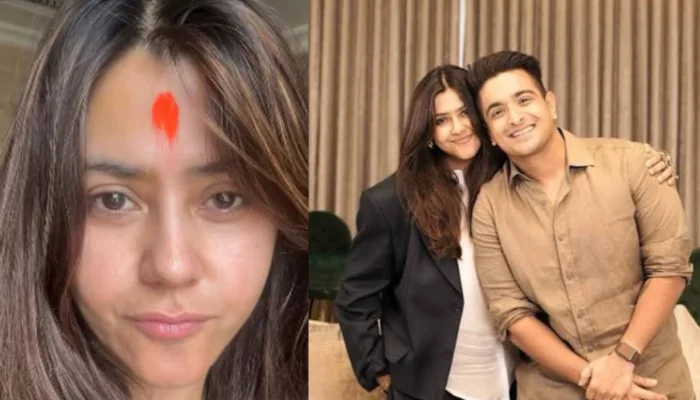
Case Summary
TV and Bollywood producer Ektaa Kapoor was targeted for openly practising her Hindu faith. She was called a “freak” and mocked for wearing a tilak and kalava (sacred thread) and for visiting temples. Kapoor spoke about her experiences of being ridiculed for expressing her religious identity and highlighted the prevalence of Hinduphobia in the entertainment industry. The incident came to light in October 2026, when Kapoor discussed her experiences during a conversation with YouTuber Ranveer Allahbadia on his podcast, "The Ranveer Show" (TRS). The episode aired on 10 October 2026, and a clip from the conversation subsequently went viral on X, formerly known as Twitter. During the conversation, Kapoor spoke about the prejudice she had encountered for wearing Hindu religious symbols and the reluctance to embrace Hindu folklore and epics in the entertainment industry. Speaking about the issue, she said, “We have so much of, I am going to say it on camera, Hinduphobia. And we have so much of phobia with what do we call...we are okay with animation, but we are not okay with discussing folklore and mythology.” She added that she was comfortable bringing stories rooted in Indian folklore, Hindu Puranic traditions and epics to the screen and wanted audiences to become more accepting of such narratives. Her remarks came in the context of her latest film, "The Vvaan", which draws from Indian Hindu folklore. Kapoor also recalled an incident from her younger days when she was mocked for wearing a tilak. She said that someone had questioned her appearance and called her a “freak” because of the religious symbol she wore. Recounting the incident, she said, “When I used to wear a tika, when I was younger, I remember somebody called me, like, ‘Why you dress like a freak?’ I said, 'Wearing a tika and wearing a dhaaga is dressing like a freak?'” During the podcast, Allahbadia also pointed out that Kapoor had been called a “tantrik” in a derogatory and mocking manner. In response, the producer discussed how wearing a tilak and openly expressing one's religious beliefs invited judgement in the entertainment industry. Kapoor further recalled an incident in which she went to a club after visiting a temple. When someone questioned her about having visited a temple in a derogatory tone, she responded, “Yeah. What's so shocking?” Allahbadia observed that times were changing, to which Kapoor agreed. She said that she had been ahead of her time in some ways and was now embracing a more contemporary outlook. The conversation also touched upon her approach to filmmaking and the reception of stories rooted in Indian and Hindu folklore, with Kapoor expressing support for bringing such narratives to a wider audience.
Why it is Hate Crime ?
This case is being added to the tracker under the primary category: Hate Speech against Hindus. The subcategory selected is: Anti-Hindu slurs, mocking faith. Anti-Hindu slurs and the deliberate mocking of the Hindu faith owing to religious animosity involve the usage of derogatory terms, stereotypes, or offensive references to religious practices, symbols, or figures. One of the common anti-Hindu slurs used against Hindus is “cow-worshipper” and “cow piss drinker”. The intention of using this term is to demean and mock Hindus as a group and their religious beliefs since Hindus consider the cow holy. Additionally, some symbols and the slurs attached to them have a historical context that exacerbates the insult, hate, stereotyping, dehumanisation and oppression against Hindus. Cow worship has been used for centuries to denigrate Hindus, insult their faith and oppress Hindus specifically as a religious group. There has been overwhelming documentation about how cow slaughter has been used to persecute Hindus with cow meat being thrown in temples and places of worship. There has also been overwhelming documentation where cow meat (beef) has been force-fed to Hindus to either forcefully convert them to Islam or denigrate their faith. Apart from cow worship, the Swastika – which holds deep religious significance for the Hindus – has also been misinterpreted and distorted to use as a slur against Hindus. Similarly, the worship of the Shivling has been used by supremacist ideologies and religions to denigrate Hindus owing to religious animosity. Such slurs and denigration stem out of inherent animosity and hate towards Hindus and their faith, therefore, it is categorised as hate speech targeted at Hindus specifically owing to their religious identity. This case exemplifies religiously driven hate, as Hindu victim Ektaa Kapoor faced hostility for openly practising her faith. She was mocked for wearing a tilak and kalava, visiting temples and expressing her Hindu identity. The ridicule directed at these religious practices demonstrated deep-seated prejudice against Hinduism and its adherents, with Kapoor being subjected to derogatory treatment simply for expressing her religious beliefs. These practices hold deep religious and spiritual significance in Hinduism and form an integral part of the faith. Temples serve as sacred spaces for worship, prayer, darshan and communion with the divine, while visiting them is an important expression of devotion. A tilak, applied to the forehead, signifies devotion to a deity, religious affiliation and commitment to one's faith. Similarly, the kalava, also known as a mauli or sacred thread, is worn as part of Hindu religious and ritual traditions and is associated with auspiciousness, protection and religious observance. Both symbols serve as visible expressions of Hindu religious identity and devotion. Against this religious context, the hostility directed at Kapoor for visiting temples and wearing Hindu religious symbols demonstrated that she was being targeted for practising her faith. The mockery of these practices reflected prejudice towards Hinduism and its adherents, reducing meaningful expressions of religious devotion to objects of ridicule. Such treatment demonstrated religious hostility towards Kapoor's Hindu identity and constituted an act of mocking her faith. The fact that Kapoor was also called a “freak” merely for wearing a tilak and kalava further demonstrated the depth of this hostility. Using derogatory language to ridicule someone for wearing religious symbols reduced an ordinary expression of religious devotion to something supposedly abnormal or worthy of contempt. Such remarks were not directed at any misconduct on her part but at the visible expression of her Hindu identity. This demonstrated the religious prejudice underlying the mockery and the hostility directed towards Hinduism and its adherents. Furthermore, Kapoor herself explicitly described the prejudice she had encountered as “Hinduphobia”. Her identification of the hostility as anti-Hindu prejudice, alongside the specific instances she recounted of being mocked for wearing religious symbols and questioned for visiting temples, provided a clear indication of the religious nature of the targeting she experienced. These details placed the incident beyond a merely ambiguous situation in which the motive was unclear and highlighted the deep-seated hostility towards the expression of Hindu religious identity. Kapoor's observation that Hinduphobia was prevalent across the entertainment industry also pointed to a disturbing pattern of prejudice rather than an isolated experience. Her account demonstrated that Hindu religious expression can become a subject of ridicule and hostility within an industry with considerable influence over cultural representation. The normalisation of such attitudes towards Hindu beliefs and practices demonstrates the prejudice faced by those who openly express their Hindu identity in professional and public spaces. In this case, although the identities and exact number of the perpetrators were not known at the time of documentation, the ordeal described by Ektaa Kapoor demonstrated that she had faced repeated mockery and hostility connected to her Hindu faith and religious identity. The instances of ridicule for wearing a tilak and kalava, questioning her temple visits, and the wider prejudice she described provided grounds for identifying the incident as religiously motivated. Therefore, this case meets the parameters for inclusion in the Hinduphobia Tracker's hate crime database as an instance of hostility directed at a Hindu individual for expressing and practising her faith. Disclaimer: The Hinduphobia Tracker records incident dates based on when the victim's ordeal began, rather than when the incident was reported in the media. However, in this case, the exact date when Ektaa Kapoor was targeted could not be established, as the incidents she described had occurred in the past and were revealed during the podcast much later. Hence, 10 October 2026, the date on which the podcast episode was released, has been selected as the indicative incident date for documentation purposes only. The exact location where the incidents of religious mockery and hostility against Ektaa Kapoor took place could not be established at the time of documentation. Hence, Mumbai, Maharashtra, India, where Kapoor was currently based at the time of documentation, has been recorded as the indicative location for documentation purposes only. This does not imply that the incidents occurred in Mumbai.
Victim Details
Total Victim
1
Deceased
0
Gender
- Male 0
- Female 1
- Third Gender 0
- Unknown 0
Caste
- SC/ST 0
- OBC 0
- General 1
- Unknown 0
Age Group
- Minor 0
- Adult 1
- Senior Citizen 0
- Unknown 0


Case Status
Unknown


Perpetrators Details
Perpetrators
Unknown
Perpetrators Range
Unknown
Perpetrators Gender
unknown
 Sources




