Hindu faith, scriptures, deities and devotees repeatedly mocked through social media posts in Lakhimpur Kheri, Uttar Pradesh
 Lakhimpur, Uttar Pradesh, India
  12 October, 2026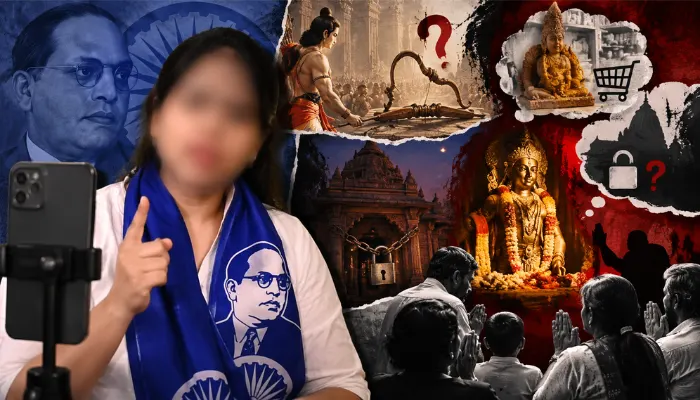
Case Summary
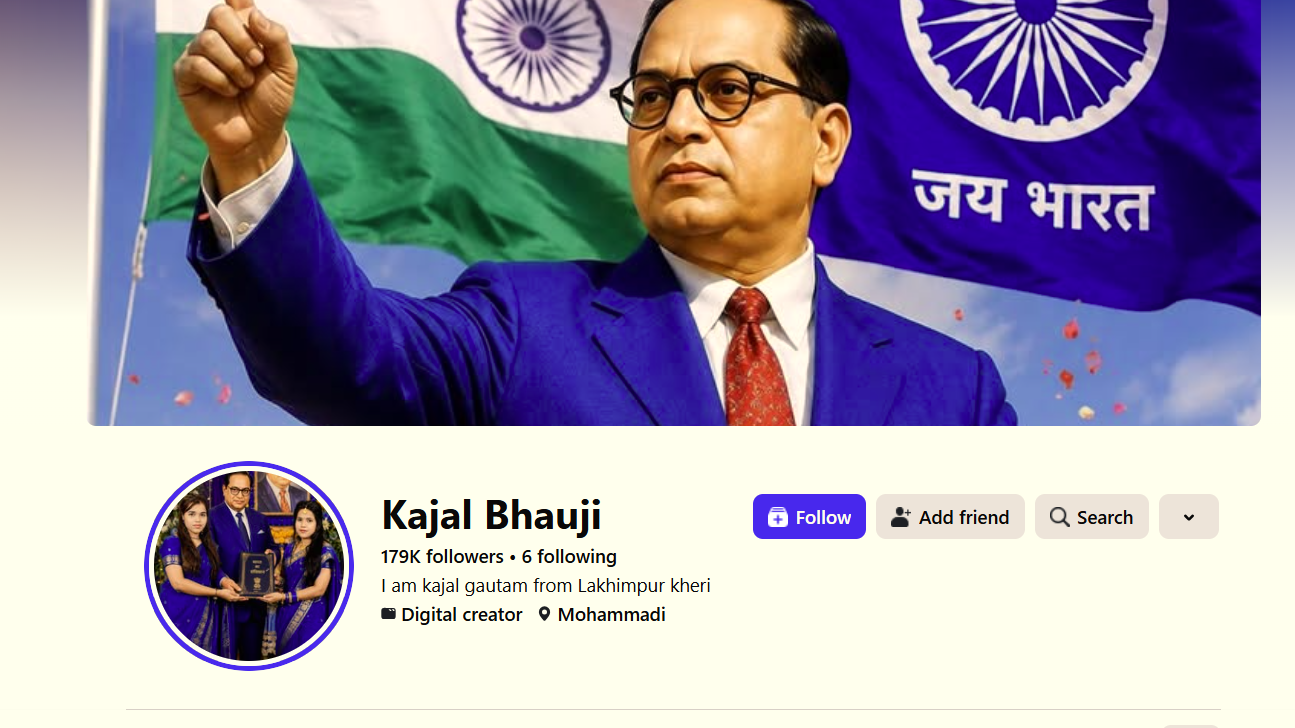
An Ambedkarite woman named Kajal Gautam, from Lakhimpur Kheri, Uttar Pradesh, has repeatedly posted social media content mocking Hindu religious beliefs, temple practices, idol worship and Hindu devotees. Her posts question Hindu scriptures and religious customs while repeatedly portraying Hindu faith as blind belief and its followers as “Andhbhakts”. The content drew public attention after a social-media user tagged Kheri Police and senior Uttar Pradesh Police officials, seeking action against her. The Hinduphobia Tracker independently reviewed Kajal Gautam’s Facebook account, operating under the user ID “Kajal Bhauji”, which had approximately 179K followers, and found multiple videos displaying a recurring pattern of denigrating Hindu faith, scriptures, saints, deities, devotees and religious practices. In one post, Gautam, who appears to be a pro-Ambedkarite, targeted the Ramayana and questioned the episode in which the bow was brought to the assembly for Sita’s swayamvar. She asked who brought the bow there and challenged believers to answer, then described the religious belief surrounding such narratives as “blind faith” and a “joke”. In another post, she mocked faith in Hindu temples and deities by saying temples are locked at night. She argued that priests locked temple doors because they trust a physical lock more than God to protect the belongings kept inside, using the practice of securing temples to ridicule belief in divine power. Gautam also posted remarks concerning Akbar’s wives, stating that he had Rajput and Brahmin wives and directing the comment towards people she called “Andhbhakts”. The remark formed part of the series of posts in which she used derogatory language while addressing people identified with Hindu religious and cultural beliefs. In another post, Gautam directly targeted Hindu idol worship. She mocked devotees for folding their hands before an idol bought from a market and asking it for wealth, arguing that if the idol could provide wealth, the shopkeeper would not have sold it in the first place. Across the posts, Gautam repeatedly used Hindu scripture, temple practices, idols and the devotional conduct of worshippers as subjects of ridicule. Her remarks reduced Hindu religious belief to blind faith, questioned the value of temple worship and mocked devotees for placing faith in consecrated idols. The content drew objections on social media, with a complaint addressed to Kheri Police, Lucknow Range and senior Uttar Pradesh Police officials stating that Gautam was continuously uploading insulting and abusive material against Hindu Dharma and the BJP. The complainant sought her arrest and police action over the posts.
Case Images
Why it is Hate Crime ?
The primary category selected for this case is: Hate speech against Hindus. The subcategory selected is: Anti-Hindu slurs, mocking faith. Anti-Hindu slurs and the deliberate mocking of the Hindu faith owing to religious animosity involve the use of derogatory terms, stereotypes, or offensive references to religious practices, symbols, or figures. One of the common anti-Hindu slurs used against Hindus is “cow-worshipper” and “cow piss drinker”. The intention of using this term is to demean and mock Hindus as a group and their religious beliefs, since Hindus consider the cow holy. Additionally, some symbols and the slurs attached to them have a historical context that exacerbates the insult, hate, stereotyping, dehumanisation and oppression against Hindus. Cow worship has been used for centuries to denigrate Hindus, insult their faith and oppress Hindus specifically as a religious group. There has been overwhelming documentation about how cow slaughter has been used to persecute Hindus, with cow meat being thrown in temples and places of worship. There has also been overwhelming documentation that cow meat (beef) has been force-fed to Hindus to either forcefully convert them to Islam or denigrate their faith. Apart from cow worship, the Swastika – which holds deep religious significance for Hindus – has also been misinterpreted and distorted to be used as a slur against Hindus. Similarly, the worship of the Shivling has been used by supremacist ideologies and religions to denigrate Hindus owing to religious animosity. Such slurs and denigration stem from inherent animosity and hate towards Hindus and their faith; therefore, it is categorised as hate speech targeted at Hindus specifically owing to their religious identity. The other subcategory selected here is: Subversion of scriptures. Subverting the religious scriptures of Hindus has particularly devastating consequences. Subversion of the scriptures of Hindus is often done to justify or promote hatred, discrimination, or violence against specific individuals or groups of Hindus. Religious scriptures are often nuanced, and those who harbour religious animosity towards Hindus often misquote or misrepresent the scripture to legitimise their animosity and hate towards the faith and its adherents. Any such misquoting of scriptures or subversion to justify hate, violence and discrimination against Hindus owing to religious animosity is hate speech and is categorised as such. The remarks collectively demonstrate a pattern of ridiculing Hindu beliefs and encouraging Hindus to view their own faith through a lens of contempt. Different elements of Hindu religious life were stripped of their sacred meaning and then presented as irrational, laughable or intellectually inferior, while Hindus adhering to these beliefs were disparaged as “Andhbhakts”. The strongest marker of scriptural subversion was her treatment of the Ramayana. Gautam isolated the episode of the bow associated with Sita’s swayamvar, rhetorically questioned who brought it to the assembly, and then characterised the belief surrounding it as “blind faith” and a “joke”. The Ramayana is not an ordinary story for Hindus; it is a foundational sacred narrative of Hindu civilisation, centred on Lord Ram and containing religious, ethical, and philosophical teachings that have shaped Hindu devotional life for centuries. Using an isolated scriptural episode merely to make Hindu belief appear absurd converts a sacred narrative into an instrument of ridicule. The significance of this conduct lies in the deliberate removal of religious context. Hindu scriptures contain narratives situated within larger theological, literary and devotional frameworks. Gautam did not engage with that framework. Instead, the episode was reduced to a rhetorical puzzle and then used to portray belief in the scripture itself as foolish. This is precisely how scriptural subversion operates: it detaches the sacred narrative from its religious meaning and recasts it to undermine the credibility of the faith and those who follow it. The same method was applied to Hindu temples. Gautam argued that locking temples at night showed that priests supposedly trusted locks more than God. This deliberately creates a false opposition between religious faith and ordinary protection of temple property. Securing a sacred place does not diminish Hindus' belief in the deity any more than protecting any sacred object negates its religious significance. The argument instead used an everyday security practice to present Hindu faith in God as internally contradictory and therefore worthy of mockery. Her attack on idol worship was even more direct. By asking why a devotee seeks prosperity before an idol bought from a shop and arguing that the shopkeeper would have kept it if it had such power, Gautam reduced Hindu worship to the commercial history of the physical object. This completely removes the theological meaning that Hindus attach to the sacred representation and uses that manufactured caricature to ridicule the devotee. For Hindus, an idol's religious significance does not arise merely from the raw material from which it was produced or the place from which it was obtained. The sacred form represents the deity and becomes the focus of worship, prayer and devotion within an established religious tradition. Gautam’s argument deliberately ignores this distinction. By reducing a sacred representation to an object bought in a marketplace, she first strips it of its religious meaning and then mocks Hindus for worshipping the distorted version she has created. The expression “Andhbhakt” further shows that the ridicule targeted not abstract theological propositions but the adherents of the faith themselves. Hindus were portrayed as blindly devoted because they accepted their scriptures, worshipped sacred representations and participated in temple traditions. The insult therefore attaches intellectual inferiority to people specifically through their Hindu religious beliefs. The recurring pattern across her social-media presence gives these remarks additional significance. The Hinduphobia Tracker’s review of her Facebook account, operating under the name “Kajal Bhauji” and having approximately 179K followers, found multiple videos repeatedly targeting Hindu faith, scriptures, saints, deities, devotees and religious practices. The repetition across different components of Hinduism shows a consistent method: Hindu religious concepts are selected, stripped of their theological meaning, and recast as evidence of superstition, absurdity, or blind devotion. Repeatedly presenting such arguments can also shape how Hindu audiences perceive their own religious traditions, especially when the remarks are framed to provoke embarrassment, doubt, or hostility rather than encourage genuine inquiry. By positioning Hindu beliefs as inherently foolish and challenging Hindus to justify what they hold sacred, the speaker risks fostering contempt towards their own religious heritage. This is especially significant when the intended audience includes Hindus themselves, as the remarks can function as a form of ideological provocation aimed at weakening their confidence in their faith. Taken together, these remarks constitute a clear expression of anti-Hindu hostility. By repeatedly ridiculing Hindu murtis, portraying Hindu deities as powerless and mocking the sacred narrative of Lord Ram, the woman demonstrates open disdain for Hinduism and its religious traditions. These are not isolated questions divorced from their context; they form a pattern of using Hindu beliefs and practices to demean the faith and provoke Hindus into questioning or feeling embarrassed about their own religious heritage. By presenting sacred beliefs as objects of ridicule, she seeks to undermine the dignity of Hindu religious identity and encourage contempt towards the faith among its adherents. Such deliberate denigration of Hindu beliefs and the repeated targeting of what Hindus hold sacred amount to anti-Hindu hate speech warranting documentation in the Tracker. It is also important to note that the accused was a member of the Bhim Army, as evidenced by her Facebook profile picture. While the Bhim Army presents itself as a champion of Dalit rights, its actions and affiliations often contradict this claim. Dalits are very much Hindus, yet the Bhim Army frequently targets Hindu symbols, festivals, and practices, including those held sacred by Dalits themselves. This pattern suggests that the organisation’s agenda is less about genuine Dalit upliftment and more aligned with broader anti-Hindu narratives that seek to divide and weaken Hindu society from within. This becomes particularly apparent when the Bhim Army aligns with leftist and Islamist platforms, where identity politics is weaponised against Hindus. In such spaces, micro-identities of caste, region, and language are secondary; religious identity matters most. It is the Hindu identity, regardless of caste, that often becomes the target of animosity. As seen in cases where Dalit families were attacked for displaying Hindu symbols or worshipping deities, the hostility stems not from caste differences, but from a disdain for Hindu religiosity. For example, on May 19, 2020, reports emerged in which a Dalit family in Bihar’s Kishanganj district accused the local Bhim Army unit of attacking them for their beliefs, desecrating a temple as they objected to their reverence for Hindu deities and saffron flags. Moreover, Bhim Army chief Chandrashekhar Azad has repeatedly made statements and taken positions that reflect his anti-Hindu stance. For instance, he has publicly endorsed conversion as a political weapon, invoking B.R. Ambedkar’s decision to leave Hinduism, and has actively supported movements that call for a rejection of Hindu festivals and practices. In fact, Chandrashekhar Azad's political trajectory has strongly focused on building a Dalit-Muslim alliance, a strategy that became particularly evident during his active participation in the anti-CAA (Citizenship Amendment Act) protests, which culminated in the Delhi anti-Hindu Riots of 2020. His brand of politics, under the banner of Dalit-Muslim unity, has contributed to narratives that vilify Hindu traditions and exacerbate targeted attacks against Hindus. Thus, by attacking Hindu symbols and aligning with forces hostile to Hinduism at large, the Bhim Army effectively turns against the cultural and spiritual traditions of the Dalit community itself. In doing so, it reinforces the very forces of division and religious antagonism that marginalise Dalits, not as a caste, but as Hindus. This contradiction reveals that, despite its stated mission, the Bhim Army’s trajectory increasingly serves an anti-Hindu, rather than a pro-Dalit, agenda. Disclaimer: The Hinduphobia Tracker records incident dates based on when the incident occurred, not when it was reported. In this case, the exact dates on which the various derogatory posts targeting Hindu faith, scriptures, deities and devotees were uploaded could not be ascertained. Therefore, 13th October 2026, the date the matter came to public attention and was documented through the social-media complaint, has been selected as the indicative incident date for documentation purposes.


Case Status
Unknown


Perpetrators Details
Perpetrators
Others
Perpetrators Range
One Person
Perpetrators Gender
female
 Sources




