Hindu temple targeted, sacred idols of Hindu deities vandalised in Vijayanagara, Karnataka
 Harpanahalli, Karnataka, India
  11 October, 2026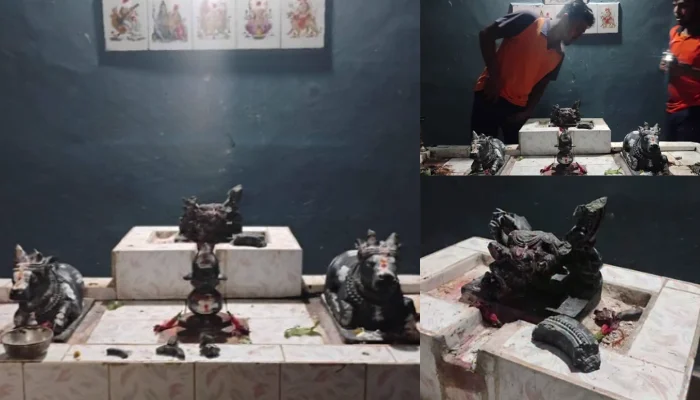
Case Summary
In Madihalli village, Harapanahalli taluk, Vijayanagara district, Karnataka, a Hindu temple was targeted, and the sacred idols of Lord Vigneshwara (Ganesha) and Basaveshwara were vandalised inside the sanctum sanctorum by unidentified miscreants. According to media reports, the incident involved the vandalism of the sacred idols of the two Hindu deities inside the temple's sanctum sanctorum. The details regarding the identity of the perpetrators were not available in the reports. Mohan Gowda, a Hindu activist associated with the Hindu Janajagruti Samiti, also posted about the incident on his official X handle on October 12, 2026. He highlighted the vandalism of the idols and demanded action against those responsible. He called upon the Karnataka state authorities and the local police to take immediate action, arrest the culprits and initiate strict legal proceedings in connection with the incident.
Why it is Hate Crime ?
The primary category selected in this case is: Attack on Hindu religious representations. The subcategory selected is: Desecration of Hindu religious symbols. Icons and symbols or a religious representation of a spiritual ideal are widely revered in Hinduism. Iconography is of vital significance in the Hindu milieu. It helps connect people’s spiritual beliefs with the real world. Iconography within the Hindu faith takes several shapes and forms. Murtis are of most significance to Hindus, to which daily rituals, prayers and offerings are done. Besides the murtis, there are several other symbols which have deep significance in the Hindu faith – the Om and Swastika for example. Since these Hindu religious symbols hold paramount importance in Hinduism, any desecration of symbols, icons, murtis, religious representations and manifestations, is driven by animosity towards the faith itself which manifests itself through these murtis, icons and symbols. Therefore, any desecration of these Hindu religious symbols and representations is considered religiously motivated hate crimes under this category. The other subcategory selected in this case is: Attack on Temples. In Hinduism, a temple is the abode of the Deity. The Deity in the Temple is consecrated, thereby, making it a real, breathing entity. Hindus believe that not just the Deity but the temple premises itself are sacred to Hindus since Hindus hold the faith that the entire Temple space is an amalgamation of the divine energy of the deity. Given the central significance of Temples in Hindu Dharma, any attack against a Hindu Temple or its peripheral premises is an attack on the faith itself and is born out of animosity towards the faith, of which, the Temple is a central tenet. Any manner of attack against a Temple and/or its premises would therefore be considered a religiously motivated hate crime. This case is a clear example of a hate crime because the sacred idols of Lord Vigneshwara and Basaveshwara were vandalised by unidentified miscreants inside a Hindu temple. In Hinduism, idols of deities hold profound religious significance as sacred representations through which devotees worship and connect with the divine. They are not merely physical objects but consecrated forms that occupy a central place in Hindu religious practices and temple worship. Lord Vigneshwara, also known as Lord Ganesha, is worshipped as the remover of obstacles and the deity invoked at the beginning of auspicious undertakings. Basaveshwara, also known as Basavanna, is a revered 12th-century philosopher and social reformer associated with the Lingayat tradition of Hinduism. His teachings and spiritual legacy hold considerable significance for devotees. The idols of these revered figures represent their religious presence within the temple and serve as focal points of devotion and worship for the Hindu community. The vandalism of the idols of Lord Vigneshwara and Basaveshwara constitutes the desecration of sacred Hindu religious symbols. Such an act within a place of worship demonstrates disregard for the religious beliefs and sentiments of Hindu devotees, for whom these idols hold deep spiritual significance. The deliberate destruction of sacred representations of Hindu deities is an attack on symbols central to Hindu religious practice. The desecration of these idols therefore constitutes an act of hostility towards Hindu religious beliefs and the community that reveres them. The fact that the vandalism occurred inside a Hindu temple further establishes the significance of the incident. Hindu temples hold profound religious and spiritual importance, serving as places of worship, devotion, religious learning, and the observance of sacred rituals and traditions. They provide devotees with a space to connect with the divine and participate in community religious practices. The temple and the idols worshipped within it are interconnected parts of a larger temple ecosystem, with the sanctum sanctorum holding particular religious importance as the innermost sacred space housing the principal deity. Desecrating idols within this space is therefore not merely an act of damage to individual objects but also an attack on the sanctity of the temple itself. Targeting sacred idols within a Hindu place of worship constitutes an attack on the religious institution, its traditions, and the faith of its devotees, demonstrating hostility towards Hinduism and its sacred spaces. At the time of writing this report, the identities of the perpetrators remain unknown. However, the vandalism of the sacred idols of Hindu deities inside a Hindu temple constitutes an act of religious desecration. The case is therefore being included in the Hinduphobia Tracker's hate crime database. Disclaimer: The Hinduphobia Tracker records incident dates based on when the crime occurred rather than when it was reported in the media. However, in this case, media reports did not specify the exact date of the incident. The vandalism first came to light on 12 October 2026, when Hindu activist Mohan Gowda posted about it on X, while media reports covering the incident appeared on 13 October 2026. Hence, 12 October 2026 has been selected as the indicative incident date for documentation purposes only.


Case Status
Unknown


Perpetrators Details
Perpetrators
Unknown
Perpetrators Range
Unknown
Perpetrators Gender
unknown
 Sources




