Hindu temple vandalised in Firozabad, Uttar Pradesh; Shivling uprooted and other idols desecrated
 Firozabad, Uttar Pradesh, India
  9 October, 2026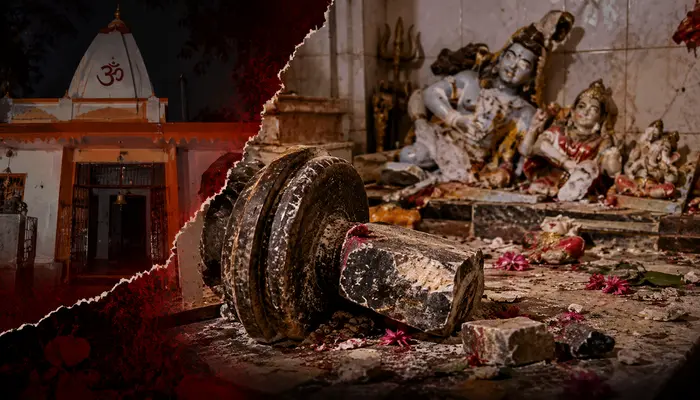
Case Summary
In Kusuamai village in Jasrana, Firozabad district, Uttar Pradesh, a Hindu temple was vandalised, the sacred Shivalinga was uprooted and removed, and other idols of the Shiva family were damaged. The incident involved the desecration of sacred Hindu religious symbols within a place of worship. The incident took place around midnight between 10 and 11 October 2026. The temple was situated near Awadh Chowk on the Shikohabad–Mustafabad road. Unidentified individuals entered the temple, uprooted the Shivalinga installed there and took it away. They also damaged other idols of the Shiva family inside the temple. The incident came to light on the morning of 11 October 2026, prompting outrage among villagers and devotees, who demanded that the police investigate the matter, identify those responsible and take appropriate legal action. Inspector Sunil Kumar of Jasrana Police Station lodged a First Information Report (FIR) against unidentified individuals in connection with the temple vandalism and the disturbance of religious harmony. Station House Officer Inspector Bhagwat Singh Gurjar stated that the temple was privately owned. The police initiated an investigation and began searching for those responsible.
Why it is Hate Crime ?
The primary category selected in this case is: Attack on Hindu religious representations. Within this, the subcategory selected is: Desecration of Hindu religious symbol. Icons and symbols or a religious representation of a spiritual ideal are widely revered in Hinduism. Iconography is of vital significance in the Hindu milieu. It helps connect people’s spiritual beliefs with the real world. Iconography within the Hindu faith takes several shapes and forms. Murtis are of most significance to Hindus, to which daily rituals, prayers and offerings are done. Besides the murtis, there are several other symbols which have deep significance in the Hindu faith – the Om and Swastika for example. Since these Hindu religious symbols hold paramount importance in Hinduism, any desecration of symbols, icons, murtis, religious representations and manifestations, is driven by animosity towards the faith itself which manifests itself through these murtis, icons and symbols. Therefore, any desecration of these Hindu religious symbols and representations is considered religiously motivated hate crimes under this category. The other subcategory selected is: Attack on Temples. In Hinduism, a temple is the abode of the Deity. The Deity in the Temple is consecrated, thereby, making it a real, breathing entity. Hindus believe that not just the Deity but the temple premises itself are sacred to Hindus since Hindus hold the faith that the entire Temple space is an amalgamation of the divine energy of the deity. Given the central significance of Temples in Hindu Dharma, any attack against a Hindu Temple or its peripheral premises is an attack on the faith itself and is born out of animosity towards the faith, of which, the Temple is a central tenet. Any manner of attack against a Temple and/or its premises would therefore be considered a religiously motivated hate crime. This case was a clear example of a religiously driven hate crime, as the perpetrators deliberately uprooted the sacred Shivling and damaged other idols of Lord Shiva and his family. Hindu temple idols hold profound religious significance and are deeply revered as sacred manifestations through which devotees offer worship, prayers and devotion. They are central to Hindu religious practice and are not merely objects of artistic or cultural value. Therefore, vandalising these sacred representations amounted to an affront to Hindu faith and sentiments, constituting deliberate disrespect towards objects held sacred by the Hindu community and reflecting hostility towards Hinduism and its traditions. As the desecration occurred inside a Hindu temple, the attack extended beyond the idols themselves to the sanctity of the temple. Hindu temples and their sacred idols form an interconnected religious ecosystem, with temples serving as spaces for worship, rituals and devotion and the deities forming their spiritual focus. Desecrating the idols within such a space therefore amounted to an attack on the Hindu temple itself and its sanctity, demonstrating hostility towards a place deeply revered by the Hindu community. The uprooting and removal of the sacred Shivling constituted a direct violation of a central object of Hindu worship and devotion. In Hinduism, the Shivling represents Lord Shiva and holds profound spiritual and religious significance for devotees. It serves as a focal point for worship, prayer, ritual offerings and personal devotion, through which Hindus express their reverence for the deity. Uprooting the Shivling from its installed position and taking it away went beyond the physical removal of a religious object; it disrupted the sanctity of the place where devotees worshipped Lord Shiva. The act deprived the temple of its installed sacred representation and interfered with the religious environment associated with daily worship and established devotional traditions. The deliberate displacement of such a revered object represented a serious affront to their faith, religious sentiments and the sanctity they associated with Lord Shiva. Moreover, the damage inflicted on other idols belonging to Lord Shiva and his divine family constituted a separate form of desecration directed at sacred representations within Hinduism. Images and idols associated with Lord Shiva and his divine family carry religious meaning beyond their physical form, connecting worshippers with the deities they revere and the spiritual traditions they follow. Damaging these idols affected objects that held devotional significance for Hindu worshippers and compromised the sanctity of the temple's religious setting. Such damage also disrupted the continuity of worship associated with those representations and undermined the care and reverence with which sacred Hindu objects are maintained. The desecration of these idols represented an affront to the deities they honour and to the religious values embodied by their worship. The incident consequently involved harm not only to physical religious objects but also to symbols through which Hindu traditions, devotional relationships and collective religious identity are expressed. By damaging multiple sacred representations associated with Lord Shiva and his divine family, the perpetrators affected several elements of the temple's devotional environment. Accordingly, this case has been documented in the Hinduphobia Tracker's Hate Crime Database as an instance of religiously motivated hostility directed against Hinduism and the religious identity of the Hindu community.


Case Status
Complaint registered


Perpetrators Details
Perpetrators
Unknown
Perpetrators Range
Unknown
Perpetrators Gender
unknown
 Sources




