Hindutva supporters portrayed as terrorists following residence attack in Kolkata, West Bengal
 Kolkata, West Bengal, India
 7 October, 2026
Case Summary
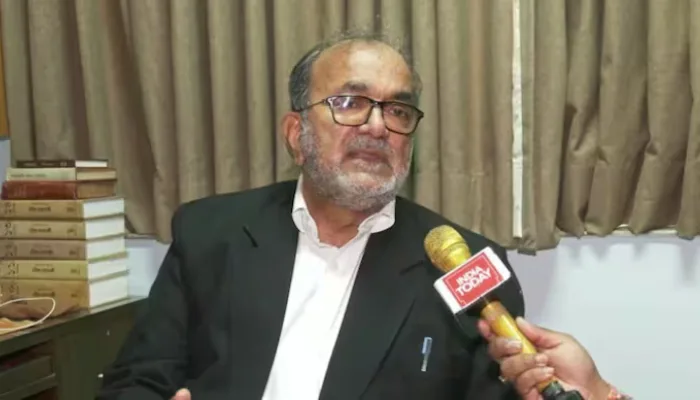
In Kolkata, West Bengal, on 8th October 2026, CPI(M) leader and former Rajya Sabha MP Bikash Ranjan Bhattacharya publicly blamed “Hindutva supporters” for an attack on his residence. He subsequently described the people behind it as “terrorists”, even though the identities, affiliations and motive of the attacker had not yet been confirmed by police. Following the statements, Vishva Hindu Parishad worker Sourish Mukherjee submitted a written complaint at Bolpur Police Station seeking an FIR and investigation into whether Bhattacharya had attributed criminal and terrorist characteristics to a wider Hindu-linked ideological section without evidence. The incident began at around 5:00 AM, when a masked man arrived on a motorcycle at Bhattacharya’s residence in Purbalok, Kalikapur, and threw glass bottles at the house, damaging windowpanes. CCTV footage showed the man with his face covered, while police initially treated him as unidentified and began efforts to establish his identity. Bhattacharya thereafter described the incident as a “Hindutva attack” and said he was targeted because he regularly spoke against Hindu fundamentalism. According to the complaint, Bhattacharya posted on Facebook at approximately 5:52 AM, attributing the attack to Hindutva supporters. In another post at approximately 6:46 AM, he described it as a planned attack and asked, “If they are not terrorists, then who are they?” Mukherjee sought preservation of the original Facebook posts, CCTV footage, metadata, an ABP Ananda interview and other digital material so investigators could determine the basis on which Bhattacharya had connected the unidentified attacker with Hindutva. Pasted text The subsequent police investigation led to the arrest of 29-year-old Bappa Guchhait, an app-bike rider, in connection with the attack. Contemporary reports stated that the West Bengal government identified Guchhait as a Trinamool Congress worker, while no established link with a Hindu organisation had been publicly disclosed at that stage. Complaints were consequently registered against Bhattacharya over his remarks, and Kolkata Police later summoned him to appear at Garfa Police Station on 13th October and Kasba Police Station on 14th October 2026. The controversy came against a longer history of Bhattacharya making statements and participating in activities that repeatedly drew criticism for their treatment of Hindu beliefs, deities and religious practices. In October 2015, he publicly participated in a beef-eating event in Kolkata organised as a protest against what participants described as growing intolerance and interference with food choices. The event itself was political in purpose, but his participation generated controversy because of the sacred status accorded to the cow by a large section of Hindus. In August 2020, Bhattacharya wrote on the CPI(M) West Bengal website about the Ram Mandir foundation ceremony in Ayodhya. He linked the ceremony with the politics of religious division, described government decisions through the framework of aggressive Hindutva politics, and argued that the events of 5th August 2020 had sown seeds of division on religious lines. He also placed the Hindu Rashtra idea within his wider criticism of the RSS and BJP’s use of religion in politics. In September 2021, Bhattacharya triggered another controversy after calling an idol of Goddess Saraswati a “large doll” carrying a veena in a Facebook post about the AICTE office. He wrote that he had declined an invitation to offer flowers to the idol and later questioned why an institution dealing with science and engineering education displayed what he described as an “imaginary goddess idol” instead of statues of figures such as Aryabhata, Charaka or Sushruta. The remarks were criticised for reducing a deity worshipped as the Hindu goddess of knowledge and learning to an imaginary object. Bhattacharya continued to make statements linking Hindu religious and civilisational ideas to divisive politics. In an interview published in February 2024, he criticised the demand for a Hindu Rashtra, compared it historically with demands for a religious state by the Muslim League, and said that the BJP had created division through the Ram Mandir. His criticism was framed as opposition to mixing religion and politics, although it repeatedly used prominent Hindu religious symbols and institutions as examples of political division. In April 2026, another controversy arose after a Bengali media report reproduced a video clip in which Bhattacharya was quoted as saying that Lord Ram ate beef and arguing that Hindu scriptures did not prohibit beef consumption. In the same clip, he challenged others to show him where Hindu scripture declared beef unsuitable for Hindus. The statement drew criticism from Hindu activists who described the invocation of Lord Ram in the beef debate as deliberately provocative towards Hindu religious beliefs. His earlier beef-related position also resurfaced during the 2026 political campaign. Bhattacharya defended his previous conduct by questioning where Hindu scripture prohibited eating beef and said that eating meat should not be linked with religion. Another September 2026 account quoted him as saying that he had eaten beef “as a Hindu” and “as a Brahmin” and asserting that Hindu texts contained provisions concerning beef consumption. In September 2026, shortly before Durga Puja, Bhattacharya again sparked controversy over Sanatani identity when he proposed that “Sanatanis” set up book stalls inside Puja pandals while “non-Sanatanis” set up stalls outside, and that sales should then be compared to determine whether Sanatanis were “acceptable or rejectable”. The statement prompted criticism from Hindu political figures, who accused him of repeatedly showing disrespect towards Sanatan identity. Thus, the October 2026 controversy did not arise in isolation. Bhattacharya had previously been involved in disputes over public beef consumption, the depiction of Goddess Saraswati as a “doll” and “imaginary” deity, statements concerning Lord Ram and beef, criticism centred on the Ram Mandir and Hindu Rashtra, and remarks concerning Sanatanis during Durga Puja. The latest episode added another dispute in which Hindus were publicly connected with terrorism before the police investigation had established the attacker’s ideological affiliation, leading to criminal complaints and police summons against him.
Why it is Hate Crime ?
The first primary category selected is: Hate speech against Hindus. The subcategory selected is: Anti-Hindu slurs, mocking faith. Anti-Hindu slurs and the deliberate mocking of the Hindu faith owing to religious animosity involve the use of derogatory terms, stereotypes, or offensive references to religious practices, symbols, or figures. One of the common anti-Hindu slurs used against Hindus is “cow-worshipper” and “cow piss drinker”. The intention of using this term is to demean and mock Hindus as a group and their religious beliefs, since Hindus consider the cow holy. Additionally, some symbols and the slurs attached to them have a historical context that exacerbates the insult, hate, stereotyping, dehumanisation and oppression against Hindus. Cow worship has been used for centuries to denigrate Hindus, insult their faith and oppress Hindus specifically as a religious group. There has been overwhelming documentation about how cow slaughter has been used to persecute Hindus, with cow meat being thrown in temples and places of worship. There has also been overwhelming documentation that cow meat (beef) has been force-fed to Hindus to either forcefully convert them to Islam or denigrate their faith. Apart from cow worship, the Swastika – which holds deep religious significance for Hindus – has also been misinterpreted and distorted to be used as a slur against Hindus. Similarly, the worship of the Shivling has been used by supremacist ideologies and religions to denigrate Hindus owing to religious animosity. Such slurs and denigration stem from inherent animosity and hate towards Hindus and their faith; therefore, they are categorised as hate speech targeted at Hindus specifically owing to their religious identity. The next subcategory for this case is: Anti-Hindu subversion and prejudice. The subcategory selected is: Anti-Hindu fake news or downplaying. Hate speech is defined as any speech, gesture, conduct, writing, or display that is prejudicial against a specific individual and/or group of people, which is leading to or may lead to violence, prejudicial action or hate against that individual and/or group. Media plays a specific and overarching role in perpetuating prejudicial attitudes towards a community owing to unfair, untrue coverage and/or misrepresentation/misinterpretation, selective coverage and/or omission of facts of/about issues affecting a specific religious group. This type of bias can dehumanise the victim group, making it easier for others to justify harmful actions against them, which aligns with the objectives of hate speech laws aimed at preventing such harm. It is often observed that the media takes a prejudicial stand against the Hindu community, driven by their need to shield the aggressor community, which happens to be a numeric minority; however, it is the one perpetrating violence against Hindus. For example, the media is often quick to contextualise religiously motivated crimes against Hindus, omit or misrepresent facts that point towards religiously motivated hate crimes, justify and/or downplay religiously motivated hate crimes, or present fake news to stereotype Hindus. Such media bias leads to the denial of persecution and is often used to dehumanise Hindus, leading to justification for violence against them. For example, the media covered several fake allegations of Hindus targeting Muslims and forcing them to chant Jai Shree Ram. Police investigations proved most of these cases false and fabricated. These fake news reports were subsequently never retracted or clarified. Such fake news led to the justification of violence and dehumanisation of Hindus based on the argument that since Hindus targeted Muslims and forced them to chant Jai Shree Ram, the dehumanisation of Hindus and violence against them was par for the course and merely a retaliation. Such media bias leads to a prejudicial portrayal of Hindus and offers a justification for violence against them and, therefore, is considered hate speech under this category. The remarks in this case went beyond criticism of a political ideology. By linking “Hindutvawadis” with terrorism and criminal violence before establishing any connection between the attacker and Hindutva, they placed an entire group under suspicion for the actions of an individual. Instead of holding the person responsible for the crime, the remarks used the incident to portray people associated with Hindutva as inherently violent and extremist. The use of the word “terrorist” made this association particularly damaging. Terrorism carries connotations of organised violence, ideological extremism and a threat to society. Attaching this label to a wider group without establishing an evidentiary basis creates the impression that people associated with Hindutva are dangerous by virtue of their beliefs. It is also important to understand how the term Hindutva is used in public discourse. Hindutva is a unifying ideology rooted in Hindu civilisational identity, cultural heritage and collective consciousness. It emerged as a framework through which Hindus could preserve and assert their cultural identity, particularly against the historical pressures of Islamic invasions, British colonial rule, Christian missionary activity and religious conversions. While Hindutva is often presented by its critics as an inherently destructive or extremist ideology, it is also understood by its supporters as a framework for Hindu cultural unity and identity. More importantly, the term is sometimes used as a convenient substitute for Hindu identity itself. By directing hostility towards Hindutva, public discourse can portray the targeting of people who identify with Hindu civilisational thought as a legitimate political disagreement, even when the rhetoric begins to extend towards Hindu religious and cultural identity more broadly. This distinction matters because it can shift attention away from the prejudice expressed and make hostility towards Hindu-associated identities appear acceptable simply by describing it as opposition to an ideology. The controversy surrounding the “Dismantling Global Hindutva” conference in the United States brought this tension into focus. Critics of the conference raised concerns that some of its arguments treated Hindutva and Hinduism as inseparable, creating the possibility that calls to dismantle Hindutva could extend into hostility towards Hinduism itself. This illustrates why the distinction between criticism of a political ideology and the denigration of an entire religious community cannot be ignored. The remarks must also be viewed against the background of earlier controversies involving Hindu religious beliefs and figures. Statements concerning Goddess Durga, the sacred status of the cow in Hindu traditions and a Hindu religious preacher had already drawn criticism for their treatment of Hindu religious sentiments. Goddess Durga is deeply revered by Hindus, particularly in Bengal. Reducing her religious significance to a political narrative of oppression or propaganda can be deeply offensive to devotees. Similarly, dismissing the religious significance of the cow or treating Hindu religious concerns with contempt can reinforce the perception that Hindu beliefs are undeserving of respect. The cumulative effect of such rhetoric is significant. When Hindu-associated identities are repeatedly described through terms such as terrorist, extremist and intolerant, Hindu civilisational assertion itself becomes associated with suspicion. Ordinary Hindus who identify with their religious heritage or cultural traditions can then find themselves having to defend their identity against stereotypes built around the actions of individuals or political groups. The concern in this case is that the label “Hindutvawadi” was used to attach the stigma of terrorism to a wider Hindu-associated identity without establishing any connection between the individual offender and the ideology. By extending criminal responsibility into a sweeping characterisation of people associated with Hindutva, the remarks reinforced the portrayal of Hindu civilisational identity as inherently violent and extremist. Within the Hinduphobia Tracker framework, such rhetoric is significant because it uses ideological language to legitimise prejudice against Hindu-associated identity and reinforce negative stereotypes about Hindus and their religious and cultural consciousness. The fundamental motivation behind this rhetoric is hostility towards Hindu identity and the desire to undermine Hindu civilisational assertion. By using the term Hindutva to associate Hindus with terrorism, violence and extremism, the speaker turns an entire identity into a target of suspicion. It also creates a convenient way to justify such hostility by presenting it as opposition to an ideology rather than prejudice against a community. At its core, this rhetoric seeks to discredit Hindu identity and cultural consciousness by portraying their assertion as dangerous, thereby making hostility towards Hindus appear acceptable under the guise of opposing Hindutva, and this is why this case has been added to the tracker.


Case Status
Complaint filed


Perpetrators Details
Perpetrators
State and Establishment
Perpetrators Range
One Person
Perpetrators Gender
male
 Sources



