Hindu temple vandalised in Maihar, Madhya Pradesh; its idol desecrated by unidentified miscreants
 Maihar, Madhya Pradesh, India
  8 October, 2026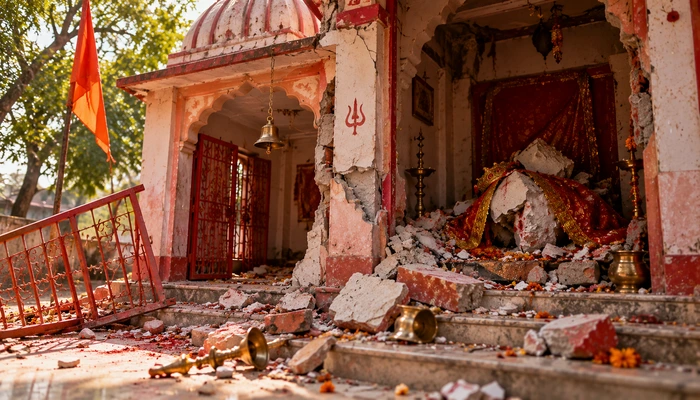
Case Summary
In Manpur’s old settlement near North Gate, within the jurisdiction of Kotwali Police Station in Maihar district, Madhya Pradesh, the approximately 100-year-old Kher Mai Temple was vandalised, and its idol was desecrated. The incident involved damage to the temple premises and a religious idol, constituting damage to a Hindu place of worship and its sacred object. The incident took place during the intervening night of 8–9 October 2026. The damage came to light on 9 October, prompting anger among local residents. Members of the Bajrang Dal subsequently went to Kotwali Police Station to protest and demand strict action against those responsible. On the afternoon of 9 October 2026, the protest was led by Shiv Chaurasia, the district convenor of the Bajrang Dal. The workers demanded that the perpetrators be identified and arrested. They also raised slogans of “Jai Shri Ram” at the police station. In response to the situation, Abhishek Singh, the officer in charge (Town Inspector) of Kotwali Police Station, intervened and persuaded the protesters to remain calm. Later that evening, the police registered a case against unidentified persons following a complaint by Deepak Malik, son of Dhaniram Malik. The police began investigating the damage to the temple premises and idol and attempted to identify those responsible.
Why it is Hate Crime ?
The primary category selected in this case is: Attack on Hindu religious representations. The first subcategory selected is: Attack on Temples. In Hinduism, a temple is the abode of the Deity. The Deity in the Temple is consecrated, thereby, making it a real, breathing entity. Hindus believe that not just the Deity but the temple premises itself are sacred to Hindus since Hindus hold the faith that the entire Temple space is an amalgamation of the divine energy of the deity. Given the central significance of Temples in Hindu Dharma, any attack against a Hindu Temple or its peripheral premises is an attack on the faith itself and is born out of animosity towards the faith, of which, the Temple is a central tenet. Any manner of attack against a Temple and/or its premises would therefore be considered a religiously motivated hate crime. The other subcategory selected is: Desecration of Hindu religious symbol. Icons and symbols or a religious representation of a spiritual ideal are widely revered in Hinduism. Iconography is of vital significance in the Hindu milieu. It helps connect people’s spiritual beliefs with the real world. Iconography within the Hindu faith takes several shapes and forms. Murtis are of most significance to Hindus, to which daily rituals, prayers and offerings are done. Besides the murtis, there are several other symbols which have deep significance in the Hindu faith – the Om and Swastika for example. Since these Hindu religious symbols hold paramount importance in Hinduism, any desecration of symbols, icons, murtis, religious representations and manifestations, is driven by animosity towards the faith itself which manifests itself through these murtis, icons and symbols. Therefore, any desecration of these Hindu religious symbols and representations is considered religiously motivated hate crimes under this category. This case was a clear example of a religiously motivated hate crime, as the perpetrators specifically targeted the 100-year-old Hindu Kher Mai Temple and damaged its sacred idol. The deliberate targeting of a Hindu place of worship and its revered religious idol demonstrated extreme hostility towards Hindu religious representations and symbols. Firstly, the damage to a longstanding Hindu temple and its religious property represented an attack on a place dedicated to Hindu worship, devotion and the observance of religious traditions. Hindu temples serve as sacred spaces where devotees offer prayers, perform rituals, seek blessings and maintain their spiritual connection with the deities they worship. The damage to such a place of worship therefore affected more than its physical structure; it also struck at a space that held religious, cultural and emotional significance for Hindu devotees. The approximately 100-year-old Kher Mai Temple carried additional significance through its longstanding presence in the local community, as its continued existence reflected the preservation of Hindu religious heritage across generations. Damage to the temple premises consequently threatened the integrity of a religious space that formed part of the community’s inherited devotional traditions. Such destruction represented an affront to the community’s religious identity and its ability to preserve and practise its faith within a dedicated place of worship. The damage to Hindu religious property thus extended beyond material loss and affected the protection of a sacred space associated with collective worship, faith and cultural continuity. Secondly, the damage to the sacred idol installed in the temple directly affected an important element of Hindu religious devotion. In Hindu traditions, consecrated murtis (sacred images or representations of deities) serve as focal points for worship, prayer and ritual offerings, enabling devotees to express their reverence and devotion. Such images are not treated merely as decorative objects; their religious significance derives from the traditions, rituals and devotional practices associated with them. Damage to a sacred idol therefore carried significance beyond the physical impairment of the object, as it affected an item associated with religious observance and the spiritual lives of worshippers. The deliberate destruction of a sacred religious image was an insult to their beliefs, an affront to their deity and a violation of the sanctity attached to the place of worship. The damage consequently affected a tangible representation of Hindu religious practice and the devotional relationship maintained by worshippers with their sacred traditions. It also threatened the preservation of an object embedded in the temple’s religious life and the community’s inherited practices of worship. Collectively, the damage to the longstanding Hindu temple and its sacred idol affected both the physical integrity of a Hindu place of worship and the religious symbols central to the community’s devotional practices. These acts struck at the preservation of Hindu religious heritage, the sanctity of a space dedicated to worship and the sentiments of devotees whose faith and traditions were associated with the temple. Together, the damage to the religious property and the sacred idol represented an affront to Hindu religious identity and the community’s right to preserve its places of worship and sacred objects. Accordingly, this case has been documented in the Hinduphobia Tracker's Hate Crime Database as an instance of religiously motivated hostility directed against Hinduism and the religious identity of the Hindu community.


Case Status
Complaint filed


Perpetrators Details
Perpetrators
Unknown
Perpetrators Range
Unknown
Perpetrators Gender
unknown
 Sources




