Brahmin IIT professor targeted over caste identity by social-media page with history of anti-Hindu and anti-Brahmin content
 Chennai, Tamil Nadu, India
 4 October, 2026
Case Summary
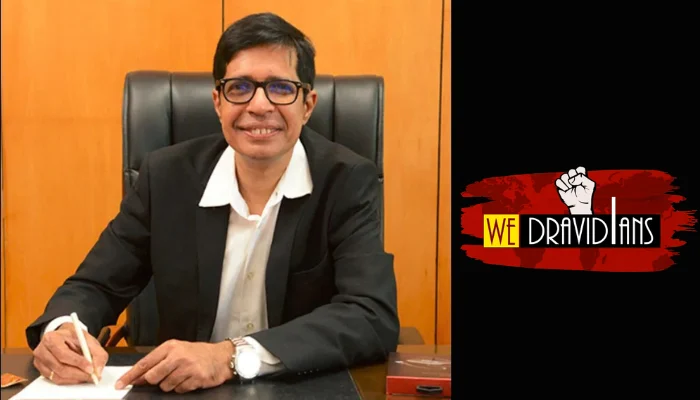
In Chennai, Tamil Nadu, IIT Madras Director Professor V. Kamakoti was targeted over his Brahmin identity by the social-media page “We Dravidians” after he addressed the Dharma Rakshana Mahotsava on 4th October 2026. The page circulated a clip of his speech and captioned it “Average Brahmin Life in Tamil Nadu”, turning his Brahmin identity into a target of ridicule rather than responding to what he said at the Hindu spiritual gathering. The event, held at Bhavan’s Rajaji Vidyashram in Kilpauk, brought together Acharyas from the Advaita, Dvaita and Vishishtadvaita traditions. Kamakoti spoke about receiving their blessings, preserving Dharma and encouraging people, including Brahmins, to remain in India and contribute to the country. His remarks centred on service, values and the connection between Dharma and national responsibility. The post was significant because it was not the first instance in which we Dravidians had targeted Hindu religious symbols, Sanatana Dharma or Brahmins. Earlier reports reproducing screenshots from the handle documented a series of such posts. On 5th October 2024, the page circulated a graphic depicting Lord Buddha smashing an idol of Lord Ganesha. It also shared another cartoon showing Periyar breaking idols of Hindu deities. On Ganesh Chaturthi, the handle posted material claiming that Lord Ganesha liked liquor and women, reducing a revered Hindu deity to the subject of vulgar ridicule. The page had also directly targeted Brahmins as a community. On 3rd October 2024, it circulated a cartoon portraying a Brahmin man with visible Hindu markers such as the choti, vibhuti, and janeu, while showing him licking the footwear of Mughals, Britishers, and Israelis. The accompanying message claimed that Brahmins had historically been “licking” the feet of these groups. This content used recognisable Brahmin and Hindu religious markers to construct a degrading stereotype of the community. Another series of posts targeted Hindu religious identity through the expression “Sanatani”. The handle depicted political figure Pawan Kalyan as needing to be “cured” of Sanatana Dharma in a cartoon referring to earlier remarks comparing Sanatana Dharma with diseases. It also posted an image suggesting that after becoming a “Sanatani”, he consumed cow dung and cow urine, using practices and symbols commonly associated with Hinduism as instruments of mockery. Earlier reporting also documented the page praising the idea that Udhayanidhi Stalin had been appointed by the Dravidian movement to “destroy Sanatan.” The wider activity of the platform also showed a strong anti-Brahmin and anti-Sanatana ideological focus. Its own website has carried articles using expressions such as “Brahminical forces,” “brahmin hegemony,” “brahministic oppression” and describing policies as making “Brahminism a casualty”. The website also currently carries material titled “Sanatani Myths vs. Keeladi Facts” and articles specifically examining what it describes as the role of “Brahmins & Hindus” in historical oppression and political structures. These publications formed part of the wider ideological environment in which the latest targeting of Kamakoti appeared. Earlier investigations identified Kathir R. Sukumar (Kathir RS) as a principal figure associated with We Dravidians. The organisation’s own website continues to publish articles under his name. A video uploaded by the We Dravidians YouTube channel was titled “We are colonised under North Indians!”, in which Kathir described South Indians as being exploited and spoke of a future political “dream” that critics interpreted as support for Dravida Nadu-style separatism. Separately, he had written material linking “Jai Shri Ram” and political mobilisation around Hindu identity to India’s loss in the 2023 Cricket World Cup final. Reports examining the people associated with the handle also identified Shaikh Abid Hasan as an administrator. His own social-media activity, separate from posts directly published by We Dravidians, included calling Hindus “hypocrites”, “anti-poor” and “crony capitalists”; dismissing Hindu religious sentiments in connection with the Tirupati laddu controversy; writing “Dead Brahmin, best Brahmin”; and using rhetoric about burning “Hindu nationalism”. These were personal posts attributed to an individual associated with the page and should be distinguished from content posted directly through the We Dravidians account, but they formed part of the documented background of its administration. The page had also developed a broader reputation for anti-North Indian and separatist rhetoric. Earlier reporting described its social-media bio as presenting We Dravidians as a political organisation following the ideological path of Periyar, Ambedkar, Anna and Kalaignar, while material associated with the account promoted the idea that South India was being “colonised” or economically exploited by North India and the Union government. The political connections attributed to the page also became controversial. Reports identified Kathir RS in photographs with MK Stalin, Udhayanidhi Stalin and other figures associated with the DMK, and noted that he had authored a book advocating MK Stalin as a national leader. The Commune additionally reported links between individuals connected with the handle and the wider DMK political ecosystem.
Why it is Hate Crime ?
The primary category selected for this case is: Hate speech against Hindus. The subcategory selected is: Anti-Hindu slurs, mocking faith. Anti-Hindu slurs and the deliberate mocking of the Hindu faith owing to religious animosity involve the use of derogatory terms, stereotypes, or offensive references to religious practices, symbols, or figures. One of the common anti-Hindu slurs used against Hindus is “cow-worshipper” and “cow piss drinker”. The intention of using this term is to demean and mock Hindus as a group and their religious beliefs, since Hindus consider the cow holy. Additionally, some symbols and the slurs attached to them have a historical context that exacerbates the insult, hate, stereotyping, dehumanisation and oppression against Hindus. Cow worship has been used for centuries to denigrate Hindus, insult their faith and oppress Hindus specifically as a religious group. There has been overwhelming documentation about how cow slaughter has been used to persecute Hindus, with cow meat being thrown in temples and places of worship. There has also been overwhelming documentation that cow meat (beef) has been force-fed to Hindus to either forcefully convert them to Islam or denigrate their faith. Apart from cow worship, the Swastika – which holds deep religious significance for the Hindus – has also been misinterpreted and distorted to be used as a slur against Hindus. Similarly, the worship of the Shivling has been used by supremacist ideologies and religions to denigrate Hindus owing to religious animosity. Such slurs and denigration stem from inherent animosity and hate towards Hindus and their faith; therefore, they are categorised as hate speech targeted at Hindus specifically owing to their religious identity. In this case, the social-media page “We Dravidians” targeted IIT Madras Director Professor V. Kamakoti by ridiculing his Brahmin identity. After he addressed the Dharma Rakshana Mahotsava on 4 October 2026, the page circulated a clip of his speech with the caption “Average Brahmin Life in Tamil Nadu”. Rather than engaging with his remarks about preserving Dharma, serving the country and contributing to society, the page reduced his public appearance at a Hindu spiritual gathering to a joke about his caste identity. This was not simply criticism of his views. It singled him out because he was a Brahmin and used that identity to invite public ridicule. The targeting becomes more significant when viewed alongside the page's earlier content. “We Dravidians” has repeatedly circulated material mocking Hindu deities, religious beliefs and Brahmins. Its posts have depicted Lord Ganesha being smashed, ridiculed the deity through vulgar references, and portrayed a Brahmin man wearing recognisable Hindu markers such as the shikha, vibhuti and janeu as someone who bowed before foreign rulers. Other posts mocked Sanatana Dharma by portraying it as something from which people needed to be cured and associating Hindu religious practices with degrading imagery. Taken together, these posts show a recurring pattern of using Hindu religious symbols, beliefs and identities as subjects of contempt. The attack on Kamakoti also needs to be understood in the context of the page's repeated targeting of Brahmins. The earlier cartoon portraying a Brahmin man with a shikha, vibhuti and janeu licking the footwear of Mughals, Britishers and Israelis was not merely a criticism of historical caste structures. It used visible markers of Brahmin and Hindu identity to construct a degrading image of the community. Similarly, the caption targeting Kamakoti made his Brahmin identity the punchline, rather than addressing anything objectionable in his speech. There is a clear distinction between criticising caste discrimination, questioning social hierarchies or disagreeing with a religious or political viewpoint, and ridiculing people because of their Hindu-associated identity. The page's content repeatedly crosses this line. By using terms such as “Brahminical forces” and “Brahmin hegemony” alongside material that mocks Hindu deities, Sanatana Dharma and Brahmins as a community, it creates an environment in which hostility towards Hindu religious and cultural identity is presented as political commentary. The page's broader history matters because the post targeting Kamakoti was not an isolated instance of criticism. It appeared amid a sustained stream of content directed at Brahmins and Hindu religious traditions. The reported association of individuals linked to the page with the broader DMK political ecosystem adds context to its public activity, but the central concern remains the content published through the page itself and the repeated way it has targeted Hindu identities and beliefs. The fundamental motivation behind this rhetoric is to demean Hindu religious and cultural identity by turning its symbols, traditions and associated communities into objects of ridicule. In Kamakoti's case, his Brahmin identity was used to mock him publicly after he participated in a Hindu religious gathering and spoke about preserving Dharma. Viewed alongside the page's repeated attacks on Brahmins, Hindu deities and Sanatana Dharma, this was part of a wider pattern of hostility towards Hindu identity rather than an isolated disagreement with an individual's views. The rhetoric seeks to portray Hindu religious expression and those associated with its preservation as backward, laughable or deserving of contempt. This incident is therefore documented in the Hinduphobia Tracker as an instance of anti-Hindu hate speech targeting Brahmins and Hindu religious identity.
Victim Details
Total Victim
1
Deceased
0
Gender
- Male 1
- Female 0
- Third Gender 0
- Unknown 0
Caste
- SC/ST 0
- OBC 0
- General 1
- Unknown 0
Age Group
- Minor 0
- Adult 1
- Senior Citizen 0
- Unknown 0


Case Status
Unknown


Perpetrators Details
Perpetrators
Others
Perpetrators Range
One Person
Perpetrators Gender
unknown
 Sources



