Hindus sentiments outraged by posts ridiculing traditions, denigrating historical and religious leaders
 Ambala, Haryana, India
 3 October, 2026
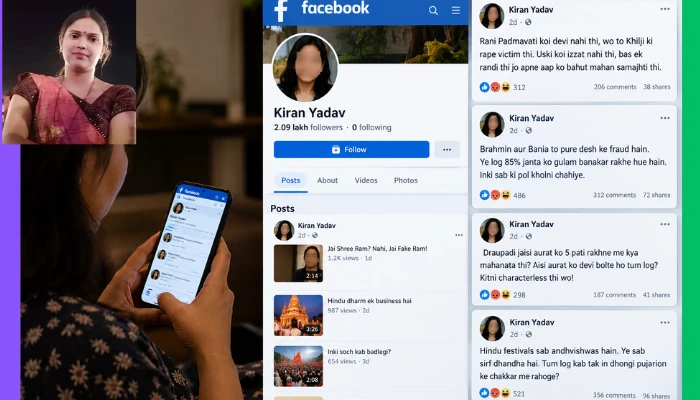
Case Summary
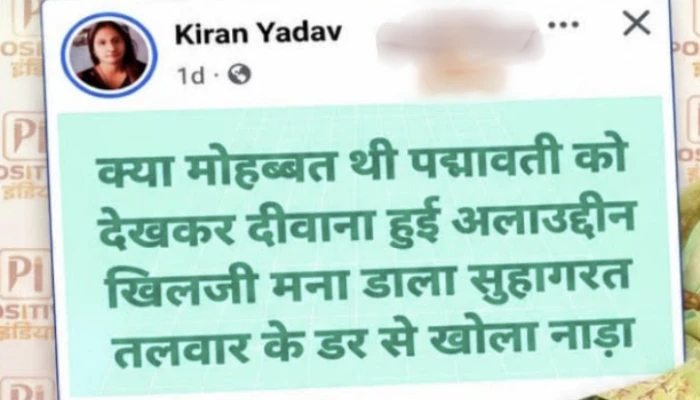
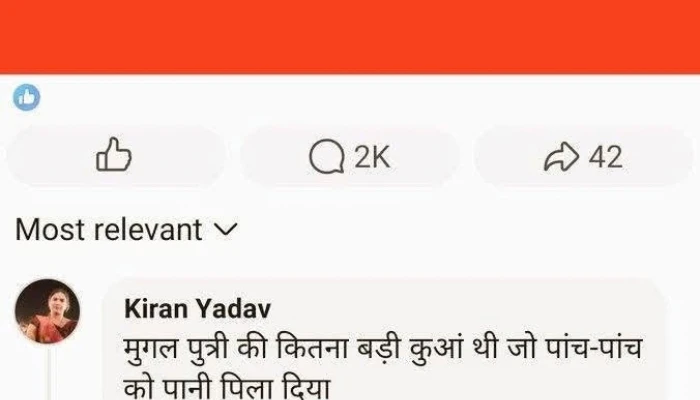
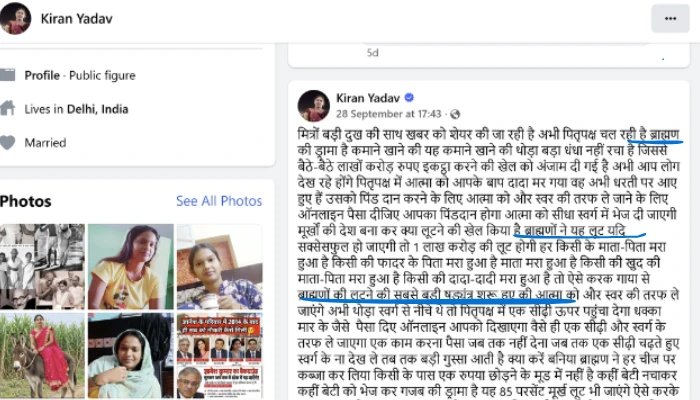
In Ambala, Haryana, Hindu religious figures, revered historical personalities, and the historical legacy of the Rajput and Brahmin communities were targeted through Facebook posts. The posts mocked Rani Padmavati, defamed Rajput history, demeaned Hindu religious traditions and denigrated Hindu Brahmins and other revered figures. The Hinduphobia Tracker team reviewed the Facebook account maintained by Kiran Yadav, a woman based in Delhi with 2,09,000 followers. The account contained several videos and posts that denigrated Hindu festivals and deities and used profanities against Hindu leaders. The incident came to light when Ritender Rana of the Rajput Youth Brigade and Pradeep Singh Rana of the local Rajput Sabha, Ambala, filed a complaint at the Sector-9 Police Station. On 4 October 2026, police registered an FIR under Sections 196(1), 351(2), 352 and 353 of the Bharatiya Nyaya Sanhita (BNS) and began investigating the Facebook posts and other complaints. According to the complaint, the woman had published derogatory remarks about Rani Padmavati and the historical heritage of the whole Hindu community on Facebook. The complainants stated that the derogatory nature of the posts hurt the religious sentiments of the Hindu community and raised concerns about social harmony. The accused posted abusive and derogatory posts against the Hindu community in large numbers. In one post, she used abusive language while discussing Rani Padmavati, stating that she had been raped and violated by Khilji, and mocked her character. In another post, she described the Brahmin and Bania communities as fraudsters and claimed that they had enslaved 85 per cent of the country's population. Further, she used derogatory language against Draupadi, the revered wife of the Pandavas, and questioned her moral character on the grounds that she had five husbands. When representatives of the Rajput community visited the woman to explain their objections and request that she remove the post, she assaulted them along with her husband and son. The complaint further stated that the three threatened to kill the complainants and to file a robbery case against them. Following the complaint, the police inspected the scene of the incident alongside the complainants. Sub-Inspector Dharampal, the investigating officer, stated that legal action would be taken on the basis of the evidence collected during the investigation.
Case Images
Why it is Hate Crime ?
This case has been added to the tracker under the primary category of Hate speech against Hindus. Within it, the sub-category selected here is Anti-Hindu slurs, mocking faith. Anti-Hindu slurs and the deliberate mocking of the Hindu faith owing to religious animosity involve the use of derogatory terms, stereotypes, or offensive references to religious practices, symbols, or figures. One of the common anti-Hindu slurs used against Hindus is “cow-worshipper” and “cow piss drinker”. The intention of using this term is to demean and mock Hindus as a group and their religious beliefs, since Hindus consider the cow holy. Additionally, some symbols and the slurs attached to them have a historical context that exacerbates the insult, hate, stereotyping, dehumanisation and oppression against Hindus. Cow worship has been used for centuries to denigrate Hindus, insult their faith and oppress Hindus specifically as a religious group. There has been overwhelming documentation about how cow slaughter has been used to persecute Hindus with cow meat being thrown in temples and places of worship. There has also been overwhelming documentation that cow meat (beef) has been force-fed to Hindus to either forcefully convert them to Islam or denigrate their faith. Apart from cow worship, the Swastika – which holds deep religious significance for the Hindus – has also been misinterpreted and distorted to be used as a slur against Hindus. Similarly, the worship of the Shivling has been used by supremacist ideologies and religions to denigrate Hindus owing to religious animosity. Such slurs and denigration stem from inherent animosity and hate towards Hindus and their faith, therefore, it is categorised as hate speech targeted at Hindus specifically owing to their religious identity. The other sub-category selected is - Mocking/denigrating Hindu leaders. Hate speech is defined as any speech, gesture, conduct, writing, or display that is prejudicial against a specific individual and/or group of people, which is leading to or may lead to violence, prejudicial action or hate against that individual and/or group. Religious leaders are often seen as representatives of the community, especially the community’s religious faith and beliefs. Mocking or denigrating a religious leader specifically owing to his religious identity and/or the religious rituals he observes can be considered hate speech because the motivating factor of the speech is animosity and/or dislike for what he represents – the religious beliefs and faith of the community. It is important to note that mere insulting words against an individual do not constitute hate speech. It is entirely possible that insulting words are used for an individual; however, the specific speech is not the result of religious hate and/or animosity towards the professed faith of the religious leader, but the individual himself. For the speech to be considered hate speech, the speech itself or the motivating factor behind the speech has to be religious in nature. Such speech that denigrates Hindu religious leaders specifically owing to animosity towards the faith they profess and the community faith they represent will be treated as hate speech under this category. This case qualified as a religiously motivated hate crime because the social media user repeatedly targeted Hindu religious figures, traditions and Hindu communities with derogatory and degrading content. This was not a single instance in which an objectionable remark were posted; the account contained a continuing pattern of posts and videos mocking Hindu festivals and deities, denigrating revered Hindu figures and stereotyping Hindu communities. The repeated nature of the conduct demonstrated hostility towards Hindu religious and cultural identity rather than an isolated expression directed at a particular individual. Rani Padmavati and Draupadi hold significant places in Hindu and Indian cultural consciousness, with their stories forming part of the historical and religious traditions through which generations of Hindus understood honour, devotion and duty. The sexually degrading treatment of Padmavati and the questioning of Draupadi's character on the basis of her marriage to the five Pandavas therefore reduced revered figures to objects of ridicule and contempt. Similarly, describing Brahmins and Banias as fraudsters and portraying them as responsible for enslaving a large part of the population applied a derogatory stereotype to identifiable Hindu communities. Further, the conduct did not end with the publication of the posts. When Hindu community members approached the accused to object to the content and requested that it be removed, she did not withdraw or correct the offending material. Instead, she, along with her husband and son, assaulted the representatives and threatened them with death and with the filing of a robbery case. This response was significant because the hostility extended from the denigration of Hindu and Rajput identity online to hostility towards Hindus who challenged that denigration. Taken together, the repeated targeting of Hindu religious figures and traditions, derogatory stereotyping of Hindu communities and the hostile response towards those who objected established a consistent pattern of religiously directed hostility. In recent times, social media has increasingly become a platform for anti-Hindu hate, with derogatory memes, videos, and messages targeting Hindu religious symbols, practices, and deities. Such content is recognised as part of a broader pattern of Hinduphobia and religious hate crimes online. This deliberate targeting of revered religious icons firmly establishes this act as a religiously motivated hate crime; therefore, it is being categorised under the hate crime database.


Case Status
Complaint filed


Perpetrators Details
Perpetrators
Others
Perpetrators Range
One Person
Perpetrators Gender
female
 Sources



