Hindu Temple’s sanctity violated: Muslim couple enters Pashupatinath Temple and films video despite strict ban on non-Hindus
 Kathmandu, Central Region, Nepal
  5 October, 2026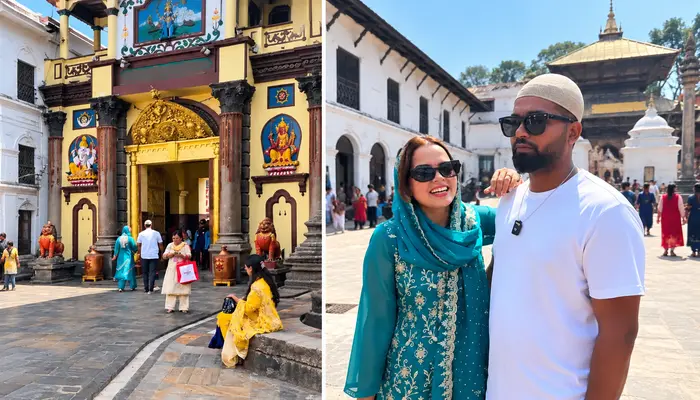
Case Summary
In Kathmandu, Nepal, 31-year-old Muslim man Asim Ansari entered the main sanctum of the Pashupatinath Temple and filmed a TikTok video, despite the temple’s rules restricting entry to practising Hindus and prohibiting photography and filming inside. Police later arrested Ansari and his wife, Priyanka Pariyar, for violating the temple’s regulations. The Pashupatinath Temple is one of the oldest and most revered Hindu temples dedicated to Lord Shiva, with historical roots dating back to the 5th century CE. Entry into the main sanctum is restricted to practising Hindus. Non-Hindus may visit the outer areas of the temple complex, the banks of the Bagmati River, and designated viewing points across the river. Filming inside the temple is also prohibited. Despite these restrictions, Ansari entered the restricted area and recorded a video showing him wearing a skullcap and walking through the temple premises with his wife. The couple had visited the temple a few days before their arrest and recorded the video during their visit. Priyanka Pariyar was from Itahari-5, while Ansari was from Itahari Sub-Metropolitan City-8 in Sunsari, where he was engaged in trade and business. The video later circulated widely on social media and drew criticism for the couple’s presence in the temple's restricted section. Member of Parliament Khusbu Oli also raised the matter on social media, referencing Ansari’s Muslim-community cap as part of the discussion. Following the controversy, the Pashupati Area Development Trust filed a complaint against the couple. Acting on the complaint from the Pashupati Area Development Trust and a letter from the Gaushala Police Circle, Sunsari Police arrested Ansari and Pariyar at the stadium in Itahari-8. They were subsequently sent to the Gaushala Police Circle in Kathmandu for further investigation. Following their arrest, the couple released a video statement explaining their actions. They claimed they had no intention of causing offence and entered out of curiosity to see the temple's interior. Priyanka said Pashupatinath was a place of faith for her and that she took her husband there so he could see it. She claimed that they entered through the main door but were stopped by security personnel and turned back at the staircase. She further said they did not offer prayers inside the temple and acknowledged that entering the restricted area may have been a mistake. The incident raised questions about security arrangements at Pashupatinath Temple and how the couple accessed the restricted section. The Pashupati Area Development Trust apologised for the security lapse and formed a five-member committee to investigate how they had entered the restricted area. The Trust also requested the Cyber Bureau to take legal action concerning the video.
Why it is Hate Crime ?
The primary category selected in this case is: Attack on Hindu religious representations. Within this, the subcategory selected is: Breaking rules of place of worship. Sanatan Dharma is not a religion of one book, which is to say that while it has religious scriptures that form the central tenets of the faith, there are several traditions followed through thousands of years, mostly passed from generation to generation orally. One of these oral traditions or written traditions is the rules of specific temples. Certain temples have rules which are traditional rules, dependent on the worship of the presiding deities. These rules and traditions have been followed for thousands of years whether they find scriptural mention or not. Such traditions are based on the nature and rules of worship of the presiding deity of that temple. Any non-compliance of these traditions owing to animosity towards the faith or for the sake of activism stems not only from the lack of faith in the presiding deity but also disregard for the faith of the devotees of that deity/temple and implicit bias against the faith, the tradition and the deity itself. Since these specific traditions are central to the faith of the devotees of that specific temple and presiding deity, any non-compliance with these traditional rules would be considered a religiously motivated hate crime. The other subcategory selected is: Defiling religious customs. Sanatan Dharma is not a religion of one book, which is to say that while it has religious scriptures that form the central tenets of the faith, there are several traditions followed through thousands of years, mostly passed from generation to generation orally. There are several such customs and traditions that are followed by various Hindus and Hindu sects. Defiling of these traditions and customs is a breach of an individual or group’s religious practices. Such practices can range from dietary restrictions like not eating non-vegetarian food for a certain period of the year, not eating non-vegetarian food at all, not eating beef since the cow is considered holy in Hinduism, the sanctity of religious customs followed in the house (like many ISCKON devotees), etc. Any malicious action leading to the breach of such traditions or defilement of these traditions owing to animosity towards the faith or for the sake of activism stems not only from the lack of faith in the religion itself but also from disregard for the faith of the devotees who follow the customs/traditions and implicit bias against the faith, the tradition itself. Since these specific traditions are central to the faith of the devotees of that specific sect of Hindus, any non-compliance with these traditional rules would be considered a religiously motivated hate crime. This case has been categorised as a hate crime because it involved the deliberate violation of an established Hindu temple-entry restriction and the filming of the restricted sacred space, despite the temple’s clearly defined rules. In Sanatan Dharma, while many temples and spaces are open to people from different religions, certain parts of a temple, or entire temples, may be strictly reserved for practising Hindus. These restrictions stem from longstanding religious traditions and customs. Several Hindu temples restrict entry to Hindus only; for example, Lingaraj Temple in Bhubaneswar, Odisha and the Jagannath Puri temple in Odisha. This practice of restricting entry to non-Hindus dates back centuries and is deeply ingrained in the temple's customs and traditions. In fact, the restriction is so strictly enforced that even a Gajapati King was not allowed to enter the Jagannath Puri temple because he was married to a Mughal soldier’s daughter. Likewise, the Pashupatinath Temple also restricts non-Hindus from entering its main temple and other restricted areas. Pashupatinath is not an ordinary tourist site. It is one of Nepal’s most revered Hindu temples, dedicated to Lord Shiva, and restricting non-Hindus from entering the main sanctum is an established religious practice. The Pashupati Area Development Trust itself confirms that the main sanctum is restricted to Hindus, while non-Hindu visitors may access other parts of the complex and observe from the surrounding ghats. Photography is also prohibited inside the main sanctum. This restriction reflects the temple’s longstanding religious customs and traditions and is intended to preserve the sanctity of the sacred space. The rule is deeply connected with the temple’s religious character and has been maintained as part of the established practices governing worship and conduct at Pashupatinath. Firstly, the couple’s entry into the restricted area violated the established rules governing a Hindu place of worship. By entering a section from which non-Hindus were prohibited, they crossed a religious boundary maintained for Hindu worshippers and disregarded the temple’s prescribed customs. Their entry therefore violated an established Hindu religious practice and the rules governing access to a sacred place of worship. The violation is more serious because the couple did not merely enter the restricted area but also recorded a video inside it. Pashupatinath separately prohibits photography and filming, including within the main sanctum. The conduct therefore disregarded two distinct safeguards intended to preserve the temple's sanctity: the restriction on who may enter the sacred space and the prohibition on recording inside it. The religious dimension is further strengthened by how the incident was presented. The video was subsequently circulated on social media, bringing the breach of the temple's religious restrictions into the public domain. A non-Hindu visitor entered a sacred space whose access is deliberately limited to practising Hindus and recorded it despite the established rules governing the site. Even if the couple's subsequent explanation, that they were motivated by curiosity, is taken into account, curiosity does not remove the religious significance of knowingly entering a space that expressly excludes one based on one's religious identity. The issue is therefore not simply that a temple regulation was technically violated. The restriction exists precisely because the main sanctum is regarded as a sacred Hindu religious space governed by particular traditions. Deliberately crossing that boundary and filming within it disregarded the institution's religious autonomy and the customs established to preserve its sanctity. The case has consequently been classified as a religiously motivated hate crime because the conduct directly interfered with an established Hindu religious boundary, entered a sacred space specifically reserved for Hindu worshippers, and disregarded rules intended to preserve its sanctity. Interestingly, this was not an isolated incident; the Hinduphobia Tracker had previously recorded similar cases. One such case involved the Lingaraj Temple in Bhubaneswar, Odisha, where established rules governing entry into the Hindu temple were violated. Such incidents have highlighted how disregard for the religious customs and rules of Hindu places of worship undermines their sanctity and affects the religious sentiments of Hindu devotees. Disclaimer: The Hinduphobia Tracker records incidents based on when an event occurred or when the victim's ordeal began. None of the media sources covering this case specified the exact date the incident occurred. Therefore, for documentation purposes, we have recorded the date based on when the video became public on social media, that is, 6 October 2026.


Case Status
Arrested


Perpetrators Details
Perpetrators
Muslim Extremists
Perpetrators Range
From 2 To 5
Perpetrators Gender
both
 Sources




