Brahmins targeted with hate by a Dravidianist; calls Hindu politician part of ‘Brahmanist-Zionist cabal’ and says it must be ‘burned to the ground’ in US
 Massachusetts, United States
 4 October, 2026
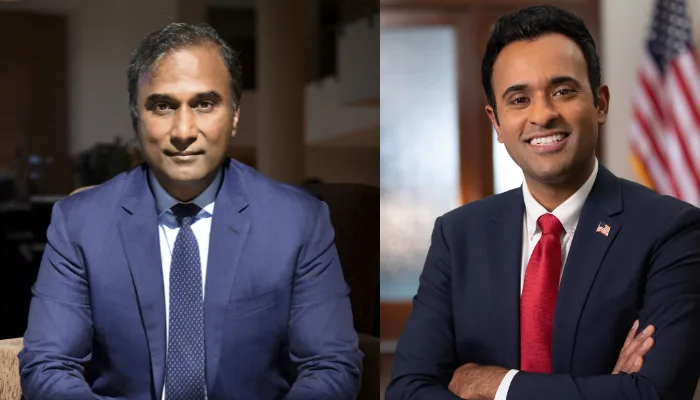
Case Summary
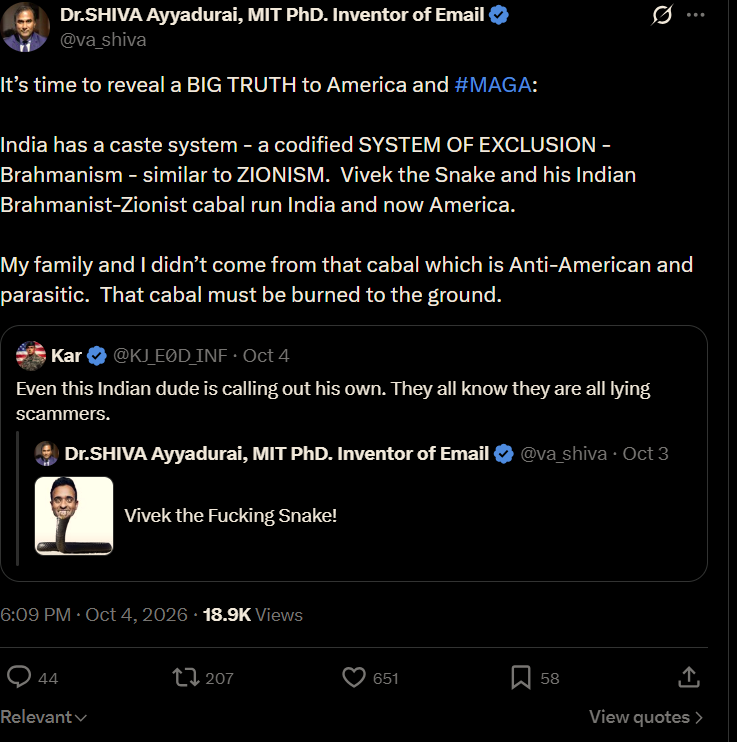
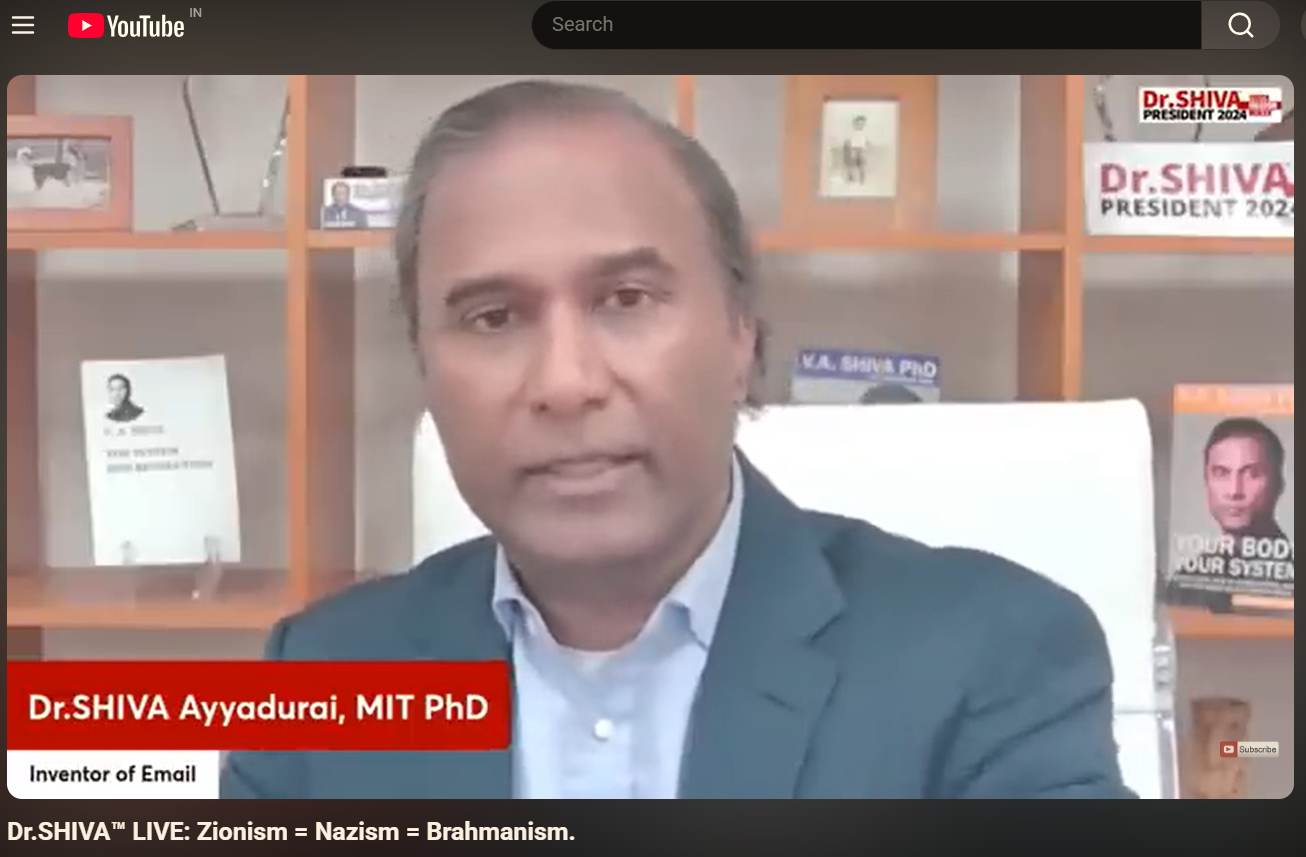
In the United States, Brahmins were targeted with caste-based and religiously loaded hate by Indian-American political activist Shiva Ayyadurai. He used Vivek Ramaswamy’s Brahmin identity to portray Brahmins collectively as an exclusionary, parasitic and conspiratorial group. Hinduphobia Tracker investigated Shiva's social media X account, under the username @va_shiva, and found out that this is not the first time he has spewed venom against Hindus publicly, but there are multiple such comments made to hurt the sentiments of Hindus. In a series of social-media posts circulated on 5th October 2026, Ayyadurai attacked Ramaswamy personally while repeatedly invoking “Brahmanism”, equating it with Zionism and portraying a supposed Brahmin-controlled network as a threat that needed to be destroyed. Ayyadurai is currently an Independent candidate for the U.S. Senate from Massachusetts, a status confirmed by Federal Election Commission records. In one post, Ayyadurai digitally placed Vivek Ramaswamy’s face on the body of a snake and labelled him “Vivek the F**king Snake”. He then broadened the attack from Ramaswamy individually to Brahmins and “Brahmanism”, writing that India had a “SYSTEM OF EXCLUSION” called Brahmanism which was “similar to ZIONISM”. He described Ramaswamy as belonging to an “Indian Brahmanist-Zionist cabal”, said this supposed group “run[s] India and now America”, characterised it as “Anti-American and parasitic”, and concluded that the cabal “must be burned to the ground”. In another post, he reduced the comparison to the declaration “Brahmanism = Zionism.” The October 2026 rhetoric was not an isolated instance. Ayyadurai had used similar language against Brahmins and “Brahmanism” for several years. In material published from his own account in 2023, while recounting his experience of caste discrimination in India, he moved from criticising the caste system to making sweeping statements about “Brahmans all over the world”, saying that they had “destroyed the health of your child”. In the same discussion, he described political and academic elites across racial and political backgrounds as “Brahmans”, called every presidential candidate a “f***ing Brahman”, and again singled out Ramaswamy as a “snake”. By January 2024, Ayyadurai was publicly promoting the formulation “Zionism = Nazism = Brahmanism.” A video uploaded to his own channel on 17th January 2024 carried that formulation as its title. In another discussion published on his own website, he said that “Brahmanism” was comparable to Nazism and Zionism, referred to it as “Brahman supremacy”, and explicitly connected what he called Brahmanism with Hinduism and the Indian caste system. Around the same period, his attacks again specifically invoked Brahmins as a community rather than merely an abstract political system. A January 2024 report reproducing one of his social-media posts quoted him as saying that Brahmins, whom he described as the “upper caste”, believed other people existed to be “subjugated & fooled”. Ayyadurai continued using the same analogy in later political commentary. His own published material described “Brahmanism” as equivalent to Zionism and Nazism, and referred to “Brahmanical Hindu right-wing movements” while presenting Brahmanism as a political ideology built around supremacy and control. In a 2026 interview transcript, he again described “Indian Brahmanism” alongside Nazism and Zionism as ideologies of “superiority, subjugation, annihilation”. At the same time, the record shows that Ayyadurai himself frames these remarks as part of his opposition to caste hierarchy. He has repeatedly spoken about experiencing caste discrimination as a child and presents “Brahmanism” as his term for an elite system of exclusion; in some speeches he even applies the word “Brahman” metaphorically to white, Black and other non-Indian elites. However, the documented remarks relevant to this case went beyond criticism of caste structures by attributing parasitism, supremacy and collective domination to Brahmins, repeatedly using Ramaswamy’s Brahmin identity as a basis for abuse, and portraying a purported Brahmin “cabal” as something that should be “burned to the ground”. The October 2026 posts therefore formed part of a longer documented pattern of hostile rhetoric directed at Brahmins and at religious-cultural concepts Ayyadurai associated with Hinduism.
Case Images
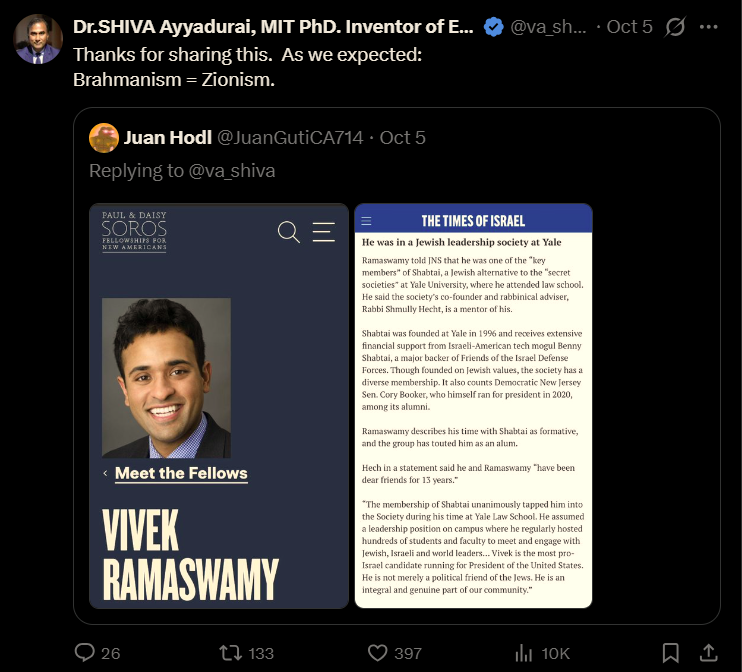
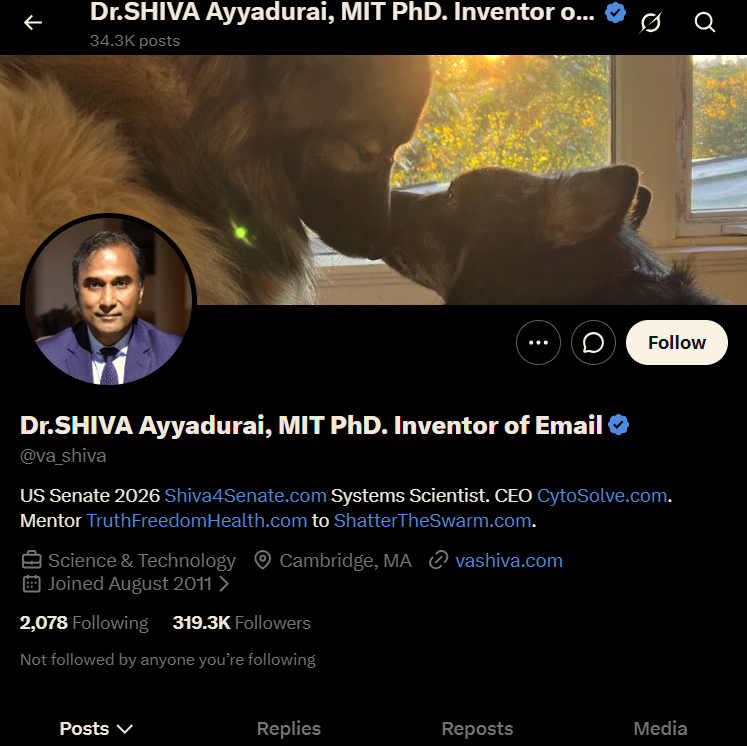
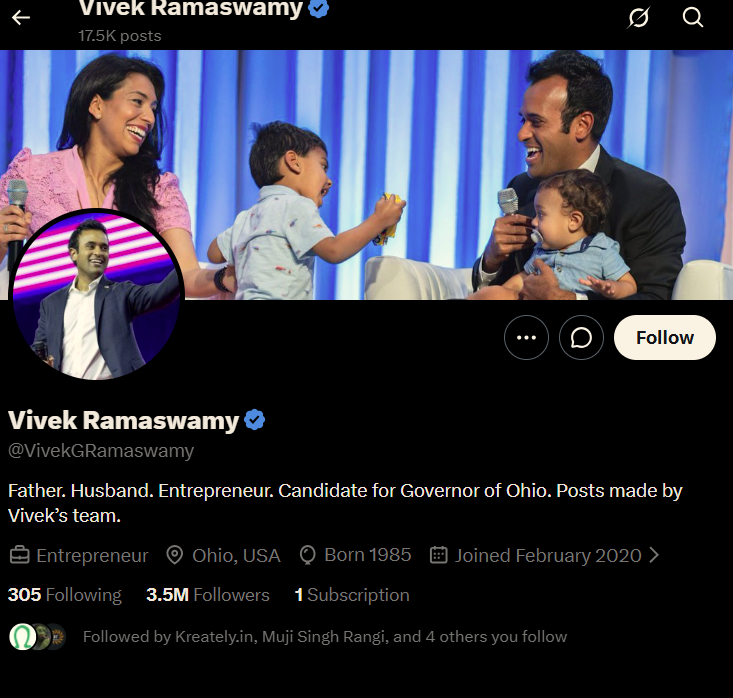
Why it is Hate Crime ?
The primary category selected for this case is: Hate speech against Hindus. The subcategory selected for this case is: Anti-Hindu slurs, mocking faith. Anti-Hindu slurs and the deliberate mocking of the Hindu faith owing to religious animosity involve the use of derogatory terms, stereotypes, or offensive references to religious practices, symbols, or figures. One of the common anti-Hindu slurs used against Hindus is “cow-worshipper” and “cow piss drinker”. The intention of using this term is to demean and mock Hindus as a group and their religious beliefs, since Hindus consider the cow holy. Additionally, some symbols and the slurs attached to them have a historical context that exacerbates the insult, hate, stereotyping, dehumanisation and oppression against Hindus. Cow worship has been used for centuries to denigrate Hindus, insult their faith and oppress Hindus specifically as a religious group. There has been overwhelming documentation about how cow slaughter has been used to persecute Hindus, with cow meat being thrown in temples and places of worship. There has also been overwhelming documentation that cow meat (beef) has been force-fed to Hindus to either forcefully convert them to Islam or denigrate their faith. Apart from cow worship, the Swastika – which holds deep religious significance for the Hindus – has also been misinterpreted and distorted to be used as a slur against Hindus. Similarly, the worship of the Shivling has been used by supremacist ideologies and religions to denigrate Hindus owing to religious animosity. Such slurs and denigration stem from inherent animosity and hate towards Hindus and their faith; therefore, it is categorised as hate speech targeted at Hindus specifically owing to their religious identity. The other subcategory selected for this case is: Call for genocide/violence against Hindus/specific sects of Hindus. Hate speech is defined as any speech, gesture, conduct, writing, or display that is prejudicial against a specific individual and/or group of people, which is leading to or may lead to violence, prejudicial action or hate against that individual and/or group. Often, animosity against Hindus or a specific panth/sampradaya/group of Hindus or a specific ideology they hold manifests itself into hate speech and calls for genocide/violence against that specific section of Hindus. For example, it has often been seen that those who hold animosity against the Hindu faith use specific sects/sampradaya/pant of Hindus as a proxy to express hate against Hindus as a whole. It has been seen that the word ‘Hindutva’ has been used to call for violence against those who say they believe in ‘Hindutva’. It is observed that ‘Hindutva’ is only used as a proxy to call for violence against Hindus as a whole, as seen in the Dismantling Global Hindutva conference where speakers admitted that ‘Hindutva’ cannot be eradicated till ‘Hinduism’ is eradicated. The eradication of an entire faith, in turn, is a genocidal call against the entire community that practices that faith. Further, it is also observed that violence against a specific section of Hindus is made, justifying these calls by weaving exaggerated tales of historical injustices. Often, those who hold animosity towards Hindus and their faith attempt to make their animosity more palatable by justifying their hate for a specific section, claiming that they are against that particular section because of their faith in the broader community and the religion they process. Such calls for violence against specific sections of Hindus, as mentioned, is a proxy for their animosity against the entire community and the faith they profess, and therefore, would be considered hate speech under this category. This case was included under Hate Speech Against Hindus because the rhetoric weaponised Brahmin identity as a marker of contempt. The speech did not merely challenge caste hierarchy or disagree with a political position; it reduced Brahmin identity itself to something corrupt, dangerous and deserving of hostility. Using an inherited Hindu religious-cultural identity as the basis for degradation is a clear form of prejudicial and identity-directed hate speech. The repeated portrayal of “Brahmanism” as inherently sinister, parasitic and conspiratorial created a dehumanising stereotype around Brahmins. Ayyadurai's remarks assigned collective moral guilt to individuals solely because of the identity with which they are associated. They stripped people of individuality and presented their background as sufficient evidence of manipulation, domination and social harm. This form of stereotyping encourages audiences to regard Brahmin identity itself with suspicion and contempt. The rhetoric also attacked the religious and cultural dignity attached to Brahmin identity within Hindu civilisation. Brahmins have historically been closely associated with the preservation of scriptures, ritual traditions, religious learning and priestly practices. Turning that identity into an abusive political epithet therefore carries an unmistakable Hindu religious dimension. It denigrates an identity deeply embedded within Hindu religious history and converts it into a shorthand for something supposedly immoral and oppressive. Ayyadurai's repeated equation of Brahmanism with Zionism and Nazism further reinforced this hostility. His formulation, “Zionism = Nazism = Brahmanism”, placed a Hindu-associated tradition alongside an ideology responsible for genocide and mass persecution. He also explicitly connected Brahmanism with Hinduism, extending his attacks beyond caste structures to Hindu religious and intellectual heritage. While he presents his remarks as opposition to caste discrimination, criticism of caste hierarchy does not justify portraying an entire Hindu-associated community or its religious traditions as inherently evil. The language describing the targeted identity as something that “must be burned to the ground” marked a further escalation from prejudice into violent rhetoric. Once an identity has been portrayed as corrupt and parasitic, invoking its destruction creates an eliminationist message. The target is no longer presented as something to debate, reform or oppose, but as something that deserves eradication. This makes the language materially more dangerous than ordinary political criticism or invective. The case therefore reflects two connected forms of religiously motivated hostility. First, Brahmin identity was degraded through sweeping, dehumanising and conspiratorial characterisations. Second, this hostility extended to Hindu religious and cultural traditions through the repeated vilification of Brahmanism and its equation with Nazism. The call to burn the supposed Brahmin network to the ground further escalated the rhetoric into destructive expression. The fundamental motivation behind these remarks was to demean and vilify a Hindu-associated community and discredit the religious and cultural traditions connected to it. By using Brahmanism as a vehicle to portray Brahmins and Hindu heritage as corrupt, parasitic and dangerous, Ayyadurai's rhetoric went far beyond opposition to caste discrimination. His words reflected deep-seated hostility towards a Hindu religious-cultural identity, expressed through dehumanising stereotypes and language invoking destruction. As such, this incident is being categorised as a religiously motivated hate crime against Hindus.
Victim Details
Total Victim
1
Deceased
0
Gender
- Male 1
- Female 0
- Third Gender 0
- Unknown 0
Caste
- SC/ST 0
- OBC 0
- General 1
- Unknown 0
Age Group
- Minor 0
- Adult 1
- Senior Citizen 0
- Unknown 0


Case Status
Unknown


Perpetrators Details
Perpetrators
Others
Perpetrators Range
One Person
Perpetrators Gender
male
 Sources



