Hindu religious festivals mocked and insulted by Muslim man in Pune, Maharashtra
 Pune, Maharashtra, India
  9 January, 2026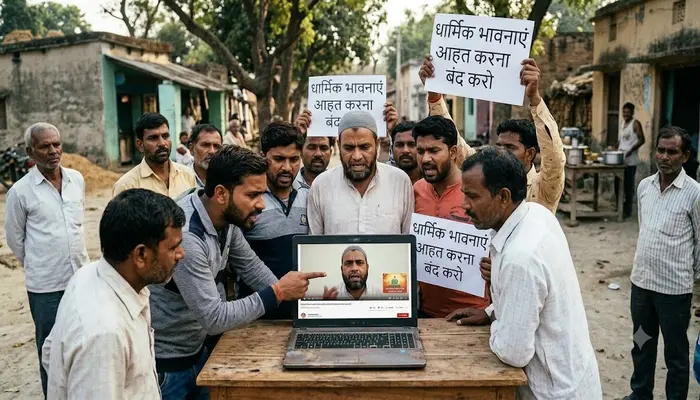
Case Summary
Hindu sentiments were outraged after a Muslim man named Mohammad Aamir made objectionable remarks against Hindu religious festivals. According to reports, Mohammad Aamir, the head of Siswa village in Balrampur district, was arrested on 10 January 2026 after a video of him making objectionable remarks against Hindu religious festivals circulated on social media. The video had been recorded in Pune and showed Aamir making derogatory remarks about Hindu religious practices and festivals. The video subsequently circulated widely on social media, prompting outrage and complaints in Balrampur. Following the complaints, Balrampur Police arrested Aamir. Police also began searching for another person who was connected to the video and the incident. An investigation was underway into the remarks and the circumstances surrounding the recording and circulation of the video.
Why it is Hate Crime ?
This case is being added to the tracker under the primary category: Hate Speech against Hindus. The subcategory selected is: Anti-Hindu slurs, mocking faith. Anti-Hindu slurs and the deliberate mocking of the Hindu faith owing to religious animosity involve the usage of derogatory terms, stereotypes, or offensive references to religious practices, symbols, or figures. One of the common anti-Hindu slurs used against Hindus is “cow-worshipper” and “cow piss drinker”. The intention of using this term is to demean and mock Hindus as a group and their religious beliefs since Hindus consider the cow holy. Additionally, some symbols and the slurs attached to them have a historical context that exacerbates the insult, hate, stereotyping, dehumanisation and oppression against Hindus. Cow worship has been used for centuries to denigrate Hindus, insult their faith and oppress Hindus specifically as a religious group. There has been overwhelming documentation about how cow slaughter has been used to persecute Hindus with cow meat being thrown in temples and places of worship. There has also been overwhelming documentation where cow meat (beef) has been force-fed to Hindus to either forcefully convert them to Islam or denigrate their faith. Apart from cow worship, the Swastika – which holds deep religious significance for the Hindus – has also been misinterpreted and distorted to use as a slur against Hindus. Similarly, the worship of the Shivling has been used by supremacist ideologies and religions to denigrate Hindus owing to religious animosity. Such slurs and denigration stem out of inherent animosity and hate towards Hindus and their faith, therefore, it is categorised as hate speech targeted at Hindus specifically owing to their religious identity. The case qualified as a religiously motivated hate crime because the remarks were directed specifically at Hindu religious festivals and practices, making Hindu religious identity the clear target of the conduct. The subject matter was not a general dispute or personal disagreement but involved expressions directed towards observances that are central to Hindu religious life. This established a direct connection between the conduct and the victim community’s religion. Hindu festivals are important occasions through which Hindus practise and publicly express their faith. They involve religious worship, rituals, prayers and community participation and are therefore protected expressions of Hindu religious identity. Offensive treatment directed specifically at these festivals consequently targeted an identifiable aspect of Hinduism rather than an unrelated cultural or social activity. The religious nexus was further strengthened by the fact that the remarks concerned Hindu religious practices and festivals as a category. By singling out these observances, the conduct treated practices associated specifically with Hinduism as objects of hostility. This was significant because the targeting was based on the religious character of the practices themselves, rather than on an individual characteristic unrelated to faith. The decisive factor was that the remarks targeted Hindu festivals and practices, establishing a clear religious nexus between the offensive conduct and the Hindu community. Taken together, the specific targeting of Hindu festivals and religious practices demonstrated hostility towards an identifiable aspect of Hindu religious identity. The conduct therefore qualified as a religiously motivated hate crime because Hindu religious observance itself was the focus of the offensive remarks.


Case Status
Arrested


Perpetrators Details
Perpetrators
Muslim Extremists
Perpetrators Range
One Person
Perpetrators Gender
male
 Sources




