Hindu temple targeted, Kali Mata idol vandalised by miscreants in Kaushambi, Uttar Pradesh
 Kaushambi District, Uttar Pradesh, India
  3 October, 2026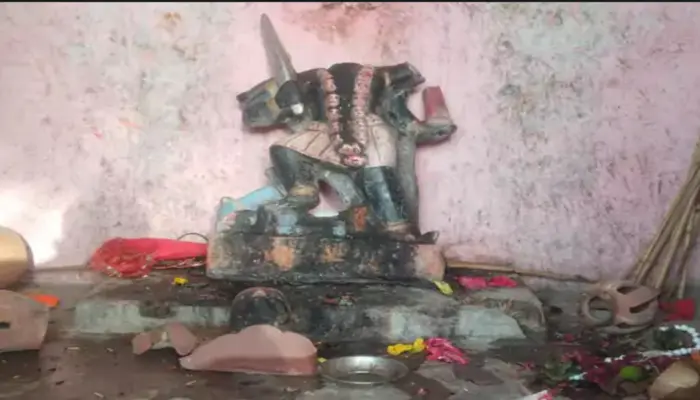
Case Summary
In Kaushambi district of Uttar Pradesh, a Hindu temple was targeted, and the idol of the Goddess was desecrated by unidentified miscreants on the night of Sunday, 4 October 2026. The incident occurred at a local temple located in Alwara village, situated within the jurisdiction of the Mahewaghat police station. The temple was built about three years ago by a local resident named Chhedilal, and villagers from the surrounding areas regularly gathered each morning and evening to perform prayers and rituals. The desecration came to light on the morning of Monday, 5 October 2026, when Hindu devotees arrived at the temple to offer their daily worship and discovered the broken idol lying on the premises. As the news spread, a large crowd of villagers gathered at the site to register their anger and protest against the destruction of the sacred idol. Following the public outcry, law enforcement officials responded on the instructions of Deputy Superintendent of Police Kaushambi, Arun Kumar Shukla. The Mahewaghat police station in-charge, Kumar Sankaram, reached the temple, assessed the damage, and initiated an on-site investigation. To pacify the angered devotees, the police immediately arranged for a replacement idol and assured the community that the new deity would be formally consecrated and installed according to traditional Hindu rituals during the Navratri festival. Acting on a formal complaint lodged by the temple founder, Chhedilal, the Mahewaghat police registered a First Information Report against unidentified perpetrators. Senior police officials confirmed that an active search was underway to trace and arrest the culprits.
Why it is Hate Crime ?
The primary category selected in this case is- Attack on Hindu religious representations. The subcategory selected is- Desecration of Hindu religious symbols. Icons and symbols or a religious representation of a spiritual ideal are widely revered in Hinduism. Iconography is of vital significance in the Hindu milieu. It helps connect people’s spiritual beliefs with the real world. Iconography within the Hindu faith takes several shapes and forms. Murtis are of most significance to Hindus, to which daily rituals, prayers and offerings are done. Besides the murtis, there are several other symbols which have deep significance in the Hindu faith – the Om and Swastika for example. Since these Hindu religious symbols hold paramount importance in Hinduism, any desecration of symbols, icons, murtis, religious representations and manifestations, is driven by animosity towards the faith itself which manifests itself through these murtis, icons and symbols. Therefore, any desecration of these Hindu religious symbols and representations is considered religiously motivated hate crimes under this category. The other subcategory selected is- Attack on Temples. In Hinduism, a temple is the abode of the Deity. The Deity in the Temple is consecrated, thereby, making it a real, breathing entity. Hindus believe that not just the Deity but the temple premises itself are sacred to Hindus since Hindus hold the faith that the entire Temple space is an amalgamation of the divine energy of the deity. Given the central significance of Temples in Hindu Dharma, any attack against a Hindu Temple or its peripheral premises is an attack on the faith itself and is born out of animosity towards the faith, of which, the Temple is a central tenet. Any manner of attack against a Temple and/or its premises would therefore be considered a religiously motivated hate crime. This incident constituted a religiously motivated hate crime because the perpetrators specifically targeted the fundamental religious markers of the local Hindu community: their sacred place of worship and their consecrated deity. The destruction was not an act of random property damage but a calculated assault on the religious identity and spiritual life of the villagers. By invading the temple premises, the perpetrators committed a direct attack on a space that served as the sacred abode of the deity. For the devotees, the temple was not merely a physical structure but an amalgamation of divine energy central to their daily lives. Violating this sanctuary to inflict damage demonstrated a deep-seated animosity towards the Hindu faith and a deliberate intent to defile a site of profound religious significance. Furthermore, the physical destruction of the Goddess idol constituted a severe desecration of a core Hindu religious representation. The murti functioned as the living embodiment of the divine, forming the vital link between the worshippers and their spiritual beliefs. Smashing the idol was an intentional expression of hatred designed to mock the faith of the devotees, sever their spiritual connection, and erase the physical manifestation of their devotion. Ultimately, the underlying motive was clear religious hostility. The perpetrators sought to disrupt the daily rituals of the local Hindus and intimidate the community by destroying the central object of their reverence. This targeted violation of both the temple space and the sacred idol confirmed the act as a hate crime driven exclusively by religious prejudice. It is important to mention that, although the last update stated that the miscreants were unknown, regardless, the action stemmed from hatred against Hinduism and resulted in the desecration of sacred temple idols and would therefore be considered a religiously motivated hate crime. Hence, this case is being added to the Hate Crime database of the Hinduphobia Tracker.


Case Status
Complaint registered


Perpetrators Details
Perpetrators
Unknown
Perpetrators Range
Unknown
Perpetrators Gender
unknown
 Sources




