Ancient Hindu temple targeted, idols of Hindu deities vandalised in Sindh, Pakistan
 Sindh, Pakistan
  4 October, 2026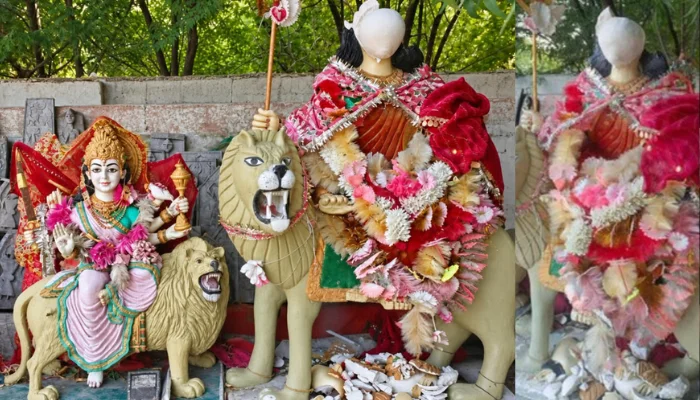
Case Summary
In Sindh, Pakistan, a Hindu temple was targeted and the sacred idols of Hindu deities were vandalised by unidentified miscreants. According to media reports, the temple targeted was the centuries-old Mata Jog Maya temple in Rathi village of Nagarparkar Taluka in Tharparkar. The perpetrators entered the temple overnight and destroyed the idols of Hindu deities, including Goddess Durga, inside the temple premises. The incident was discovered after the vandalism had taken place. Following the incident, Nagarparkar Station House Officer Subhan Memon and Rahmatullah Dars, in-charge of the Harho/Haaro Police Post, visited the temple. The officials inspected the site and initiated an inquiry into the circumstances surrounding the vandalism. The Mata Jog Maya temple was regarded by the local Hindu community as an important religious site. The incident therefore caused particular concern among Hindu residents and community representatives, who called on the authorities to identify those responsible and take action against them under Pakistani law. The incident also prompted appeals to senior authorities, including the Assistant Commissioner Nagarparkar, Deputy Commissioner Tharparkar, Deputy Inspector General Mirpurkhas and Senior Superintendent of Police Tharparkar, to ensure that the matter was investigated promptly and transparently. Residents and community representatives urged the authorities to preserve evidence from the temple, examine any available CCTV footage and other forensic material, and record statements from temple caretakers and local residents. They also called for those found responsible for vandalising the Hindu place of worship and damaging its sacred idols to be prosecuted according to Pakistani law. The identities of those responsible had not been established at the time of reporting, and no suspect had been publicly identified. This case highlights the persecution faced by the Hindu minorities in Pakistan, marked by systemic discrimination, violence, and forced conversions. Hindu women, particularly young girls, are often abducted, forcibly converted to Islam, and married off to Muslim men with little to no legal recourse. Temples are frequently vandalised or destroyed, and Hindu communities are subjected to social and economic marginalisation. Blasphemy laws are disproportionately used against Hindus, leading to false accusations and severe punishments. Many Hindu families are forced to flee their homes due to religious intolerance, living in constant fear of attacks. This sustained persecution highlights the dire conditions for Hindus in Pakistan, where their religious identity makes them targets of oppression.
Why it is Hate Crime ?
This case is being added to the tracker under the primary category: Attack on Hindu religious representations. The subcategory selected is: Desecration of Hindu religious symbol. Icons and symbols or a religious representation of a spiritual ideal are widely revered in Hinduism. Iconography is of vital significance in the Hindu milieu. It helps connect people’s spiritual beliefs with the real world. Iconography within the Hindu faith takes several shapes and forms. Murtis are of most significance to Hindus, to which daily rituals, prayers and offerings are done. Besides the murtis, there are several other symbols which have deep significance in the Hindu faith – the Om and Swastika for example. Since these Hindu religious symbols hold paramount importance in Hinduism, any desecration of symbols, icons, murtis, religious representations and manifestations, is driven by animosity towards the faith itself which manifests itself through these murtis, icons and symbols. Therefore, any desecration of these Hindu religious symbols and representations is considered religiously motivated hate crimes under this category. The other subcategory selected is: Attack on Temples. In Hinduism, a temple is the abode of the Deity. The Deity in the Temple is consecrated, thereby, making it a real, breathing entity. Hindus believe that not just the Deity but the temple premises itself are sacred to Hindus since Hindus hold the faith that the entire Temple space is an amalgamation of the divine energy of the deity. Given the central significance of Temples in Hindu Dharma, any attack against a Hindu Temple or its peripheral premises is an attack on the faith itself and is born out of animosity towards the faith, of which, the Temple is a central tenet. Any manner of attack against a Temple and/or its premises would therefore be considered a religiously motivated hate crime. This case was a clear example of a religiously driven hate crime, as the perpetrators targeted a sacred Hindu temple and vandalised idols of revered Hindu deities, including Goddess Durga. Hindu temple idols hold profound religious significance and are deeply revered as sacred manifestations through which devotees offer worship, prayers and devotion. They are central to Hindu religious practice and are not merely objects of artistic or cultural value. Therefore, vandalising these sacred representations amounted to an affront to Hindu faith and sentiments, constituting deliberate disrespect towards objects held sacred by the Hindu community and reflecting hostility towards Hinduism and its traditions. As the desecration occurred inside a Hindu temple, the attack extended beyond the idols themselves to the sanctity of the temple. Hindu temples and their sacred idols form an interconnected religious ecosystem, with temples serving as spaces for worship, rituals and devotion and the deities forming their spiritual focus. Desecrating the idols within such a space therefore amounted to an attack on the Hindu temple itself and its sanctity, demonstrating hostility towards a place deeply revered by the Hindu community. The incident took place in Pakistan, a Muslim-majority country where Hindus have faced persecution, discrimination and repeated attacks on their religious sites. Hindu temples and other places of worship have been subjected to vandalism and desecration on multiple occasions, forming part of a wider pattern of hostility towards Hindu religious spaces. Against this backdrop, the targeting of a Hindu temple and its sacred idols reflected the broader religious animosity faced by the Hindu community in Pakistan and could not be viewed merely as an isolated act of vandalism. Although the perpetrators remained unidentified, the deliberate vandalism of sacred Hindu idols and targeting of a Hindu place of worship amounted to a clear case of a religiously driven hate crime. Therefore, this case was added to the hate crime database of the Hinduphobia Tracker. Disclaimer: Hinduphobia Tracker records incident dates based on when the crime occurred rather than when it was reported by the media. However, the media reports in this case did not specify the exact date on which the vandalism occurred. The only date mentioned was 5 October 2026, when the report was published. Hence, an indicative incident date of 5 October 2026 has been selected for documentation purposes only.


Case Status
Unknown


Perpetrators Details
Perpetrators
Unknown
Perpetrators Range
Unknown
Perpetrators Gender
unknown
 Sources




