Hindu deities Lord Ram and Goddess Sita depicted in obscene edited image by Muslim man in Govandi, Mumbai
 Mumbai, Maharashtra, India
  4 October, 2026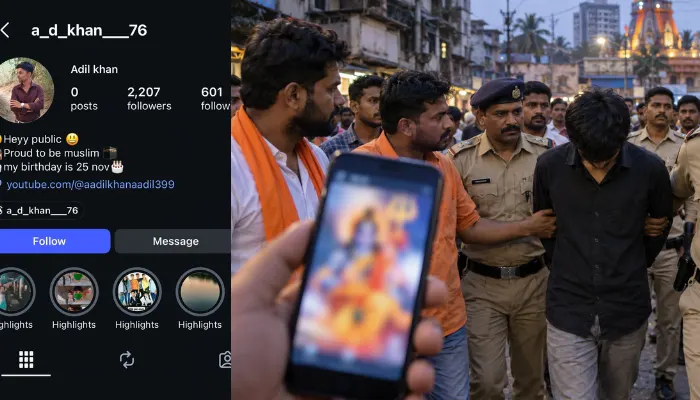
Case Summary
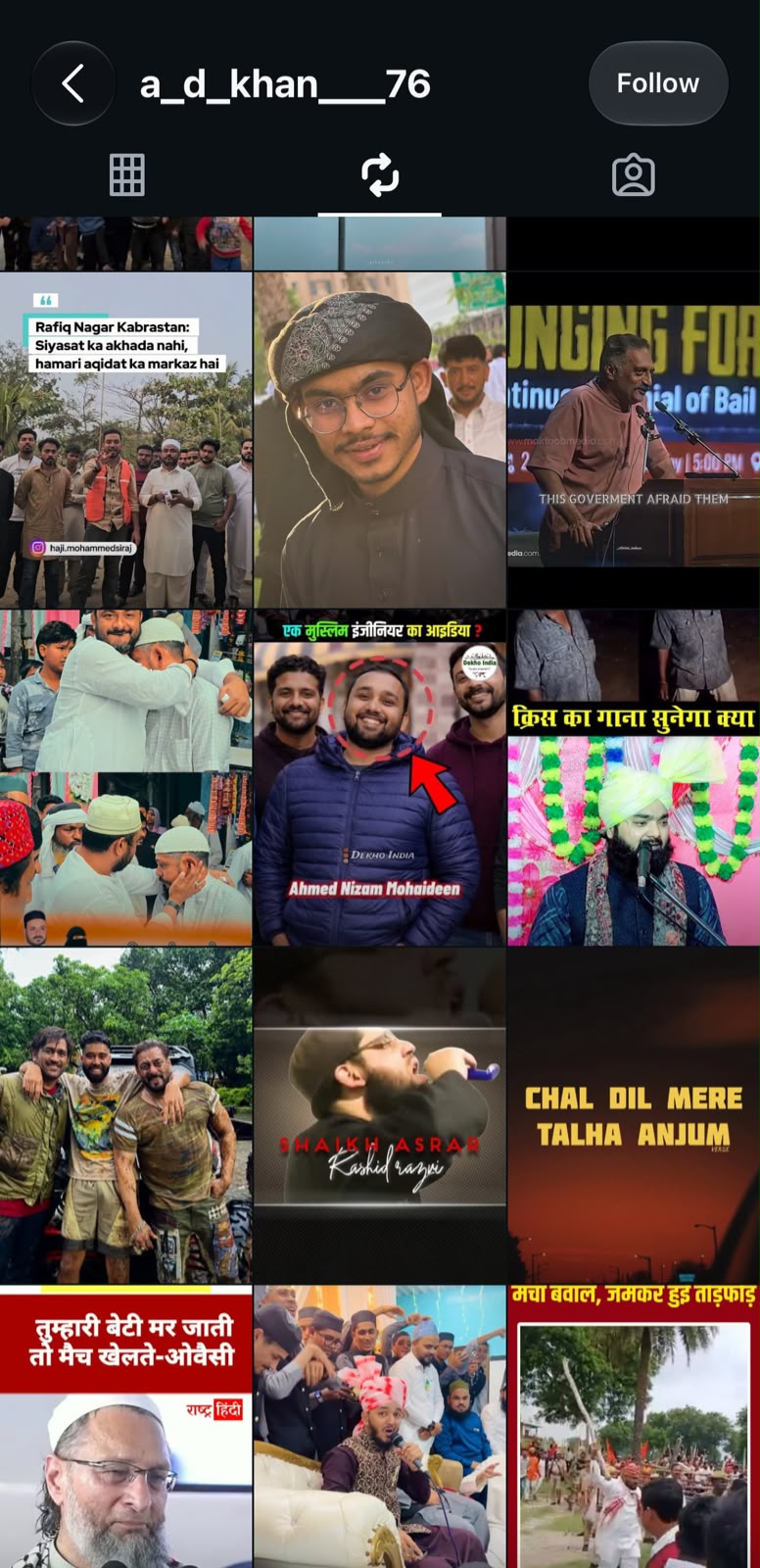
In Govandi, Mumbai, Maharashtra, Hindu religious sentiments were hurt after Muslim man Adil Khan deliberately edited and circulated an obscene and sexualised image depicting Lord Ram and Goddess Sita on social media. The image presented revered Hindu deities in an objectionable manner, prompting members of the Bajrang Dal to confront Khan over the post and subsequently hand him over to the police. In examining the case, the Hinduphobia Tracker identified Adil Khan’s Instagram account as a_d_khan__76 and reviewed his broader social-media activity. The Tracker found that the account contained political content, including material supportive of the BJP, alongside reposted content in which Hindus or Hindu supporters were derided using expressions such as “andhbhakt”, meaning “blind devotee”. The account also contained material associated with CJP, which Khan appeared to follow or support. These posts formed part of the Tracker’s assessment of his broader online activity surrounding the objectionable post. The immediate controversy centred on the edited depiction of Lord Ram and Goddess Sita, both of whom occupy deeply revered positions in Hindu religious tradition. The image had been altered in an explicitly sexual and obscene manner before being shared online, turning sacred Hindu figures into the subject of degrading visual content. After becoming aware of the post, Bajrang Dal members located and confronted Adil Khan. During the confrontation, Khan claimed that he respected Hindu gods and goddesses “from the heart”. Videos circulating from the incident showed him being reprimanded and being compelled to apologise publicly for the objectionable social-media content. The confrontation drew a crowd, following which Khan was handed over to the police. The circulated footage consequently documented both the objectionable-post controversy and the subsequent physical treatment of Khan by the activists.
Case Images



Why it is Hate Crime ?
The primary category for this case is: Attack on Hindu religious representations. The first subcategory for this case is: Iconoclastic representation of Hindu Gods/Goddesses. An icon is a symbol of someone or something that is revered, or a religious representation of a spiritual ideal. Iconography is of vital significance in the Hindu milieu. It helps connect people’s spiritual beliefs with the real world. Iconography within the Hindu faith takes several shapes and forms. Murtis are of most significance to Hindus, to which daily rituals, prayers and offerings are done. Besides the murtis, there are several other symbols which have deep significance in the Hindu faith – the Om and Swastika, for example. Any iconoclastic representation of these symbols, images and murtis is an affront to the religious beliefs and faith of the Hindu community itself since the symbols and icons are deeply religious in nature. In this sub-category of crime, we would record hate crimes and iconoclastic representations, in words, art, or any other form of representation of symbols that hold religious significance for the Hindu community. Since these symbols, icons and murtis are central to the Hindu faith, any iconoclastic representation of these symbols is born out of animosity towards the faith itself, manifesting itself through these symbols; therefore, these representations would be considered religiously motivated hate crimes. This case has been included because it involved the deliberate iconoclastic alteration and sexualisation of revered Hindu deities, Lord Ram and Goddess Sita. Both deities occupy a central and sacred position in Hindu religious belief, and their images are treated by devotees as representations of the divine rather than as ordinary artistic subjects. By editing their image into an obscene and explicitly sexual form and circulating it publicly, Adil Khan transformed a sacred Hindu representation into an object of vulgarity and ridicule. The act therefore directly attacked the dignity attached to Hindu iconography and deeply hurt the religious sentiments of Hindu devotees. Lord Ram and Goddess Sita hold profound theological and devotional significance in Hinduism. Lord Ram is worshipped as an incarnation of Lord Vishnu and is regarded as an embodiment of dharma, righteousness, restraint and ideal conduct. Goddess Sita is revered as an embodiment of virtue, devotion, courage, dignity and divine feminine strength. Their relationship is treated within Hindu tradition as sacred and spiritually significant. Sexualising their image consequently did not merely involve an offensive alteration of two religious figures; it deliberately corrupted a representation that Hindus associate with purity, devotion, marital sanctity and divine conduct. The method used was particularly important. Iconoclastic attacks are not confined to breaking idols or physically damaging temples. Sacred representations can also be attacked through deliberate distortion, vulgarisation, sexualisation or visual desecration. When a revered deity is intentionally depicted in a sexually obscene manner, the sacred meaning of the image is replaced with one intended to humiliate, provoke or degrade. In this case, the offending material directly targeted the religious dignity of Lord Ram and Goddess Sita and converted an object of reverence into a vehicle for disrespect towards Hindu belief. The broader online activity identified by the Hinduphobia Tracker provided additional context to the conduct. The Tracker located Adil Khan’s Instagram account, a_d_khan__76, and found reposted content using expressions such as “andhbhakt” to deride Hindus or people associated with Hindu religious and political identities. This wider online pattern was relevant because the obscene depiction did not exist in complete isolation from other disparaging material. Taken together, the content reflected a repeated willingness to demean identities and symbols associated with Hindus rather than a respectful engagement with Hindu religious belief. The significance of the act was magnified because religious icons in Hinduism are integral to devotion, memory and worship. Images of Hindu deities are displayed in temples, homes and sacred spaces, incorporated into festivals and rituals, and treated by devotees with reverence. To deliberately sexualise such representations is therefore to attack something through which believers express their relationship with the divine. The injury caused is consequently collective as well as individual: the distortion is directed at symbols shared by an entire religious community. The conduct therefore went beyond crude humour or an ordinary offensive social-media post. It involved the conscious transformation of sacred Hindu iconography into obscene material, stripping revered deities of the dignity with which they are worshipped and presenting them in a manner fundamentally incompatible with their religious significance. Such iconoclastic representation demonstrated contempt, hostility and animosity towards Hindu religious symbols and the sentiments attached to them, and for this reason the incident was documented as a religiously motivated hate crime involving an attack on Hindu religious representations. Disclaimer: The Hinduphobia Tracker records incidents based on the date on which they occurred or when the objectionable content was first circulated. In this case, the exact date on which the edited and obscene image of Lord Ram and Goddess Sita was originally created or uploaded was not specified in the available material. Therefore, 5th October 2026 has been recorded as the indicative incident date for documentation purposes only.


Case Status
Complaint filed


Perpetrators Details
Perpetrators
Muslim Extremists
Perpetrators Range
One Person
Perpetrators Gender
male
 Sources




