Hindu minor sexually exploited for five years by Muslim man, pressured to convert to Islam and blackmailed with obscene videos in Nashik, Maharashtra
 Nashik, Maharashtra, India
  4 October, 2021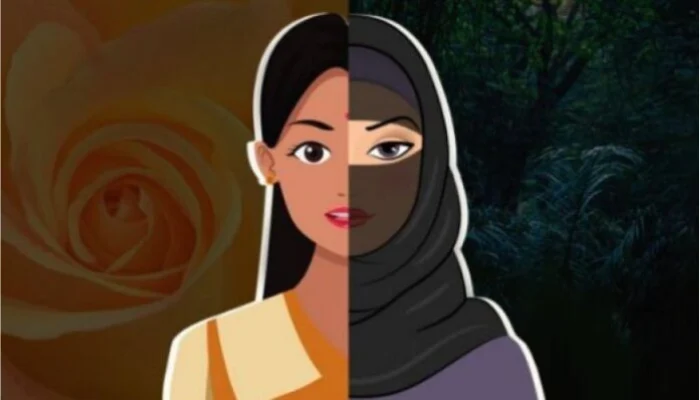
Case Summary
A Hindu minor girl in Nashik, Maharashtra, was sexually exploited from the age of 16 by a Muslim man identified as Aman Afsar Khan, who later pressured her to convert to Islam as a precondition for marriage. He also blackmailed her with obscene photographs and videos, demanded ₹5 lakh for deleting the material, and continued sexually exploiting her even after she attempted to end the relationship. The victim first came into contact with Aman on Instagram in 2021, when she was in Class 11 and about 16 years old. During the same period, her father died, leaving her emotionally vulnerable. During this time, Aman developed a close relationship with her and assured her he would marry her. Despite knowing that she was a minor, he took her to a lodge and subsequently to around 30 different locations, where he sexually exploited her on the promise of marriage. At the time the incident was documented, the victim had become an adult. After the victim attained adulthood and asked Aman to fulfil his promise of marriage, he made conversion to Islam a condition for marrying her. Under this pressure, she converted to Islam. She was subsequently pressured to live according to an Islamic identity, including wearing a burqa, and was restricted from interacting with other men. Despite her conversion, Aman did not marry her and continued taking her to different places and sexually exploiting her. During the course of the exploitation, Aman obtained obscene photographs and videos of the victim. He used this material to blackmail her by threatening to circulate it on social media and demanded ₹5 lakh in exchange for deleting the photographs and videos. The threats continued even when she attempted to distance herself from him and end the relationship. On 25th June 2025, Aman forcibly called the victim to meet him and raped her again. He subsequently demanded money and threatened her with serious consequences. Unable to endure the prolonged sexual exploitation, conversion pressure, blackmail and threats, the victim eventually disclosed her ordeal to her family. The victim subsequently approached Bhadrakali Police Station in Nashik with her family and lodged a complaint. Police registered a case against Aman Afsar Khan under the POCSO Act, relevant criminal provisions, and Maharashtra’s anti-conversion law. The case was described as the first case registered in Nashik under the newly implemented anti-conversion provisions. At the time of the available report, Aman Afsar Khan had absconded, and police had launched a search for him. Investigators were examining the sexual exploitation that began when the victim was a minor, the conversion pressure connected with marriage, the obscene digital material, the ₹5 lakh demand, and the subsequent threats and sexual violence. The Hinduphobia Tracker contacted the concerned police station in Nashik and confirmed that the victim was Hindu.
Why it is Hate Crime ?
The primary category selected in this case is: Crimes against women in relationships and other sexual crimes. The subcategory selected is: Forced conversion before marriage. The tertiary category selected for this case is: Forced to wear a Hijab. In such cases, a non-Hindu man is in a relationship with a Hindu woman when the pressure to convert her religion begins to manifest. In such cases, typically, two patterns emerge. First, when the relationship is consensual and the religious identity of the perpetrator is known to the Hindu woman in the relationship, at some point during the relationship, the non-Hindu man starts to force the victim to convert her religion and give up her Hindu religious identity. The second is when the woman marries the man, who pretends to share her faith. Later, when the truth is revealed, the man starts pressuring the woman to convert her religion and give up her religious identity. In both situations, the methods used to force the victim to convert her religion often revolve around force-feeding beef, forcing her to wear hijab, forcing her to read the Kalma or even pressuring the victim to do ‘Nikah’, which is marriage under Islamic law, with a prerequisite being conversion to Islam. Cases where a Hindu woman consensually converts to Islam in a relationship will be left out of the hate crime database, even though it could be argued in several cases that the conversion was a result of religious brainwashing. The other subcategory selected is: Blackmailed to convert. When Hindu women are in a relationship with non-Hindu men, there are cases where the woman is blackmailed to convert her religion, owing to her religious identity as a Hindu. Such relationships may be consensual, with the religious identity of the non-Hindu man known to the victim; however, there could be cases where the relationship is not consensual, and the non-Hindu man starts blackmailing a Hindu woman to convert her religion. In these cases, it is often seen that the Hindu woman is blackmailed with intimate photos and/or videos, threats of harm to her or her family, threats of violence, etc. Such cases are driven by specific religious motivations, are against the religious identity of the victim, and are therefore qualified as hate crimes. The other subcategory selected for this case is: Brainwashed and/ or groomed. The tertiary categories are: Rape and sexual assault/harassment and Conversion of minor. In our database, we have not added incidents where women have converted to another religion of their free will and no allegations of forced/involuntary conversion have been made. However, there are certain cases of conversion where the consent itself is a result of the brainwashing or grooming of a minor by the non-Hindu perpetrator trying to victimise a woman for her Hindu religious identity. The phenomenon of grooming points to non-Hindu perpetrators identifying their Hindu victims’ vulnerabilities and exploiting them over months and sometimes years, to extract the supposed ‘consent’ in order to convert their religion. In most cases of grooming, the victims are minors or the grooming started when the victim was a minor. In other cases of grooming, the non-Hindu perpetrator brainwashes and grooms a minor victim to extract their trust and then proceeds to rape them repeatedly with the intent of converting them to their faith. It is pertinent to understand here that when the victim is a minor, the ‘consent’ to convert or enter into a romantic relationship with an adult itself is redundant – addressed by POCSO. While every case of conversion of a minor and incidents of establishing a physical relationship with a minor by an adult is a crime, for the purpose of this database, a case would be considered a hate crime only if there is a distinct religious angle to the grooming. For example, in the UK, if a Hindu minor is targeted by Pakistani grooming gangs, it would be considered a hate crime because the victims are specifically targeted owing to their non-Muslim religious identity with the perpetrators being Muslim. In other cases, if a Hindu minor is brainwashed into entering a physical relationship with the non-Hindu adult perpetrator and the family alleges grooming/brainwashing of the minor to convert her religion, it would form a part of this database. If the victim is a Hindu adult, the case would form a part of this database only if the victim herself says that she was brainwashed/groomed to convert her religion. However, if the victim is deceased (murdered or otherwise), the case would form a part of this database if her family/friends provided testimony that the victim was brainwashed/groomed to convert her religion. Since these crimes have a distinct religious angle where the victim is being targeted owing to her Hindu religious identity, these cases are considered a hate crime. The next primary category selected in this case is: Predatory Proselytisation. The subcategory selected is: Harassment, threat, coercion for conversion. Harassment covers a wide range of behaviours of an offensive nature. It is commonly understood as behaviour that demeans, humiliates, and intimidates a person, including threats and coercion. Harassment and threats, in this case, find their root in discriminatory grounds, which have the effect of nullifying a person’s rights or infringing upon his freedom to exercise his rights specifically owing to the victim’s religious identity. Verbal and physical threats and psychological or physical harassment are often used against Hindu victims because they choose to practice their professed religion. Religious harassment also includes forced and involuntary conversions by harassment, threats or coercion. Coercion includes intimidatory tactics like force-feeding a Hindu victim beef to convert to another religion, forceful circumcision, etc. In several documented cases, non-Hindu perpetrators or those who harbour specific animosity towards Hinduism harass victims simply based on their religious identity. Such cases often also include harassment to ensure the Hindu victim abandons his/her professed religion and adopts the religion of the perpetrator. Such cases where Hindu victims are harassed to convert to the perpetrator’s religion are rooted in animosity towards the victim’s religious identity and are therefore documented as religiously motivated hate crimes. The other subcategory selected for this case is: Proselytisation by grooming, brainwashing, manipulation or subtle indoctrination. The tertiary categories are: Rape and sexual assault/harassment and Conversion of minor. In our database, we have not added incidents where women have converted to another religion of their free will, and no allegations of forced/involuntary conversion have been made. However, there are certain cases of conversion where the consent itself is a result of the brainwashing or grooming of a minor by the non-Hindu perpetrator trying to victimise a woman for her Hindu religious identity. The phenomenon of grooming points to non-Hindu perpetrators identifying their Hindu victims’ vulnerabilities and exploiting them over months and sometimes years to extract the supposed ‘consent’ to convert their religion. In most cases of grooming, the victims are minors or the grooming started when the victim was a minor. In other cases of grooming, the non-Hindu perpetrator brainwashes and grooms a minor victim to extract their trust and then proceeds to rape them repeatedly with the intent of converting them to their faith. It is pertinent to understand here that when the victim is a minor, the ‘consent’ to convert or enter into a romantic relationship with an adult itself is redundant – addressed by POCSO. While every case of conversion of a minor and incidents of establishing a physical relationship with a minor by an adult is a crime, for this database, a case would be considered a hate crime only if there is a distinct religious angle to the grooming. For example, in the UK, if a Hindu minor is targeted by Pakistani grooming gangs, it would be considered a hate crime because the victims are specifically targeted owing to their non-Muslim religious identity, with the perpetrators being Muslim. In other cases, if a Hindu minor is brainwashed into entering a physical relationship with the non-Hindu adult perpetrator and the family alleges grooming/brainwashing of the minor to convert her religion, it would form a part of this database. If the victim is a Hindu adult, the case would form a part of this database only if the victim herself says that she was brainwashed/groomed to convert her religion. However, if the victim is deceased (murdered or otherwise), the case would form a part of this database if her family/friends provided testimony that the victim was brainwashed/groomed to convert her religion. Since these crimes have a distinct religious angle where the victim is being targeted owing to her Hindu religious identity, these cases are considered a hate crime. This case was documented as a religiously motivated hate crime because the victim’s vulnerability was exploited from the time she was a 16-year-old Hindu minor, and the relationship later became the vehicle through which pressure was applied to detach her from Hinduism and bring her into Islam. The religious dimension did not arise merely because the perpetrator and victim belonged to different faiths. It arose because marriage was ultimately made conditional upon religious conversion, while the victim’s emotional dependence, prolonged sexual exploitation and compromised position were used to influence her religious identity. Such acts are carried out by Muslim perpetrators due to indoctrination by Islamic theology, which advocates that all non-Muslims (referred to as kafirs) are inferior and subject to subjugation unless they convert to Islam or live under Islamic rule (dhimmitude). These ideas are not mere abstractions; they manifest in actions where non-Muslims, especially Hindus in India, are seen as targets for religious domination, coercion, or humiliation. This theological framework fosters an "us versus them" mindset, in which any assertion of Hindu identity or religious freedom is seen not only as undesirable but as a threat to Islamic supremacy. As a result, perpetrators who are shaped by such teachings feel justified, even morally obligated, to harass, suppress, or violently attack Hindus, particularly when Hindus assert their religious rights or resist conversion. As a result, Muslim perpetrators invoke such doctrines to justify coercive attempts to convert non-Muslims, particularly Hindus, portraying conversion as a means of abandoning Kufr (a state of disbelief in Islam or disbelief in Islam) and attaining salvation. Such acts, therefore, are not isolated but driven by a broader ideological hostility towards Hindus as non-believers and reflect an attempt to impose religious dominance. Since this case was also not a random isolated incident of grooming of a minor but a premeditated attack motivated by bias and hatred against the Hindu community, which is a defining feature of hate crimes, this has been added to the tracker. A particularly significant aspect was the grooming process that began while the victim was still a minor. The perpetrator entered her life when she was emotionally vulnerable following her father’s death, developed her trust over time and established an intimate relationship despite her minority. Grooming operates by identifying vulnerability, building dependence, and gradually increasing control over the victim. In this case, that process began before the victim possessed the maturity and legal capacity expected of an adult relationship. The subsequent religious demands therefore emerged from a relationship in which the imbalance of power had already been established over several years. The conversion pressure became explicit when the victim, after attaining adulthood, sought fulfilment of the promise of marriage. Instead of honouring that promise on the terms under which the relationship had developed, the perpetrator required her to convert to Islam before marriage. This changed the relationship from one based on an assurance of marriage into one in which marriage became conditional upon surrendering her existing Hindu identity. Conversion was therefore not presented as an independent spiritual choice but as the price she was expected to pay for the matrimonial commitment that had earlier been promised to her. The subsequent imposition of an Islamic mode of life further demonstrated that the pressure extended beyond a nominal change of religion. The victim was made to adopt Islamic dress, specifically a burqa, and restrictions were placed upon her interactions with other men. This was significant because the coercion moved from demanding a formal conversion to regulating how she was expected to live and publicly present herself after abandoning her Hindu identity. The conduct corresponding to the selected dress-imposition category therefore reflected an attempt to replace visible aspects of her previous identity with practices associated with the perpetrator’s religion. The use of obscene photographs and videos introduced another layer of religious coercion. Intimate material placed the victim in a position where her privacy, reputation and family relationships could be threatened at any moment. When such material is used in the same relationship in which conversion is being demanded, blackmail becomes a mechanism capable of overriding genuine religious choice. The ₹5 lakh demand demonstrated financial exploitation, while the threat of public exposure created psychological leverage that made resistance substantially more difficult. The victim’s ability to reject conversion was therefore exercised in an environment already shaped by fear, humiliation and continuing control. The prolonged sexual exploitation was equally important in understanding the coercive structure of the case. Sexual abuse beginning during minority and continuing into adulthood can create dependence, trauma and fear that severely restrict a victim’s ability to disengage from the perpetrator. In this case, the exploitation preceded the explicit conversion demand and consequently created the vulnerable circumstances in which that demand was later imposed. The sexual violence and religious pressure were therefore not isolated episodes; they formed successive stages of control in which the victim’s body, emotional vulnerability and religious identity became subject to the perpetrator’s domination. The harassment also persisted when the victim attempted to resist and distance herself. This demonstrated that the perpetrator was not merely communicating a preference that she adopt his religion. His conduct sought to overcome her resistance through intimidation, blackmail and continuing sexual violence. Religious conversion obtained under such circumstances cannot be treated as the product of free conscience, because genuine religious choice requires the absence of fear, coercion and exploitative leverage. The victim’s eventual conversion therefore occurred within a relationship that had already been characterised by prolonged grooming and abuse. The case consequently reflected a progression from grooming of a Hindu minor, sexual exploitation, conditional conversion before marriage, imposition of Islamic religious practices, intimate-image blackmail and sustained coercion. Each stage affected a different aspect of the victim’s autonomy: her ability to consent to an adult relationship, her bodily integrity, her privacy, her freedom to decide whether to marry, and ultimately her right to retain her Hindu faith. Taken together, these elements demonstrated hostility towards her continued Hindu identity and an effort to replace that identity through predatory and coercive means rather than through an independent change of belief. One classification point should, however, be kept precise. The available material placed the beginning of the grooming and sexual exploitation at age 16, but stated that the explicit demand for conversion and her subsequent conversion occurred after she had turned 18. Therefore, the case strongly supports grooming of a minor and sexual exploitation of a minor with a later religious-conversion objective, but the specific tertiary label “Conversion of minor” should only be used if additional evidence establishes that the conversion itself occurred before she attained adulthood. The case therefore involved a continuous progression from grooming of a Hindu minor, sexual exploitation, conditional conversion before marriage, imposition of Islamic religious practices, and blackmail and coercion connected with religious change. The significance lay in how these different methods operated together against the same objective: weakening the victim’s ability to remain Hindu and independently determine her religious identity. The sustained interference with her bodily autonomy, dignity and freedom of religion established the basis for documenting the case as a religiously motivated hate crime. Disclaimer: The Hinduphobia Tracker records incidents based on the date on which the victim’s ordeal began. In this case, the victim first came into contact with the accused in 2021, when she was approximately 16 years old, but the exact date on which the grooming and sexual exploitation began was not specified in the available reports. Therefore, 5th October 2021 has been recorded as the indicative incident date for documentation purposes only.
Victim Details
Total Victim
1
Deceased
0
Gender
- Male 0
- Female 1
- Third Gender 0
- Unknown 0
Caste
- SC/ST 0
- OBC 0
- General 0
- Unknown 1
Age Group
- Minor 1
- Adult 0
- Senior Citizen 0
- Unknown 0


Case Status
Complaint registered


Perpetrators Details
Perpetrators
Muslim Extremists
Perpetrators Range
One Person
Perpetrators Gender
male
 Sources




