150-year-old Hindu temple targeted, sacred idol of Lord Hanuman vandalised in Unnao, Uttar Pradesh
 Unnao, Uttar Pradesh, India
  30 September, 2026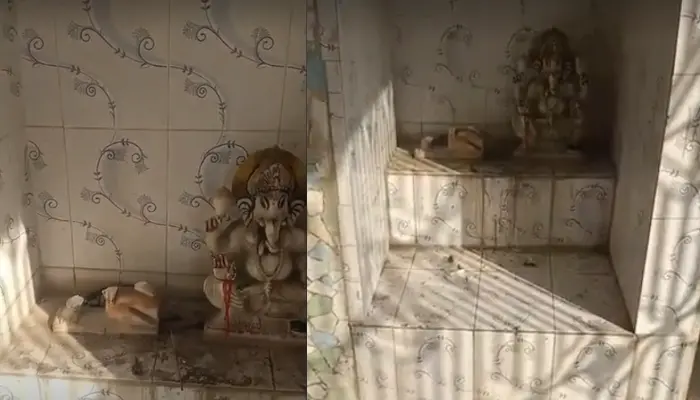
Case Summary
In Unnao, Uttar Pradesh, a 150-year-old Hindu temple was targeted, and the sacred idol of Lord Hanuman was vandalised by unidentified miscreants. The incident took place at a temple near a gas warehouse in Bhagwantnagar town, under the jurisdiction of the Bihar police station. Located in Tilak Bagh, the historic Durga temple housed idols of Lord Ganesha and Lord Hanuman. The miscreants specifically targeted the Hanuman idol, breaking and desecrating it. The incident sparked strong anger among local devotees. Photographs of the desecrated idol subsequently circulated widely on social media, following which the local police and administration took cognisance of the incident. Bhagwantnagar outpost in-charge Krishna Kumar Singh reached the temple along with police personnel and conducted an on-site inspection. The police confirmed that the idol had been desecrated. No written complaint had been submitted to the police at the time of writing this report, and the police stated that they were monitoring the situation. Mahesh Kumar Gupta, a member of the family that built the temple and its caretaker, said that the historic temple had been constructed by his late grandfather, Mannalal Gupta. He expressed anguish over the incident and stated that anti-social elements had previously attempted to damage the idol several times. He added that the matter had already been discussed with the police administration. Following discussions with the temple authorities, it was decided that a new idol would be installed during the upcoming Navratri after performing the requisite religious rituals, and that renovation work would also be carried out at the temple.
Why it is Hate Crime ?
The primary category selected in this case is: Attack on Hindu religious representations. The subcategory selected is: Desecration of Hindu religious symbols. Icons and symbols or a religious representation of a spiritual ideal are widely revered in Hinduism. Iconography is of vital significance in the Hindu milieu. It helps connect people’s spiritual beliefs with the real world. Iconography within the Hindu faith takes several shapes and forms. Murtis are of most significance to Hindus, to which daily rituals, prayers and offerings are done. Besides the murtis, there are several other symbols which have deep significance in the Hindu faith – the Om and Swastika for example. Since these Hindu religious symbols hold paramount importance in Hinduism, any desecration of symbols, icons, murtis, religious representations and manifestations, is driven by animosity towards the faith itself which manifests itself through these murtis, icons and symbols. Therefore, any desecration of these Hindu religious symbols and representations is considered religiously motivated hate crimes under this category. The other subcategory selected is: Attack on Temples. In Hinduism, a temple is the abode of the Deity. The Deity in the Temple is consecrated, thereby, making it a real, breathing entity. Hindus believe that not just the Deity but the temple premises itself are sacred to Hindus since Hindus hold the faith that the entire Temple space is an amalgamation of the divine energy of the deity. Given the central significance of Temples in Hindu Dharma, any attack against a Hindu Temple or its peripheral premises is an attack on the faith itself and is born out of animosity towards the faith, of which, the Temple is a central tenet. Any manner of attack against a Temple and/or its premises would therefore be considered a religiously motivated hate crime. This case was a clear example of a religiously motivated hate crime, as the perpetrators specifically targeted a Hindu temple and desecrated the sacred idol of Lord Hanuman installed there. The deliberate targeting of a Hindu place of worship and a revered representation of a Hindu deity established the religious nature of the attack. Idols hold profound religious significance in Hinduism as consecrated forms of the deity through which devotees offer prayers, rituals and worship. They are not regarded as ordinary physical objects but as sacred manifestations of the divine. Lord Hanuman is revered for his devotion, strength, courage, protection and unwavering dedication to Lord Rama. His idol therefore holds deep spiritual significance as a central object of worship for Hindu devotees. Therefore, the act of deliberately damaging Lord Hanuman's idol amounted to an attack on a Hindu religious symbol and demonstrated disregard for its sacred status and the sentiments of Hindu devotees. Targeting such a revered representation of a Hindu deity reflected the perpetrator's hostility towards Hindu religious belief and constituted an act of anti-Hindu hatred. As the desecration took place within the temple premises, it also constituted an attack on the wider temple ecosystem. Hindu temples are sacred spaces dedicated to worship, prayer, rituals and religious observance, with consecrated idols forming their spiritual centre. The temple and its deity are therefore intrinsically connected. Damaging a sacred idol within a temple consequently constituted an attack not only on the religious symbol itself but also on the sanctity of the Hindu place of worship. Such deliberate desecration of a temple and its sacred representation amounted to an attack on the Hindu faith and constituted a religiously motivated hate crime. The temple had also been targeted repeatedly, with previous attempts made to damage its idols. The recurring nature of these attacks established a sustained pattern of targeting the Hindu place of worship and its sacred representations, rather than an isolated incident. This repeated targeting further demonstrated hostility towards the temple and the Hindu faith it represented. Although the perpetrators remained unidentified at the time of documentation, the nature and repeated pattern of the attacks established hostility towards Hinduism and its places of worship. The specific targeting and desecration of Lord Hanuman's sacred idol therefore qualified the incident as a religiously motivated hate crime. Accordingly, the case was added to the Hinduphobia Tracker's hate crime database. Disclaimer: Hinduphobia Tracker records incidents based on the date on which the crime occurred, rather than the date on which it was reported by the media. In this case, media reports did not specify the exact date on which the crime occurred. Hence, the date on which the incident was reported by the media, 1 October 2026, has been selected as the indicative incident date for documentation purposes only.


Case Status
Complaint not filed


Perpetrators Details
Perpetrators
Unknown
Perpetrators Range
Unknown
Perpetrators Gender
unknown
 Sources




