Anti-Hindu hate speech: Indian politician mocks Hanuman Chalisa and Hindu religious devotion during public rally
 Paschim Medinipur district, West Bengal, India
  29 September, 2026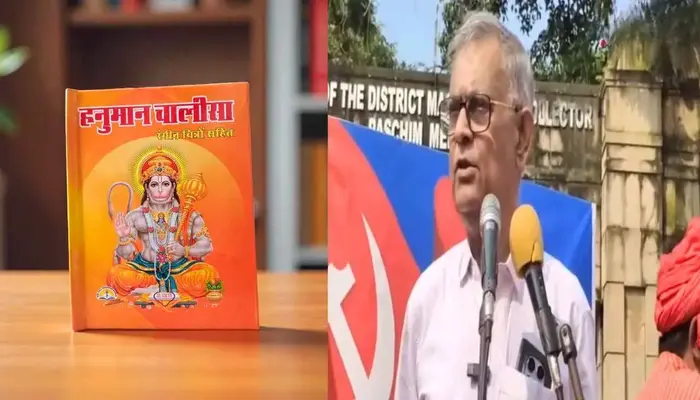
Case Summary
CPI(M) State Secretary Swapan Banerjee made mocking remarks targeting Lord Hanuman and the Hanuman Chalisa while attempting to promote his political ideology and criticise his political opponents. These remarks were rooted in a political dispute after BJP leader and West Bengal Chief Minister Suvendu Adhikari had criticised Left-affiliated book stalls at Durga Puja venues. He had questioned why such stalls sold Marx and Lenin but not Hindu religious works such as the Hanuman Chalisa and Bhagavad Gita within the religious setting. In response to Suvendu Adhikari, Swapan Banerjee made the mocking remarks targeting the Hanuman Chalisa during a Left Front public meeting held at the District Magistrate’s office in Paschim Medinipur, West Bengal. While addressing the gathering, Banerjee criticised the BJP, saying, "This time, books will not be sold in the puja pandals. Hanuman reads Hanuman Chalisa. We are not Hanuman, nor do we belong to Hanuman’s party. We read Marxism, Leninism and Gandhism.” His remarks were circulated on social media and drew criticism for mocking a Hindu religious practice and invoking Lord Hanuman in a political context. The remarks triggered protests from Hindu organisations at the meeting venue, with protesters objecting to mocking a Hindu religious practice and invoking Lord Hanuman in a political context. The incident also drew criticism from political opponents, and the BJP indicated that legal action could be pursued against Banerjee. The Hindu Jagaran Manch subsequently registered an FIR against the CPI leader in connection with the remarks.
Why it is Hate Crime ?
This incident has been added to the tracker under the primary category- Hate speech against Hindus, and within this, the subcategory selected is- Anti-Hindu slurs, mocking faith. Anti-Hindu slurs and the deliberate mocking of the Hindu faith owing to religious animosity involve the usage of derogatory terms, stereotypes, or offensive references to religious practices, symbols, or figures. One of the common anti-Hindu slurs used against Hindus is “cow-worshipper” and “cow piss drinker”. The intention of using this term is to demean and mock Hindus as a group and their religious beliefs since Hindus consider the cow holy. Additionally, some symbols and the slurs attached to them have a historical context that exacerbates the insult, hate, stereotyping, dehumanisation and oppression against Hindus. Cow worship has been used for centuries to denigrate Hindus, insult their faith and oppress Hindus specifically as a religious group. There has been overwhelming documentation about how cow slaughter has been used to persecute Hindus with cow meat being thrown in temples and places of worship. There has also been overwhelming documentation where cow meat (beef) has been force-fed to Hindus to either forcefully convert them to Islam or denigrate their faith. Apart from cow worship, the Swastika – which holds deep religious significance for the Hindus – has also been misinterpreted and distorted to use as a slur against Hindus. Similarly, the worship of the Shivling has been used by supremacist ideologies and religions to denigrate Hindus owing to religious animosity. Such slurs and denigration stem out of inherent animosity and hate towards Hindus and their faith, therefore, it is categorised as hate speech targeted at Hindus specifically owing to their religious identity. This case was added to the tracker because Swapan Banerjee mocked Lord Hanuman and the Hanuman Chalisa while making a political argument against the BJP and promoting Marxist-Leninist ideology. Rather than confining his criticism to political opponents, he used a Hindu devotional practice as a subject of sarcasm and ridicule, making the reference to Hindu faith integral to the rhetoric. Lord Hanuman holds a prominent place in Hindu religious devotion and is revered as a symbol of devotion, strength, courage and service to Lord Rama. The Hanuman Chalisa, a forty-verse devotional hymn dedicated to Hanuman, is one of the most widely recited Hindu prayers and is used by devotees as an expression of faith and devotion. References to Hanuman and the Hanuman Chalisa therefore carry clear religious significance for Hindus. In this context, Banerjee’s use of the Hanuman Chalisa was not a reference to an ordinary book or cultural object but to a central element of Hindu devotional practice, making its sarcastic use in a political argument particularly relevant to the religious nature of the incident. Banerjee made the anti-Hindu remarks targeting Lord Hanuman and the Hanuman Chalisa while he was attacking the BJP and defending the Left’s ideological position. Rather than limiting his criticism to the BJP’s political arguments or policies, he brought a Hindu devotional practice into the political exchange and used it sarcastically to contrast Hindu religious devotion with Marxism, Leninism and Gandhism. In this context, the concern was not simply that he preferred Marxist literature to religious literature; it was that a Hindu religious practice was used as a rhetorical device to advance a political argument and distinguish his ideological camp from its opponents. The same political criticism could have been made without invoking or mocking Hanuman and the Hanuman Chalisa. By turning a sacred Hindu practice into a subject of ridicule while promoting Marxist-Leninist ideology as the alternative, the remark crossed from political criticism into the disparagement of a religious practice. The religious element was therefore integral to the rhetoric rather than incidental to it. This was particularly significant because the speech followed a dispute over the presence of Left-affiliated book stalls at Durga Puja venues. BJP leader Suvendu Adhikari had questioned why these stalls were selling works by Marx and Lenin within the setting of a Hindu religious festival, while Hindu religious works such as the Hanuman Chalisa and Bhagavad Gita were not being offered. The issue was therefore not that the stalls were selling Marxist literature in itself, but that Left ideological works were being promoted at a Hindu religious festival while books representing the festival’s own religious tradition were absent. Instead of countering Suvendu Adhikari’s criticism through a political argument or a respectful response, Banerjee invoked and mocked Hindu devotion. He took the Hanuman Chalisa, a Hindu devotional text raised by Adhikari, and used it sarcastically to contrast Hindu religious devotion with Marxism, Leninism and Gandhism. In doing so, he used a Hindu religious symbol and devotional practice as a rhetorical tool to advance his political argument and distinguish the Left’s ideology from its opponents. Banerjee incorporated a Hindu religious practice into his political rhetoric and mocked it while presenting his ideological alternatives. It was this use and ridicule of a Hindu religious practice to advance a political argument that provided the direct religious nexus to the incident. Taken together, the incident had a clear religious nexus because Banerjee used Lord Hanuman and the Hanuman Chalisa, a prominent element of Hindu devotional practice, as objects of mockery while advancing a political and ideological argument in favour of Marxism, Leninism and Gandhism. The issue was therefore not his criticism of the BJP or his expression of Marxist ideology, which constituted political speech in itself, but his choice to advance that political rhetoric by ridiculing a Hindu religious practice. By turning a sacred Hindu text and its devotional significance into a subject of political mockery, the remark reportedly targeted an identifiable aspect of Hindu faith rather than merely a political opponent, providing the basis for treating the incident as anti-Hindu hate speech. Disclaimer: The Hinduphobia Tracker records incidents based on when an event occurred or when the victim's ordeal began. It is important to clarify that none of the media sources covering this case has specified the exact date when the CPI(M) State Secretary Swapan Banerjee made these remarks. Therefore, for documentation purposes, we have recorded the date based on when the incident was reported in the media, 30 September 2026.


Case Status
Complaint registered


Perpetrators Details
Perpetrators
Others
Perpetrators Range
One Person
Perpetrators Gender
male
 Sources




