Hindu transgenders assaulted for Varaha Puja, Hindu deity mocked; Muslim accused had earlier threatened forced conversion to Islam
 Pune, Maharashtra, India
  21 September, 2026
Case Summary
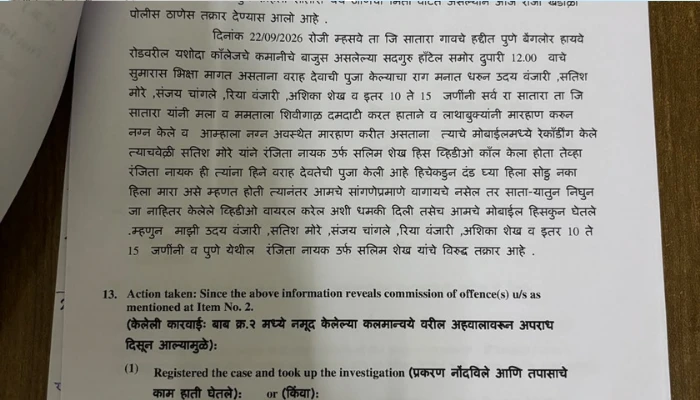
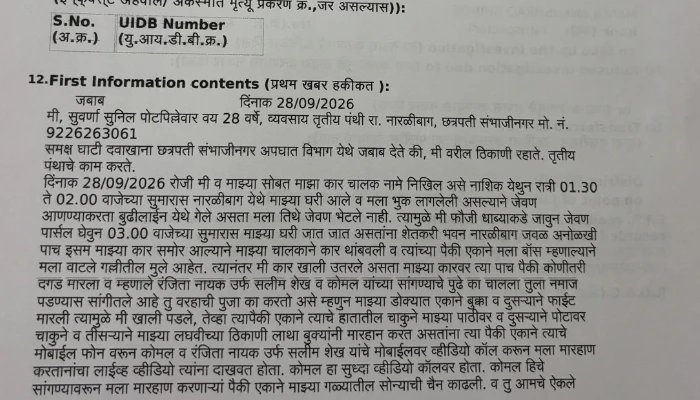
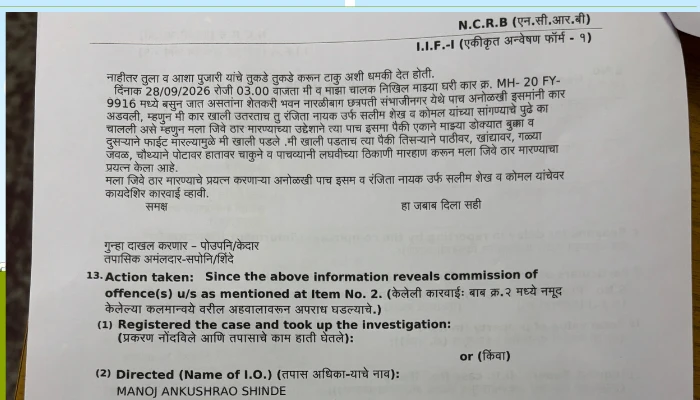
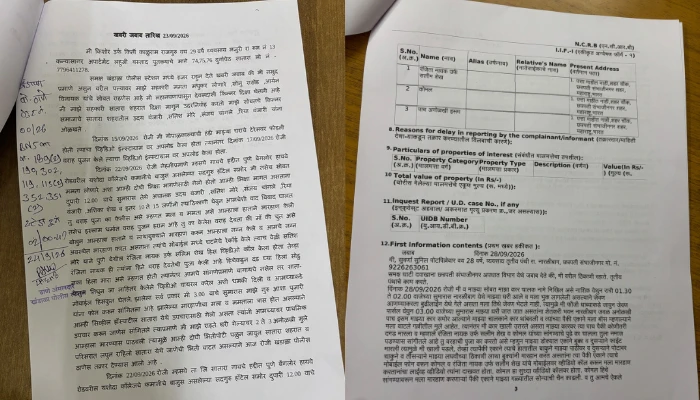
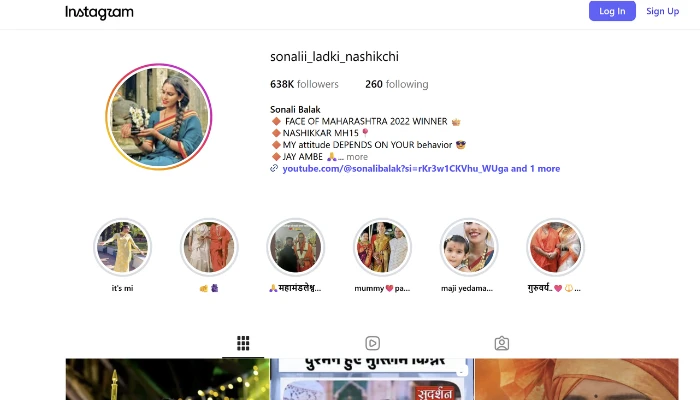
In Satara, Maharashtra, Hindu transgender persons were abused, brutally assaulted and stripped naked by Muslim transgender persons for performing the Varaha Puja. The Muslim perpetrators acted on the instructions of Ranjita Nayak alias Salim Sheikh and also made derogatory remarks against the Hindu deity. Furthermore, other members of the Hindu transgender community stated that the Muslims accused, Ranjita Nayak, had forced many Hindu transgender persons to convert to Islam, offer namaz, observe roza and consume cow meat. The accused has also threatened the victims with death for not complying. The incident came to light after a video of two Hindu transgender victims, identified as Kishor alias Kirty Kakuram Rajguru, known as Kirti Tai, and Mamta Madhukar Lonare, getting brutally assaulted went viral on social media. The team of Hinduphobia Tracker secured a copy of the First Information Report of the incident and verified the identity of the transgender persons. The Hinduphobia Tracker team also reviewed the Instagram account maintained by a Hindu transgender person, Sonali Balak, which has approximately 6,38,000 followers, along with videos shared on the account documenting the abuse and threats faced by the Hindu victims on instructions of Ranjita Nayak. The videos showed Kirti Tai's attack, while other posts documented threats issued against other Hindu transgenders and conversion pressure. According to the FIR filed by the victim, Kirti Tai had taken Devadasi Kinnar Diksha since childhood and earned her livelihood by seeking Diksha from colleagues in Satara city. She resides at Room No. 13, Kanchyasagar Apartment, Hudgi Vasti, Putalwadi, Satara, with Mamta Madhukar Lonare and others. Kirti Tai stated that on 15 September 2026, she uploaded a video on Instagram, in which she recorded Janmashtami celebrations where she broke the Gopalkalaya handi (a traditional ritual associated with Lord Krishna) on her terrace. On 17 September 2026, she uploaded another video on Instagram of her performing Varaha Puja. Thereafter, on 22 September 2026, Kirti Tai and Mamta went to seek alms in front of Sadguru Hotel, near Yashoda College on Pune–Bengaluru Highway 85 Road. During this time, a group of Muslim transgenders, namely Uday Vanjari, Satish More, Sanjay Jange, Riya Vanjari, Ashika Sheikh and 10 to 15 others, intercepted them and started an argument, questioning them, “Why did you worship Varaha Dev?” They mocked the Hindu deity Varaha Dev as a boar and abused the Hindu victims while questioning their worship. They stated, “ Worshipping Varaha Dev is haram in Islam” ( boar worship is forbidden in Islam). The accused then stripped both victims naked and brutally assaulted them, while recording a video of the incident. During the assault, one of the accused hurled profanities, asking, “Why did you worship the boar?” During the assault, the accused sent the recorded video to Ranjita Nayak alias Salim Sheikh. Satish More, one of the accused, also made a video call to Ranjita Nayak in Pune. Ranjita instructed Satish More to collect a fine from Kirti Tai and snatch her mobile phone. Acting on her instructions, the accused continued beating the victims. The accused threatened to make the video viral if Kirti Tai and Mamta did not leave Satara, while snatching away their mobile phones. Subsequently, at around 3 p.m., Kirti Tai called her guru, Asha Pujari, and informed her about the assault. As Kirti Tai and Mamta suffered serious injuries during the assault, they went to Civil Hospital, Satara, for medical attention. After Kirti Tai returned home, two to three unidentified boys were sent to assault the victims again. Fearing further attacks, Kirti Tai and Mamta fled and went into hiding. Kirti Tai subsequently approached Khandala Police Station to lodge a complaint against the Muslim perpetrators, Uday Vanjari, Satish More, Sanjay Jange, Riya Vanjari, Ashika Sheikh, Ranjita Nayak and 10 to 15 unknown persons. Six days later, on 28 September 2026, another Hindu transgender person, Guddi Tai and her car driver, Nikhil, were assaulted by Muslim transgenders for worshipping Varaha dev. They had travelled from Nashik to Guddi Tai’s house in Narlibagh. At around 3 a.m., near Shetkari Bhavan in Narlibagh, five unidentified people stepped in front of their car, prompting Nikhil to stop. One of the men addressed Guddu Tai and questioned her about why she was performing Varaha Puja when Ranjita Nayak had tortured all Hindu transgender persons to observe roza and offer namaz. Following this, the accused threw stones at the vehicle, and one attacker punched Guddi Tai on the head while another kicked her, causing her to fall to the ground. They brutally assaulted her, stabbing her in the stomach and hitting her genital area. During the assault, the attackers made a video call to Ranjita Nayak and showed her the live video of the assault. Ranjita Nayak and her associate, Komal, then threatened Guddu Tai that if she did not follow their instructions, they would cut her into pieces. Another Hindu transgender person, Sonali Balak, and her associates revealed that they had been pressured to convert to Islam under the instructions of Ranjita Nayak. Sonali stated that she was subjected to religious indoctrination and pressured to consume cow meat as part of the coercive process. Sonali Balak further stated that their guru, Asha Tai, had also been forced to convert to Islam and consume cow meat. Asha Tai herself also stated that she had received death threats, which left her fearful for her life and concerned that she could be killed. When the Hinduphobia Tracker team searched further, it found that Hindu transgender persons had previously uploaded videos on social media in which they complained that Ranjita Nayak alias Salim Sheikh had forced them to convert to Islam and that they were not free to profess their religion according to their choice. In the videos, they were seen crying and describing the pressure they faced, stating, “Today, because of him, we have nowhere to show our faces. We only want support from the organisation and society. We just need food for our stomachs; we don't want anything else.”
Case Images
Why it is Hate Crime ?
This case has been added to the tracker under the first primary category: Attack not resulting in death. The sub-category selected is: Attacked for Hindu identity. In several cases, Hindus are attacked merely for their Hindu identity without any perceived provocation. A classic example of this category of religiously motivated hate crime is a murder in 2016. 7 ISIS terrorists were convicted for shooting a school principal in Kanpur because they got ‘triggered’ seeing the Kalava on his wrist and the tilak that he had put. In this, the Hindu victim had offered no provocation except for his Hindu religious identity. The motivation for the murder was purely religious, driven by religious supremacy. Such cases where Hindus are targeted merely for their religious identity would be documented as a hate crime under this category. The other category selected is: Attack against Hindu devotees. Hindu devotees are among the easiest targets of religiously motivated hate crimes because during the festival/procession/puja, etc., it is easy for non-Hindus to profile their victims based on religion. Hindu devotees come under attack on several occasions by individual non-Hindus or mobs of non-Hindus owing to their animosity against Hinduism, its symbols and tradition/practices. There are several instances of Hindu devotees being attacked while they worship in temples or temporary religious structures, during religious processions, doing bhajan/kirtan/puja in their own homes, in the residential society, etc. These attacks are perpetrated by non-Hindus primarily because of their animosity towards Hindus and their faith. In some cases, the trigger for the violence may be non-religious; however, two elements make these hate crimes. First, the Hindus who come under attack are attacked violently while indulging in religious activity. Whether they are in a place of worship or not is immaterial to the crime. When individuals are attacked while indulging in religious practices, the attack in itself is a hindrance to their freedom to practice religion and therefore constitutes a hate crime. Secondly, religious supremacist doctrines and ideologies deem religious practices of Hindus to be offensive ab initio since they are considered “sinful” by these ideologies, worthy of being annihilated by force or coercion. Driven by these religious supremacist ideologies and doctrines, the attacks against Hindu devotees stem from intrinsic animosity towards Hinduism. In some cases, the trigger for the violence may be non-religious; however, it develops into a religiously motivated crime during the course of the violence. Since these attacks stem from animosity towards Hindus and Hinduism, they are considered religiously motivated hate crimes under this category. The other category selected for the case is: Hate speech against Hindus. The first subcategory under this is: Anti-Hindu slurs, mocking faith. Anti-Hindu slurs and the deliberate mocking of the Hindu faith owing to religious animosity involve the usage of derogatory terms, stereotypes, or offensive references to religious practices, symbols, or figures. One of the common anti-Hindu slurs used against Hindus is “cow-worshipper” and “cow piss drinker”. The intention of using these terms is to demean and mock Hindus as a group and their religious beliefs, since Hindus consider the cow holy. Additionally, some symbols and the slurs attached to them have a historical context that exacerbates the insult, hate, stereotyping, dehumanisation and oppression against Hindus. Cow worship has been used for centuries to denigrate Hindus, insult their faith and oppress Hindus specifically as a religious group. There has been overwhelming documentation about how cow slaughter has been used to persecute Hindus, with cow meat being thrown in temples and places of worship. There has also been overwhelming documentation that cow meat (beef) has been force-fed to Hindus to either forcefully convert them to Islam or denigrate their faith. Apart from cow worship, the Swastika – which holds deep religious significance for Hindus – has also been misinterpreted and distorted to be used as a slur against Hindus. Similarly, the worship of the Shivling has been used by supremacist ideologies and religions to denigrate Hindus owing to religious animosity. Such slurs and denigration stem from inherent animosity and hate towards Hindus and their faith; therefore, it is categorised as hate speech targeted at Hindus specifically owing to their religious identity. The other primary category selected in this case is Predatory Proselytisation. The sub-category selected is: Harassment, threats, coercion for conversion. Harassment covers a wide range of behaviours of an offensive nature. It is commonly understood as behaviour that demeans, humiliates, and intimidates a person, including threats and coercion. Harassment and threats, in this case, find their root in discriminatory grounds, which have the effect of nullifying a person’s rights or infringing upon his freedom to exercise his rights specifically owing to the victim’s religious identity. Verbal and physical threats and psychological or physical harassment are often used against Hindu victims because they choose to practice their professed religion. Religious harassment also includes forced and involuntary conversions by harassment, threats or coercion. Coercion includes intimidatory tactics like force-feeding a Hindu victim beef to convert to another religion, forceful circumcision, etc. In several documented cases, non-Hindu perpetrators or those who harbour specific animosity towards Hinduism harass victims simply based on their religious identity. Such cases often also include harassment to ensure the Hindu victim abandons his/her professed religion and adopts the religion of the perpetrator. Such cases, where Hindu victims are harassed to convert to the perpetrator’s religion, are rooted in animosity towards the victim’s religious identity and are therefore documented as religiously motivated hate crimes. This case was included in the Hinduphobia Tracker because the hostility was expressly directed at the victims’ Hindu identity and their right to practise Hinduism. The religious trigger was unambiguous: the victims’ worship of Varaha Dev was singled out, questioned and treated as something for which they deserved to be punished. The violence therefore did not arise merely from a personal disagreement. Their Hindu identity and their adherence to a Hindu form of worship were central to the hostility directed against them. Varaha Dev is a sacred manifestation of Lord Vishnu, and Varaha Puja is a sacred act of Hindu worship carrying religious significance for the devotees. Consequently, attacking devotees because they performed Varaha Puja was an attack on their exercise of Hindu faith itself. The derogatory reference to Varaha Dev as a “boar” and the abusive language used while questioning the worship further demonstrated contempt towards a Hindu deity and the religious practice associated with Him. The conduct therefore went beyond physical assault and directly targeted the religious identity expressed through worship. The nature of the assault further demonstrated that the victims were being punished for continuing to practise their faith. Religious worship does not cease to receive protection merely because it takes place outside a temple or formal place of worship. A Hindu remains entitled to perform puja and express devotion wherever he or she chooses. By violently confronting the victims over Varaha Puja, humiliating them and attempting to force them away from Satara, the perpetrators directly interfered with that freedom. The message conveyed through the violence was that continued Hindu worship would attract punishment and that the victims were expected to abandon their practice to avoid further harm. Moreover, the threats to make the assault video viral and the demand that the victims leave Satara were instruments of intimidation directed at controlling their conduct after they had been identified through their Hindu practice. The subsequent pursuit and further assault reinforced the coercive nature of the conduct. The victims were being pressured through violence, humiliation and fear rather than allowed to exercise their faith freely. The statements concerning Asha Tai further strengthened this coercive religious context. Other Hindu transgender persons stated that Ranjita Nayak alias Salim Sheikh had forced their guru Asha Tai to convert to Islam and had forced them to consume beef. The cow holds profound religious significance in Hinduism and is widely revered as a sacred animal, with its veneration deeply embedded in Hindu traditions, scriptures, rituals and cultural practices. Hindus therefore abstain from consuming cow meat as an expression of this religious reverence. Forcing a Hindu to consume beef consequently did not concern food alone. It directly violated a deeply held religious practice and sought to compel the victim to act against her own Hindu beliefs. Coupled with the pressure to convert to Islam, this demonstrated that the coercion extended beyond the immediate dispute over Varaha Puja and was directed towards changing the victims’ religious identity and conduct. The verbal abuse also carried an independent religious significance. Referring to Varaha Dev in a deliberately derogatory manner while attacking the devotees was not simply abusive language directed at particular individuals. It demeaned a Hindu deity and mocked the religious practice for which the victims were being targeted. Anti-Hindu slurs and mocking of Hindu deities functioned here as a means of degrading both the victims and the faith they followed. The religious insult was therefore intertwined with the physical violence rather than being an incidental expression of anger. The continuing online dimension further intensified the harassment. The assault was recorded, and the victims were threatened with the public circulation of the recording. The subsequent social-media material concerning the abuse, injuries, religious practice and threats demonstrated how the victims’ Hindu identity and religious activities became the subject of continuing public harassment. The online exposure therefore functioned as another means of intimidation and reinforced the pressure already being placed on the victims because of their faith. Importantly, the separate attack on Guddu Tai on 28 September 2026 reinforced the religious character of the pattern. The later attackers again questioned her specifically about worshipping Varaha Dev and about following the instructions of Salim Sheikh and Komal before subjecting her to severe physical violence. The recurrence of the same religious issue in a separate assault demonstrated the attackers’ hostility towards the Hindu religion practised by the victim. The violence was not confined to punishing individual victims or forcing them to abandon Hinduism. By targeting those who continued to practise their faith, the attackers also created an atmosphere of fear intended to deter other Hindu transgender persons from openly following and expressing their Hindu religion. More importantly, the earlier social-media videos reviewed by the Hinduphobia Tracker team showed that these Hindu transgender persons were not free to practise their faith according to their choice. They were being pressured to convert to Islam and were being prevented from freely professing their Hindu religion. This established that the hostility towards their Hindu identity and religious practice had existed before the assault over Varaha Puja. Thus, Varaha Puja brought the hostility into the open, while the earlier material showed that the underlying issue was their continued freedom to remain Hindu and practise their faith. Thus, the case involved more than isolated physical attacks. The conduct combined targeting of Hindu identity, violent interference with Hindu worship, contemptuous treatment of a Hindu deity, coercive intimidation and continuing harassment. The earlier restrictions on religious practice, the assault over Varaha Puja and the subsequent targeting of Guddu Tai demonstrated a continuing pattern in which Hindu identity and devotion were treated as grounds for punishment and control, bringing the case within the selected Tracker categories. Disclaimer: The number of perpetrators recorded in the Tracker was taken as 21 (twenty-one), comprising the six identified perpetrators, Uday Vanjari, Satish More, Sanjay Jange, Riya Vanjari, Ashika Sheikh and Ranjita Nayak, along with 10 to 15 unidentified persons involved in the assault. Since the source specified a range of 10 to 15 unidentified perpetrators, the higher figure of 15 was used for documentation purposes, resulting in a total recorded perpetrator count of 21. Disclaimer: The number of victims recorded in the Tracker was taken as 6 (six), comprising the Hindu transgender persons identified across the incidents and accounts reviewed: Kishor alias Kirty Kakuram Rajguru, known as Kirti Tai, Mamata Madhukar Lonare, Guddu Tai, Nikhil, Sonali Balak and Asha Tai. The count was based on the individuals explicitly identified as having faced assault, threats, coercion or other forms of religiously motivated targeting in the available accounts. However, the available material also indicated that other Hindu transgender persons may have experienced similar coercion, threats or pressure, and the actual number of victims could therefore be higher than the six recorded in the Tracker.
Victim Details
Total Victim
6
Deceased
0
Gender
- Male 0
- Female 0
- Third Gender 5
- Unknown 1
Caste
- SC/ST 0
- OBC 0
- General 0
- Unknown 6
Age Group
- Minor 0
- Adult 6
- Senior Citizen 0
- Unknown 0


Case Status
Complaint filed


Perpetrators Details
Perpetrators
Muslim Extremists
Perpetrators Range
From 10 to 100
Perpetrators Gender
third
 Sources




