Minor Hindu girl abducted by Muslim men, subjected to forced religious conversion and nikah in Sindh, Pakistan
 Umerkot District, Sindh, Pakistan
  28 March, 2026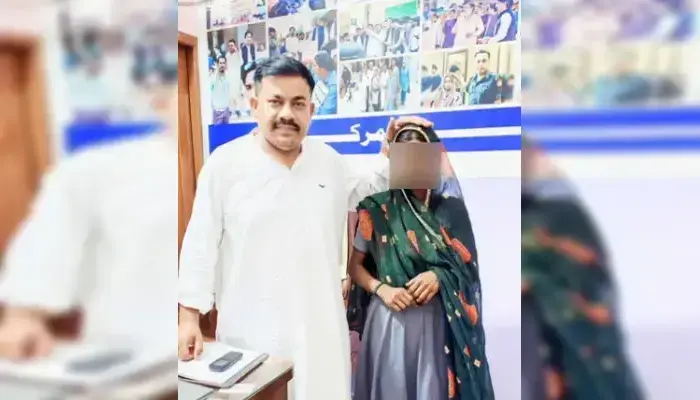
Case Summary
In Sindh, Pakistan, a 15-year-old Hindu girl, Jamna Kolhi, was abducted, forcibly converted to Islam and made to undergo a nikah (Islamic marriage) with a Muslim man. The incident came to light on 29 September 2026, when Hindu activist Faqir Shiva Kachhi, Chairman of Pakistan Darawar Ittehad, tweeted about Jamna’s recovery on X. He stated that Jamna had been abducted around six months earlier and subjected to forced religious conversion and marriage before being recovered. Jamna belonged to Ahmed Khan Bhurgri village, near Road Samaro in Umerkot district. Four members of the Dhoonkai Muslim community abducted her from her home and took her to an Islamic cleric in Mirpurkhas. There, she was forced to convert to Islam and subsequently subjected to a forced marriage. She was later taken from near Mirpurkhas to an area near Badin, where she remained until she was traced and recovered. Following her recovery, she was reunited with her family. On 1 October 2026, Hindu activist Faqir Shiva Kachhi tweeted about Jamna’s case again on X. He shared details of a press conference held with Jamna and her family at the Mirpurkhas Press Club. The same post also included a video testimony by Jamna, in which she stated that four Muslim men had entered her house. They tied up her parents and bound her hands and legs with rope before abducting her in a car. She stated that she was then taken to an Islamic cleric, where she was forced to convert to Islam and made to undergo a nikah with a Muslim man. During the press conference, Jamna’s family raised serious concerns about threats following her recovery. They stated that the abductor, Ismail Dhoonkai, and his associates were again threatening to abduct Jamna. They also threatened to kill her family members, set their homes on fire and cause other serious harm. The family stated that they remained extremely fearful and felt unsafe despite Jamna’s recovery. They were concerned that the threats could be acted upon, putting Jamna and her family members at further risk. Faqir Shiva Kachhi called upon the relevant authorities to immediately provide full protection to Jamna and her family. He also called for a transparent investigation into the threats and legal action against those responsible. He further stated that he would pursue the matter and take Jamna to court. There, she could testify about her abduction, forced conversion and marriage. Faqir Shiva Kachhi also urged Pakistani state institutions to take the protection of minor Hindu girls seriously. He also emphasised human rights and the security of religious minorities. He called on authorities to ensure Jamna and her family’s safety and security. This case highlights the persecution faced by the Hindu minorities in Pakistan, marked by systemic discrimination, violence, and forced conversions. Hindu women, particularly young girls, are often abducted, forcibly converted to Islam, and married off to Muslim men with little to no legal recourse. Temples are frequently vandalised or destroyed, and Hindu communities are subjected to social and economic marginalisation. Blasphemy laws are disproportionately used against Hindus, leading to false accusations and severe punishments. Many Hindu families are forced to flee their homes due to religious intolerance, living in constant fear of attacks. This sustained persecution highlights the dire conditions for Hindus in Pakistan, where their religious identity makes them targets of oppression.
Why it is Hate Crime ?
This case has been added to the tracker under the primary category: Predatory Proselytisation. Within this, the subcategory selected is: Harassment, threats, coercion for conversion. Harassment covers a wide range of behaviours of an offensive nature. It is commonly understood as behaviour that demeans, humiliates, and intimidates a person, including threats and coercion. Harassment and threats, in this case, find their root on discriminatory grounds which has the effect of nullifying a person’s rights or infringing upon his freedom to exercise his right specifically owing to the victim’s religious identity. Verbal and physical threats and psychological or physical harassment are often used against Hindu victims because they choose to practice their professed religion. Religious harassment also includes forced and involuntary conversions by harassment, threats or coercion. Coercion includes intimidatory tactics like force-feeding a Hindu victim beef to convert to another religion, forceful circumcision etc. In several cases documented, non-Hindu perpetrators or those who harbour specific animosity towards Hinduism, harass victims simply based on their religious identity. Such cases often also include harassment to ensure the Hindu victim abandons his/her professed religion and adopts the religion of the perpetrator. Such cases where Hindu victims are harassed to convert to the perpetrator’s religion are rooted in animosity towards the victim’s religious identity and are therefore documented as religiously motivated hate crimes. This case has been added to the hate crime database since the abduction and forced conversion of a minor Hindu girl, followed by her marriage to a Muslim man in Pakistan, starkly illustrates the exploitation of vulnerable Hindu minorities through coercion and force. Such incidents are not isolated cases; rather, they are part of a persistent and troubling pattern in Pakistan, where Hindu minorities, particularly young Hindu girls, are frequently targeted for kidnappings, forced religious conversions, and marriages to Muslim men. This ongoing trend showcases the systemic discrimination and violence faced by the Hindu community in Pakistan. The Hindu minority has been subjected to various forms of harassment, marginalisation, and abuse since the country’s inception. The victim’s status as a minor further underscores the coercive nature of the crime. Her age significantly undermined any possibility of genuine and informed consent to such a profound change in religious identity. A child is particularly vulnerable to manipulation and coercion due to her ongoing emotional and cognitive development. Targeting a Hindu minor through abduction and religious coercion therefore constituted an attack on both her individual rights and her Hindu identity. The forced conversion also represented a direct violation of the victim’s religious autonomy. Religious autonomy encompasses the right to retain one’s faith and make personal decisions about religious belief freely. Compelling her to adopt another religion deprived her of that choice. The involvement of an Islamic cleric and the subsequent nikah further demonstrated that religious elements were central to the coercion rather than incidental to the crime. This deliberate interference with her Hindu identity demonstrates explicit hostility towards Hinduism and its adherents. The threats made against the victim and her family after her recovery further demonstrate the religious hostility involved. Threatening to abduct her again, kill family members and burn their homes sought to intimidate the Hindu family after the victim’s recovery. Such threats also attempted to deter the family from resisting or challenging the religious coercion imposed upon her. The continued intimidation therefore extended the harm beyond the original crime and reinforced the vulnerability of the Hindu victim and her family. Taken together, the targeting of a Hindu minor, coercive religious conversion, imposition of an Islamic marriage and subsequent intimidation demonstrate religious animosity towards Hinduism and Hindus. The conduct therefore goes beyond an ordinary criminal offence and reflects religiously motivated hostility, meeting the parameters for inclusion in the Hinduphobia Tracker’s hate-crime database. Disclaimer: Hinduphobia Tracker records incident dates based on when the victim’s ordeal begins, rather than when the incident is reported by the media. This incident first came to light on 29 September 2026, when Faqir Shiva Kachhi tweeted about the case for the first time. He stated that the victim had been abducted approximately six months earlier. Accordingly, 29 March 2026 has been recorded as the indicative incident date for documentation purposes. In this case, the victim stated that four Muslim men, along with an Islamic cleric, were directly involved in the crime. Accordingly, the perpetrator count has been recorded as five. This count has been recorded for documentation purposes only.
Victim Details
Total Victim
1
Deceased
0
Gender
- Male 0
- Female 1
- Third Gender 0
- Unknown 0
Caste
- SC/ST 1
- OBC 0
- General 0
- Unknown 0
Age Group
- Minor 1
- Adult 0
- Senior Citizen 0
- Unknown 0


Case Status
Unknown


Perpetrators Details
Perpetrators
Muslim Extremists
Perpetrators Range
From 2 To 5
Perpetrators Gender
male
 Sources




