Lord Ganesha idol targeted as man kicks Hindu man’s car carrying the idol, demands “proof” that Ganesha is God
 Bangalore Urban, Karnataka, India
  28 September, 2026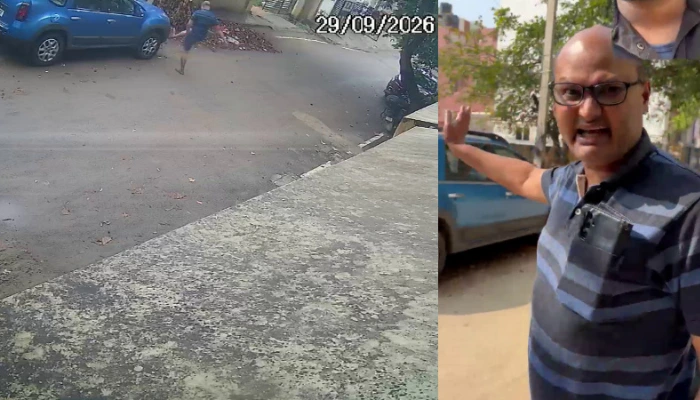
Case Summary
In Bengaluru, Karnataka, a Hindu man’s car was kicked by a man after he noticed an idol of Lord Ganesha inside the vehicle. The incident took place in Banjara Layout in Horamavu, near Udupi Garden, within the limits of Hennur police station. The accused also made mocking remarks about the revered Hindu deity when confronted by the Hindu car owner. According to reports, the incident occurred on 29 September 2026 at around 7:22 am. CCTV footage showed the perpetrator kicking the Hindu man’s parked car. After reviewing the footage, the car owner confronted him and questioned him about kicking the vehicle and the damage caused. The accused became angry and responded by questioning the presence of the idol, asking, “What is it? Is it God inside your car?” He also questioned whether Ganesha was God and told the car owner to “get lost”. The confrontation then escalated into a heated verbal altercation, during which the accused repeatedly abused the car owner and mocked the divinity of Lord Ganesha. A video of the confrontation subsequently went viral on social media. In the footage, the Hindu car owner is heard questioning whether keeping an idol of Lord Ganesha inside his own vehicle had become a crime. He then questioned the accused again about kicking his car and warned him that he would call the police. The accused continued mocking the deity by repeatedly questioning his divinity while verbally abusing the car owner. The argument unfolded publicly on the road and drew the attention of people in the locality. The viral video of the incident triggered outrage among Hindus over the treatment of the revered deity and the manner in which the Hindu car owner was confronted over keeping the idol inside his vehicle. Locals also condemned the accused’s behaviour and questioned whether people were no longer free to keep their Hindu deities inside their own vehicles.
Why it is Hate Crime ?
This case is being added to the tracker under the first primary category: Attack not resulting in death. The subcategory selected is: Attacked for Hindu identity. In several cases, Hindus are attacked merely for their Hindu identity without any perceived provocation. A classic example of this category of religiously motivated hate crime is a murder in 2016. 7 ISIS terrorists were convicted for shooting a school principal in Kanpur because they got ‘triggered’ seeing the Kalava on his wrist and tilak that he had put. In this, the Hindu victim had offered no provocation except for his Hindu religious identity. The motivation for the murder was purely religious, driven by religious supremacy. Such cases where Hindus are targeted merely for their religious identity would be documented as a hate crime under this category. The second primary category selected is: Hate Speech against Hindus. The subcategory selected is: Anti-Hindu slurs, mocking faith. Anti-Hindu slurs and the deliberate mocking of the Hindu faith owing to religious animosity involve the usage of derogatory terms, stereotypes, or offensive references to religious practices, symbols, or figures. One of the common anti-Hindu slurs used against Hindus is “cow-worshipper” and “cow piss drinker”. The intention of using this term is to demean and mock Hindus as a group and their religious beliefs since Hindus consider the cow holy. Additionally, some symbols and the slurs attached to them have a historical context that exacerbates the insult, hate, stereotyping, dehumanisation and oppression against Hindus. Cow worship has been used for centuries to denigrate Hindus, insult their faith and oppress Hindus specifically as a religious group. There has been overwhelming documentation about how cow slaughter has been used to persecute Hindus with cow meat being thrown in temples and places of worship. There has also been overwhelming documentation where cow meat (beef) has been force-fed to Hindus to either forcefully convert them to Islam or denigrate their faith. Apart from cow worship, the Swastika – which holds deep religious significance for the Hindus – has also been misinterpreted and distorted to use as a slur against Hindus. Similarly, the worship of the Shivling has been used by supremacist ideologies and religions to denigrate Hindus owing to religious animosity. Such slurs and denigration stem out of inherent animosity and hate towards Hindus and their faith, therefore, it is categorised as hate speech targeted at Hindus specifically owing to their religious identity. In this case, the perpetrator targeted a Hindu man’s vehicle after noticing an idol of Lord Ganesha kept inside it, making it a clear example of a religiously motivated hate crime. The circumstances indicate that the vehicle itself was not the true object of hostility; rather, the visible expression of the victim’s Hindu identity through the presence of the Ganesha idol became the sole reason for the vehicle being targeted. This exposed hostility towards the victim’s religious identity and its visible expression. The Hindu victim himself highlighted the religious nature of the targeting when he questioned, “Even keeping the idol of Ganesha, has it become a crime now?” after confronting the perpetrator about kicking his car. When asked why he had targeted the vehicle, the perpetrator repeatedly referred to the idol and questioned the deity’s divinity, asking, “Is this a God?” and “Is Ganesha a God?” His remarks establish a direct connection between the presence of the Ganesha idol and the act of targeting the vehicle, showing that the religious identity expressed through the idol was central to the confrontation. Lord Ganesha is one of the most widely revered deities in Hinduism and is worshipped as Vighnaharta, the remover of obstacles, and is also associated with wisdom, prosperity and auspicious beginnings. His image or idol is commonly kept in homes, workplaces and personal spaces as an expression of devotion and as a means of seeking his blessings. Hindus also keep a small Ganesha idol or image inside their vehicles as an expression of their faith and devotion, while seeking the deity’s blessings and protection during travel. Such practices form part of the ordinary expression of Hindu religious belief. Targeting a Hindu man because he visibly expressed his faith through a Ganesha idol therefore amounted to hostility towards a legitimate expression of his Hindu identity and religious practice. The perpetrator’s repeated mockery of Lord Ganesha further underscores the religious nature of his conduct. For Hindus, deities are objects of worship and profound reverence, and their divinity is integral to religious belief and devotional practice. After being confronted about kicking the vehicle, the perpetrator did not express remorse or distance himself from the act; instead, he repeatedly questioned whether Lord Ganesha was God, making the deity’s divinity itself the subject of ridicule. By directing these remarks at a revered Hindu deity during the confrontation, he went beyond merely kicking the vehicle and openly demeaned a figure held sacred in Hindu worship. Such conduct demonstrated contempt for deeply held Hindu beliefs and exposed the perpetrators' hostility towards Hinduism and its adherents. Since the circumstances and the perpetrator’s remarks indicate that the Hindu man’s visible expression of faith through the Ganesha idol was targeted, the case meets the parameters for inclusion as a hate crime. Although the perpetrator's religious identity remains unknown, his conduct demonstrates hostility towards Hindu religious beliefs. The case is therefore being added to the Hinduphobia Tracker’s hate-crime database.
Victim Details
Total Victim
1
Deceased
0
Gender
- Male 1
- Female 0
- Third Gender 0
- Unknown 0
Caste
- SC/ST 0
- OBC 0
- General 0
- Unknown 1
Age Group
- Minor 0
- Adult 1
- Senior Citizen 0
- Unknown 0


Case Status
Unknown


Perpetrators Details
Perpetrators
Unknown
Perpetrators Range
One Person
Perpetrators Gender
male
 Sources




