Hindu woman murdered and chopped into pieces by Muslim man over trivial issue in Vijayawada, Andhra Pradesh
 Vijayawada, Andhra Pradesh, India
  16 September, 2026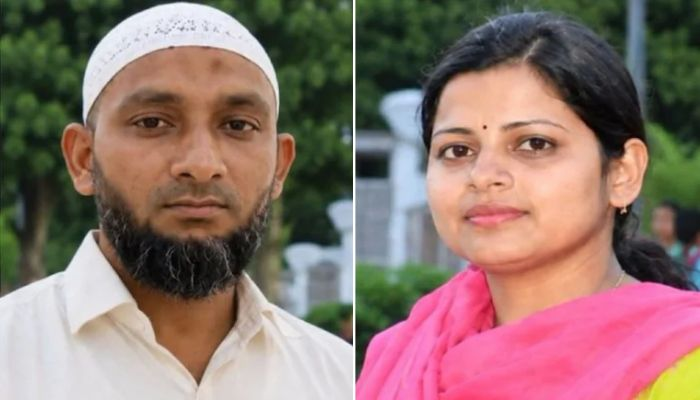
Case Summary
In Vijayawada, Andhra Pradesh, a 28-year-old Hindu woman, Kalyani alias Durga, was murdered and dismembered by a Muslim man named Mohd Shafi (35), over a trivial issue. According to the police investigation, Kalyani was in a relationship with the Muslim accused, Shafi, a butcher who ran a mutton shop in Bhavanipuram. On 17 September 2026, she went to his house after he called her there. Shafi’s wife and children had been sent to Guntur at the time. During this time, a dispute broke out between Kalyani and Shafi over money and her child, who was in the care of Shafi’s family. The argument escalated as Shafi attacked Kalyani with a knife and slit her throat, killing her. He then chopped her body into several pieces and transported the remains to the cooling canal in the Gollapudi area, where he dumped them. On 18 September 2026, Ibrahimpatnam police found a headless torso near the VTPS cooling canal and registered a murder case. Police teams, assisted by drones and NDRF personnel, searched the canal and recovered Kalyani’s head, legs and other body parts, while one hand remained missing. The remains were sent for post-mortem examination. Police subsequently checked missing-person records from Andhra Pradesh and neighbouring districts of Telangana, including Bhadradri-Kothagudem and Khammam. Kalyani was identified after information about the unidentified body was circulated on social media, with her brother and relatives recognising her through a tattoo and other identifying details. Kalyani was a semi-orphan from Chinna Tatinada village in West Godavari district and had spent her childhood at an NGO home in Gannavaram. She later married a man from Mangalagiri in Guntur district and had a son, but the couple separated following family problems, after which she lived alone. Following the murder, Kalyani’s son remained with Shafi’s wife, while authorities sought legal advice regarding his custody and considered handing him over to the ICDS department. Police traced Shafi through CCTV footage, call data, technical investigation and other evidence and arrested him in connection with the murder. The knife used in the killing was also recovered. Police questioned Guruvulu, who worked at Shafi’s mutton shop, regarding his suspected involvement in moving the body. Another person, identified as Abdullah Durga Rao and described as Shafi’s friend and associate in the case, was reported to have remained absconding, with efforts underway to trace him. The investigation continued to establish the roles of all persons involved in the disposal of Kalyani’s body.
Why it is Hate Crime ?
This case has been placed in the Undecided database because, although the circumstances surrounding Kalyani’s murder raise serious suspicions about whether religious animosity played a role in the offence, the available evidence does not establish that she was killed because of her Hindu identity or that religious hostility motivated the crime. Kalyani, a Hindu woman, was murdered by Mohd Shafi, a Muslim man with whom she was in a relationship. The interfaith nature of the relationship warrants examination in light of cases documented by the Hinduphobia Tracker in which Hindu women involved in relationships with Muslim men have faced exploitation, coercion, violence or other forms of abuse connected to their religious identity. However, in this case, there is currently no evidence indicating that Kalyani was targeted because she was Hindu, that Shafi attempted to interfere with or alter her religious identity, or that religious differences formed part of the dispute preceding her murder. The available police account identified a dispute over money and the child who was in Shafi’s family’s care as the immediate circumstances preceding the killing. There is also no reported statement from Kalyani’s family or other available evidence indicating that religious hostility played a role in the relationship or the murder. Furthermore, the sheer brutality of Kalyani’s killing raises additional questions about whether religious animosity may have played a role in the offence. Shafi attacked her with a knife, slit her throat, dismembered her body and dumped the remains in the VTPS cooling canal. The extreme nature of the violence, particularly the dismemberment and disposal of her body, raises the question of whether the manner of the killing had any connection to her Hindu identity. However, there is presently no evidence linking the brutality of the assault or the subsequent disposal of her remains to religious hostility. The severity of the violence, while deeply concerning, cannot by itself establish that Kalyani was targeted on account of her faith. The Hinduphobia Tracker follows a strict evidentiary parameter when determining whether a case should be classified as a hate crime. In this case, the interfaith nature of the relationship, the extreme brutality of the murder and the existence of similar cases documented by the Tracker warrant scrutiny of whether a religious element may have been involved. However, these circumstances do not, in the absence of evidence directly connecting the offence to Kalyani’s Hindu identity, establish that the murder was rooted in religious hostility. The available evidence instead points to a dispute over money and the child as the immediate circumstances preceding the killing. The case has therefore been placed in the Undecided database of the Hinduphobia Tracker. This classification should not be understood to mean that a religious motive was absent, but rather that the available evidence is presently insufficient to establish such a motive conclusively. There were no reported casteist slurs or other identity-based abuse directed at Kalyani, nor was there any reported mention of her Hindu identity during the dispute or the assault. If credible evidence emerges establishing that she was targeted, assaulted or killed because of her religious identity, or that a coercive religious element formed part of the crime, the classification can be reassessed accordingly.
Victim Details
Total Victim
1
Deceased
1
Gender
- Male 0
- Female 1
- Third Gender 0
- Unknown 0
Caste
- SC/ST 0
- OBC 0
- General 0
- Unknown 1
Age Group
- Minor 0
- Adult 1
- Senior Citizen 0
- Unknown 0


Case Status
Arrested


Perpetrators Details
Perpetrators
Muslim Extremists
Perpetrators Range
One Person
Perpetrators Gender
male
 Sources




