Anti-Hindu bias: Leftist media outlet uses Hindu names for Muslim accused in Karnataka rape case
 India
India  6 April, 2019
Case Summary
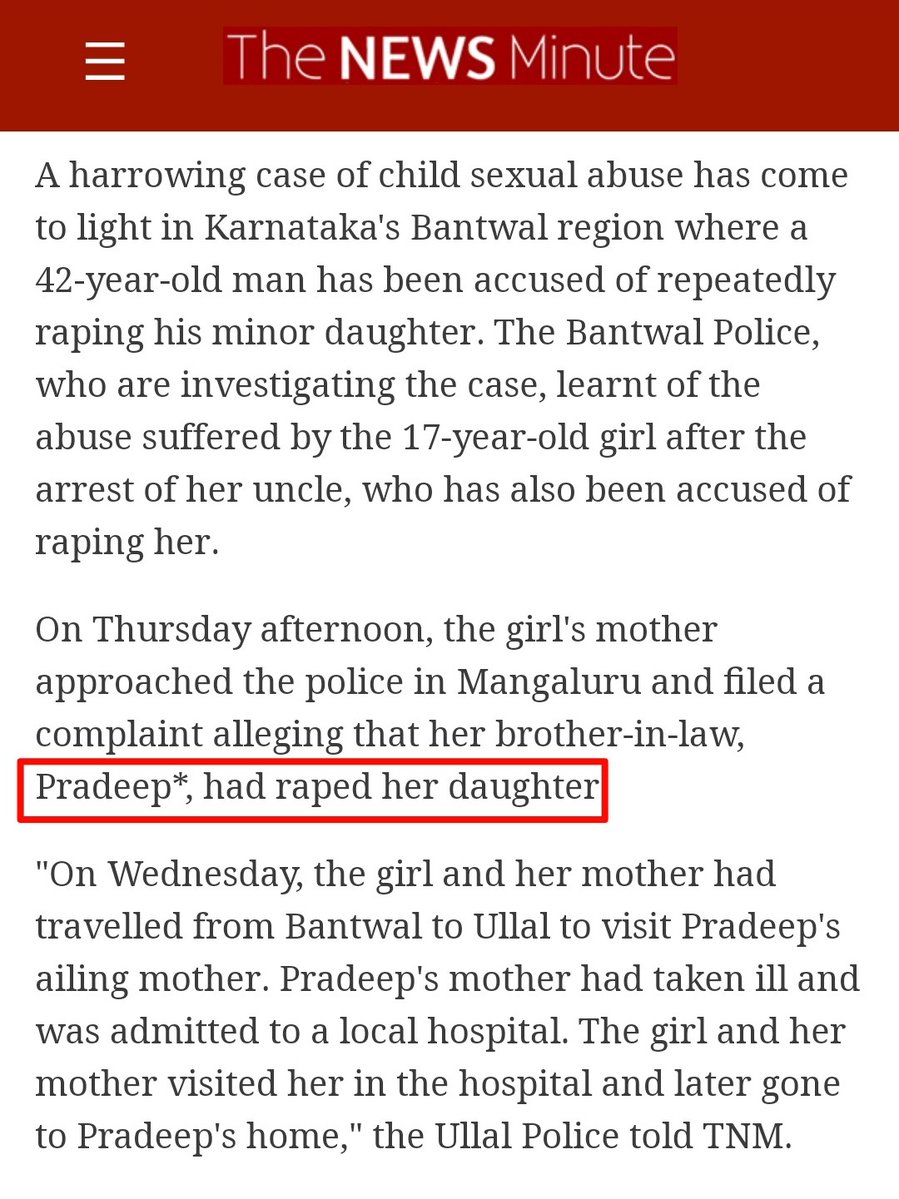
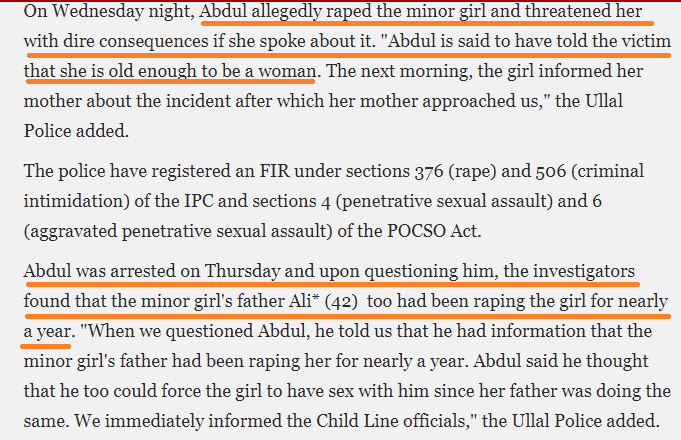
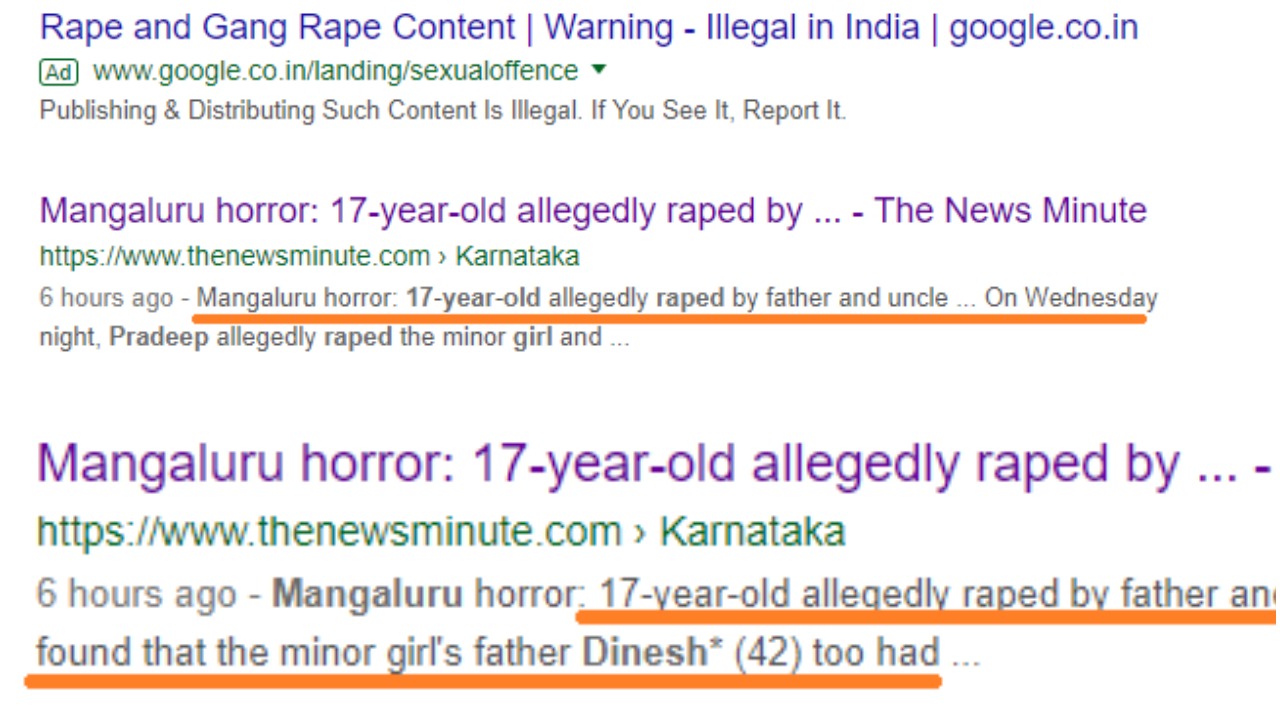
An old 2019 report by The News Minute (TNM) resurfaced in September 2026, bringing renewed scrutiny to its anti-Hindu bias after Hindu names were used for Muslim men accused of sexually abusing a 17-year-old girl in Karnataka. The controversy resurfaced on 24 September 2026, after TNM Editor-in-Chief Dhanya Rajendran shared a post reflecting on her earlier journalistic practices while reporting sexual abuse cases. In response, author Shefali Vaidya highlighted TNM's 2019 report and questioned Rajendran over the publication's use of a “representative imaginary Hindu name” for the Muslim accused. The original report, published on 7 April 2019, concerned the sexual abuse of a 17-year-old girl in the Bantwal region of Karnataka. It identified the girl’s father, who had been sexually abusing her for around a year, as “Dinesh”, and her uncle, who was also involved in the abuse, as “Pradeep”. TNM stated that representative names had been used, but both names are conventionally associated with Hindu men, creating the impression that the accused were Hindu. The case came to light after the girl’s mother approached the police regarding the sexual assault of her daughter by her brother-in-law. During the investigation, the uncle told the police that the girl’s father had also been sexually abusing her for approximately a year. Other media outlets later identified the father as Dawood, a Muslim man with four wives. Following reports identifying the father as Dawood, TNM changed the representative names in its report. TNM changed “Dinesh” to “Ali” for the father and “Pradeep” to “Abdul” for the uncle. TNM had initially used the Hindu names before replacing them with Muslim names that corresponded to the actual religious identity of the accused. The News Minute Editor-in-Chief, Dhanya Rajendran, later issued a clarification about the use of the representative names. She claimed that the father’s actual name had not been disclosed because revealing his identity could also have revealed the identity of the minor victim. Rajendran acknowledged that using a Hindu representative name for a Muslim perpetrator was incorrect and described it as an unintended mistake by the editor. The incident raised concerns over the use of Hindu names to represent Muslim perpetrators in crime reports. While TNM had initially withheld the actual names of the accused to protect the identity of the minor victim, it selected names conventionally associated with Hindu men for both accused and later replaced them with Muslim representative names after the accused’s religious identity became known. This created a situation in which readers of the original report could have understood the perpetrators to be Hindu, despite the actual accused being Muslim. The issue resurfaced in September 2026 when Rajendran’s post prompted renewed discussion about the 2019 report. Shefali Vaidya shared the earlier report and an OpIndia article that had criticised TNM’s use of Hindu representative names for the Muslim accused. On 26 September 2026, OpIndia Editor-in-Chief Nupur Sharma also revisited the controversy in a reply to Vaidya. Sharma said that after the original controversy, Rajendran and TNM co-founder Chitra Subramaniam had separately contacted her and asked her not to shame the journalist who wrote the report. According to Sharma, they explained that the journalist was suffering from cancer and had undergone chemotherapy on the morning the report was prepared, and asked her to consider how the criticism could affect the journalist. Sharma further stated that she questioned how the reporter’s illness was relevant to the decision to give a Hindu name to a Muslim accused. According to Sharma, she received no answer and described the response as an attempt to guilt-trip her into dropping the criticism.
Case Images
Why it is Hate Crime ?
This case has been added to the hate tracker under the prime category- Hate speech against Hindus, and within this, the sub-category selected is- Anti-Hindu subversion and prejudice. Under this, the tertiary categories, namely, 'Anti-Hindu fake news or downplaying' and 'Mislabelling/Misrepresentation of perpetrator's religion as Hindu', have also been selected. Hate speech is defined as any speech, gesture, conduct, writing, or display that is prejudicial against a specific individual and/or group of people, which is leading to or may lead to violence, prejudicial action or hate against that individual and/or group. Media plays a specific and overarching reach in perpetuating prejudicial attitudes towards a community owing to unfair, untrue coverage and/or misrepresentation/misinterpretation, selective coverage and/or omission of facts of/pertaining to issues affecting a specific religious group. This type of bias can dehumanise the victim group, making it easier for others to justify harmful actions against them, which aligns with the objectives of hate speech laws aimed at preventing such harm. It is often observed that the media takes a prejudicial stand against the Hindu community driven by their need to shield the aggressor community which happens to be a numeric minority, however, is the one perpetrating violence against Hindus. For example, the media is often quick to contextualise religiously motivated crimes against Hindus, omit or misrepresent facts that point towards religiously motivated hate crimes, justify and/or downplay religiously motivated hate crimes or simply present fake news to stereotype Hindus. Such media bias leads to the denial of persecution and is often used to dehumanise Hindus, leading to justification for violence against them. For example, the media covered several fake allegations of Hindus targeting Muslims and forcing them to chant Jai Shree Ram. Most of these cases were proved false and fabricated after police investigation. These fake news reports were subsequently never retracted or clarified. Such fake news led to the justification of violence and dehumanisation of Hindus based on the argument that since Hindus targeted Muslims and forced them to chant Jai Shree Ram, the dehumanisation of Hindus and violence against them was par for the course and merely a retaliation. Such media bias leads to prejudicial portrayal of Hindus and offers a justification for violence against them and therefore, is considered hate speech under this category. The religious marker in this incident lay in the deliberate use of Hindu representative names for Muslim perpetrators of a serious sexual crime. The News Minute had claimed that it used representative names because publishing the father’s actual name would have revealed the identity of the minor victim. This meant that the publication was aware of the accused’s actual identity and had consciously decided to replace it with a representative name. If the identity of the accused was not known, there would have been no reason to invent representative names in the first place; the individuals could simply have been described as an unidentified father and uncle. The choice of “Dinesh” and “Pradeep” was therefore a deliberate editorial choice, even if Dhanya Rajendran subsequently described the use of Hindu names as an unintended mistake. The issue was not merely that substitute names had been assigned, but that Hindu-identifying names were specifically selected for Muslim perpetrators. By doing so, the report created a false association between Hindu identity and the rape and sexual abuse of a minor. The subsequent decision to change “Dinesh” and “Pradeep” to “Ali” and “Abdul” further demonstrated that the representative names were being used to convey the perceived religious identity of the accused. This showed that the religious character of the names was material to the editorial presentation and was not simply an unavoidable consequence of anonymising the accused. Such deliberate religious misrepresentation stigmatised Hindus by associating the community with heinous criminal conduct committed by individuals from another religious background. A reader encountering the original report had no reason to know that “Dinesh” and “Pradeep” were fabricated representative names rather than the identities of the accused, and would consequently have been led to understand the perpetrators as Hindu. The stigma attached to the crime was therefore transferred onto Hindu identity, while the actual Muslim identity of the perpetrators was concealed. The incident therefore went beyond ordinary anonymisation. It deliberately presented Muslim perpetrators of a heinous sexual crime through Hindu identities, thereby falsely associating criminality with Hindus and creating a misleading portrayal of the community. Such misrepresentation contributed to negative stereotypes about Hindus and fostered prejudice by placing Hindu identity in connection with acts that were not committed by Hindus. The deliberate use of Hindu representative identities for Muslim perpetrators therefore constituted anti-Hindu religious misrepresentation and contributed to the stigmatisation of Hindus and Hinduism. Therefore, this case is being added to the hate crime database. Disclaimer: The Hinduphobia Tracker records incidents based on the date on which an event occurred or the victim’s ordeal began. Although the incident went viral again in September 2026 following a post by Nupur Sharma, the original incident dates back to 2019. The News Minute published the report containing the anti-Hindu framing on 7 April 2019. Therefore, the incident date has been recorded as 7 April 2019.


Case Status
Unknown


Perpetrators Details
Perpetrators
Others
Perpetrators Range
Unknown
Perpetrators Gender
unknown
 Sources




