Hindu woman pressured to convert to Islam after marriage by her Muslim husband, assaulted and threatened for refusing
 Nagpur, Maharashtra, India
  15 January, 2026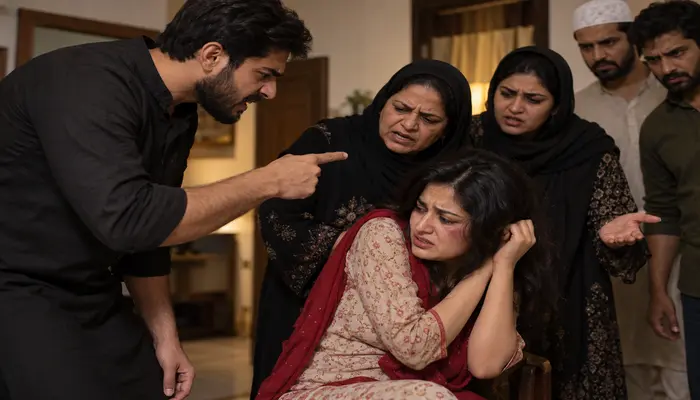
Case Summary
In Nagpur, Maharashtra, a 26-year-old Hindu woman was pressured to convert to Islam, physically assaulted, abused, and threatened after marrying her Muslim partner, Hamza Raza Tehseen Raza. According to reports, the victim, who was working as an architect, had married her 26-year-old engineer friend, Hamza Raza Tehseen Raza, under the Special Marriage Act. The victim had made it clear to the accused before the marriage that she would neither renounce Hinduism nor convert to another religion. She married him on 16 January 2026 in the presence of a court witness. Following the marriage, between January and September 2026, Hamza Raza Tehseen Raza, his mother Shahina Raza Tehseen Raza, his sister Naba Raza Sophia Sheikh, Naba's mother-in-law and her brother-in-law began pressuring the Hindu woman to accept Islam. During this period, the accused subjected her to physical and mental harassment at their residence in Nandanvan. She was abused in obscene language, beaten with sticks and punched, and threatened with death when she refused to comply with the demand to convert. The victim subsequently informed her family about the treatment she had faced. Through her family, she also approached members of the Bajrang Dal, following which a complaint was lodged at Nandanvan police station. Based on her complaint, police registered a case against all five accused, namely Hamza Raza Tehseen Raza, Shahina Raza Tehseen Raza, Naba Raza Sophia Sheikh, Munna Sheikh and Imran Sheikh. The case was registered under various provisions of the Bharatiya Nyaya Sanhita, including Sections 85, 115(2), 296, 298, 302, 504 and 34, along with other applicable provisions. Police subsequently began an investigation into the accusations of pressure to convert, assault, criminal intimidation and sustained physical and mental harassment.
Why it is Hate Crime ?
This case has been added to the tracker under the primary category of - Crimes against women in relationships and other sexual crimes. Within it, the sub-category selected here - Forced conversion after marriage. In such cases, a non-Hindu man marries a Hindu woman, and the force/pressure to convert to any Abrahamic faith, like Islam, begins after marriage. In such cases, typically, two patterns emerge. First, when the relationship is consensual, and the religious identity of the perpetrator is known to the Hindu woman in the relationship. The marriage could be under the Special Marriages Act, where neither parties are required to convert their religion for the marriage to be considered legitimate. While the victim in such cases enters matrimony assuming that religious identity is not a barrier, the non-Hindu man starts to pressure the woman to convert her religion after marriage. The second is when the woman gets into a marriage with the man, pretending to share her faith. Later, when the truth is revealed, the man starts pressuring the woman to convert her religion and give up her religious identity. In both situations, there is application of force by the perpetrator, including the denial of the woman’s religious rights. Some of the means by which the woman is forced/pressured to convert include force-feeding beef, being forced to read the Kalma, being forced to wear a hijab, forced to undergo Halala, etc. There are several instances where, after marriage, the woman voluntarily converts to Islam. Such cases are often argued to be a result of religious brainwashing, however, for the purpose of documenting religiously motivated hate crimes, in the absence of the victim complaining of forced conversion, such cases do not form a part of the database. The other sub-category selected here is - Assault or threat upon refusal to convert. When Hindu women are in a relationship with non-Hindu men, there are cases where the woman faces threats or assault after she refuses to convert and change her religious identity owing to pressure/force by the non-Hindu man. Such relationships may be consensual with the religious identity of the non-Hindu man known to the victim. Somewhere along the relationship, the non-Hindu man starts pressurizing the Hindu woman to convert to Islam and upon her refusal, assaults or threatens the victim. Such cases are driven by specific religious motivations and against the religious identity of the victim and are therefore qualified as hate crimes. Cases where the Hindu woman converts to Islam and does not file a complaint about the force or threat, are not considered a part of the hate tracker, even though, it may be argued that the woman was brainwashed or threatened to convert to Islam. The accused's conduct constituted a hate crime because the mistreatment was specifically connected to the victim’s Hindu religious identity and her refusal to abandon that identity in favour of Islam. The central discriminatory element was not simply a marital dispute or domestic abuse, but the attempt to compel a Hindu woman to relinquish her religion and adopt Islam. This establishes that her Hindu faith was a known and explicit aspect of the relationship and that the subsequent demand for her to accept Islam directly targeted that religious identity. In this case, the nature of the relationship through which the victim was brought into the marriage was significant. Although the Muslim perpetrator did not conceal his religious identity, he entered into a marriage with the Hindu woman knowing that she intended to retain her Hindu faith, as she had expressly made clear before the marriage that she would neither renounce Hinduism nor convert to another religion. The subsequent demand that she convert to Islam showed that her Hindu identity was not accepted or respected as part of the relationship, but was instead treated as an obstacle that had to be removed. The perpetrator exploited the trust and vulnerability associated with an intimate relationship and used the marriage as a means to pressure her into abandoning her religion. The fact that the demand for conversion followed the marriage demonstrated that the relationship itself was a means of subjecting the victim to religious coercion. Targeting a Hindu woman through an intimate relationship and subsequently seeking to change her faith reflected religiously profiled targeting of Hindu women and a predatory dynamic centred on religious conversion. The circumstances therefore established that the relationship was not merely a private marital dispute, but was intrinsically connected to the attempt to alter the victim's religious identity. The accused attempted to pressure the Hindu victim to renounce her Hindu faith and convert to Islam. Pressuring a Hindu individual to abandon her religious identity and embrace another religion constituted a direct attack on her freedom to retain and practise her faith. This was not merely a matter of personal or marital disagreement, as the coercion was specifically centred on changing the victim's religion. The attempt to make her abandon Hinduism therefore reflected religiously motivated hostility, as her continued adherence to the Hindu faith was treated as something that needed to be removed or replaced. Such conduct represented an attempt to undermine the victim's religious identity and dignity, making it a religiously motivated hate crime. Another significant hate-crime indicator was that the abuse and violence were directly linked to the victim's refusal to convert. When the Hindu victim refused to accept Islam and give up her faith, she was abused, threatened and physically assaulted by the accused. The violence was therefore rooted in religious animosity and hostility towards her decision to retain her Hindu identity. Rather than accepting her refusal to abandon her faith, the accused responded with intimidation and physical violence, making her religious adherence the basis for the mistreatment. The assault and threats thus formed part of the coercive attempt to force the victim to surrender her Hindu faith and accept Islam. Such actions stem from inherent hostility towards the victim's professed faith since Abrahamic faiths believe that any non-adherent to the faith is subject to being dehumanised till they convert. Such acts were not merely personal crimes; they were rooted in a desire to dominate and erase the religious identity of the victim. Since such predatory actions stem from doctrinal animosity towards the Hindu faith and its adherents, this case is being documented as a religiously motivated hate crime Disclaimer: It is important to clarify that none of the media sources covering this case have specified the exact date when the victim's ordeal began. The earliest date mentioned is 16 January 2026, when the couple got married. Since Hinduphobia Tracker records the incident based on when the victim’s ordeal began and not when it was reported, we have considered the date of the incident as 16 January 2026, though the media reported the incident on 25 September 2026.
Victim Details
Total Victim
1
Deceased
0
Gender
- Male 0
- Female 1
- Third Gender 0
- Unknown 0
Caste
- SC/ST 0
- OBC 0
- General 0
- Unknown 1
Age Group
- Minor 0
- Adult 1
- Senior Citizen 0
- Unknown 0


Case Status
Complaint registered


Perpetrators Details
Perpetrators
Muslim Extremists
Perpetrators Range
From 5 to 10
Perpetrators Gender
both
 Sources




