Hindu festival vilified, Ganesh idol immersion falsely blamed as sole cause for river pollution by Sangli Municipal Commissioner
 Sangli, Maharashtra, India
  20 September, 2026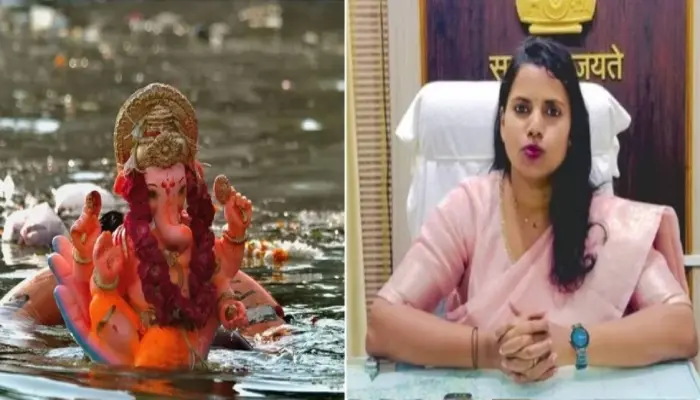
Case Summary
Municipal Commissioner Sanjita Mohapatra vilified Hindu festivals and idol immersion during a press conference on river pollution. The incident occurred on 21 September 2026, when Sangli-Miraj-Kupwad Municipal Commissioner Sanjita Mohapatra spoke to reporters against the backdrop of reports of foamy, green-coloured water from Sheri Nala entering the Krishna River in Sangli, Maharashtra. Instead of addressing this real cause, she attributed pollution in the Krishna River primarily to the immersion of Shri Ganesh and Gauri idols during the Ganesh Chaturthi festival. Mohapatra claimed that the river water had turned green due to Plaster of Paris (POP) idols and chemical colours and that idol immersion was the primary reason for the increase in pollution. She further claimed that the Krishna River had begun experiencing pollution after the immersion of Shri Ganesh idols following one and a half days of Ganesh Chaturthi. Mohapatra also claimed that the pollution was not caused only by water flowing from Sheri Nala. The Commissioner’s remarks came as municipal authorities worked to restart the closed pump house at Sheri Nala, from where polluted water was flowing into the Krishna River. Mohapatra said the pumps would be operational as soon as possible and said the release of water from the Koyna Dam would help reduce pollution in the river. Her statement specifically linked the deterioration in the river’s water quality to the immersion of Gauri-Ganesh idols and the colours used during the festival, thereby placing a Hindu religious practice at the centre of the explanation for the pollution. The remarks attracted criticism for attributing river pollution primarily to a Hindu religious festival without addressing other sources of pollution such as industrial effluents and sewage entering the river. Furthermore, people also questioned why action was not being directed towards factories and other sources of chemical and sewage discharge while Ganesh idol immersion was being singled out. They also criticised the Commissioner for making the statement without supporting pollution statistics and argued that attributing the pollution primarily to Ganesh idol immersion portrayed the Hindu festival as responsible for environmental degradation.
Why it is Hate Crime ?
This case has been added to the tracker under the primary category of - Hate speech against Hindus. Within it, the sub-category selected here is - Anti-Hindu subversion and prejudice. Hate speech is defined as any speech, gesture, conduct, writing, or display that is prejudicial against a specific individual and/or group of people, which is leading to or may lead to violence, prejudicial action or hate against that individual and/or group. Media plays a specific and overarching reach in perpetuating prejudicial attitudes towards a community owing to unfair, untrue coverage and/or misrepresentation/misinterpretation, selective coverage and/or omission of facts of/pertaining to issues affecting a specific religious group. This type of bias can dehumanise the victim group, making it easier for others to justify harmful actions against them, which aligns with the objectives of hate speech laws aimed at preventing such harm. It is often observed that the media takes a prejudicial stand against the Hindu community driven by their need to shield the aggressor community which happens to be a numeric minority, however, is the one perpetrating violence against Hindus. For example, the media is often quick to contextualise religiously motivated crimes against Hindus, omit or misrepresent facts that point towards religiously motivated hate crimes, justify and/or downplay religiously motivated hate crimes or simply present fake news to stereotype Hindus. Such media bias leads to the denial of persecution and is often used to dehumanise Hindus, leading to justification for violence against them. For example, the media covered several fake allegations of Hindus targeting Muslims and forcing them to chant Jai Shree Ram. Most of these cases were proved false and fabricated after police investigation. These fake news reports were subsequently never retracted or clarified. Such fake news led to the justification of violence and dehumanisation of Hindus based on the argument that since Hindus targeted Muslims and forced them to chant Jai Shree Ram, the dehumanisation of Hindus and violence against them was par for the course and merely a retaliation. Such media bias leads to prejudicial portrayal of Hindus and offers a justification for violence against them and therefore, is considered hate speech under this category. The hate-crime dimension in this case arose from the manner in which a specifically Hindu religious practice was singled out and associated with environmental harm. The statement did not merely discuss the environmental impact of idol immersion as one component of a broader pollution problem; it identified the immersion of Gauri-Ganesh idols as the “primary reason” for the increase in pollution. This was significant because the statement did not merely address an environmental-management issue in general terms; it directly linked pollution to a recognisable Hindu religious observance, thereby placing a Hindu festival and its devotees under negative scrutiny based on their religious practice. The religious targeting was evident in the selective decision to identify Ganesh idol immersion as the principal source of pollution. River pollution can arise from several sources, including untreated sewage, industrial discharge, drainage and other pollutants. In this case, foamy, green-coloured water was reported to be flowing from Sheri Nala into the Krishna River, while municipal authorities were also working to restart a pump house there. Despite this broader pollution context, the statement singled out Gauri-Ganesh idol immersion as the primary reason for the deterioration in water quality. This disproportionate attribution directly linked a Hindu religious practice with pollution and environmental damage, making the religiously prejudicial nature of the statement explicitly clear. Ganesh idol immersion is a religious activity carried out over a limited period of a few days each year, yet it was identified as the primary reason for increased pollution in the Krishna River. River pollution, however, generally results from pollutants accumulating over a prolonged period through sustained discharges and other ongoing sources; it cannot reasonably be attributed solely to idol immersions carried out over just one and a half days, as the IAS officer claimed. Attributing a major and continuing river-pollution problem primarily to an activity that occurred once a year created a disproportionate association between Ganesh Chaturthi and environmental degradation. This disproportionate attribution risked portraying the observance of Ganesh Chaturthi itself as an environmental threat and thereby negatively characterising a customary Hindu religious practice and the devotee The timing and context were also relevant. The statement was made during the Ganesh festival, when idol immersion constituted an active and highly visible expression of Hindu religious devotion. Consequently, the remarks concerned an ongoing religious practice at the same time large numbers of Hindus were practising it. Singling out the festival during this period contributed to portraying devotees as contributors to environmental damage and could create social pressure against continuing a customary Hindu ritual. Such framing can be discriminatory by treating a religious practice as a public nuisance or environmental threat rather than recognising its religious significance, while addressing genuine environmental concerns through neutral regulation. The speaker's position also increased the significance of the statement. Sanjita Mohapatra was the Municipal Commissioner of Sangli-Miraj-Kupwad Municipal Corporation and therefore occupied an official administrative position responsible for civic and environmental matters. A statement made by a senior municipal authority carried greater institutional weight than an ordinary individual's criticism of a religious practice. When an official authority publicly attributed a civic problem to a Hindu religious observance, it risked giving institutional legitimacy to a narrative in which Hindu religious practices were treated as inherently responsible for a wider public problem. The concern was therefore not limited to personal offence caused by an isolated remark, but related to the use of an official platform to attach a negative social and environmental characterisation to a Hindu festival. This is not an isolated case where a Hindu religious festival was targeted. A similar pattern of selectively linking pollution to a Hindu religious festival also appears in the recurring discourse surrounding Diwali. Diwali is conventionally observed over three days, with widespread firecracker use concentrated primarily on the main day of celebration. Yet, every year, air pollution is heavily linked to Diwali celebrations. This is despite pollution also coming from year-round sources such as vehicles, industries, construction, waste burning and seasonal stubble burning. A November 13, 2023 report noted that Delhi's AQI improved the morning after Diwali compared with the days before the festival. It stated, “AQI post Diwali celebrations was significantly better on the morning of 13th November than it was earlier.” The same report recorded 987 stubble-burning incidents in Punjab on November 12, while 2,003 incidents had been recorded on November 8 and 1,515 on November 7. This was relevant to the present case because the same reasoning was applied to Ganesh idol immersion. A Hindu festival that takes place for only a few days each year was portrayed as a major contributor to a broader and long-running pollution problem. The issue was not whether the environmental impact of firecrackers or idol immersion can be questioned. It was the disproportionate focus on Hindu festivals while giving less attention to pollution from other, ongoing sources. This framing risked portraying Hindu religious practices as inherently harmful to the environment. The case can therefore be understood as reflecting a disregard for Hindu religious observances and the stereotyping of Hindu festivals as inherently harmful to society. Ganesh Chaturthi and the practice of idol immersion were singled out and portrayed as the principal cause of a wider, long-standing pollution problem. Such framing reduced a deeply significant Hindu festival to public harm, overlooking its religious and cultural importance to millions of devotees. The hate-crime dimension lay in this disproportionate targeting and negative stereotyping of a Hindu religious practice, reinforcing the idea that the public expression of Hindu faith itself is socially or environmentally problematic.


Case Status
Unknown


Perpetrators Details
Perpetrators
State and Establishment
Perpetrators Range
One Person
Perpetrators Gender
male
 Sources




