Sacred customary Hindu dhuna of Guru Gorakhnath vandalised by unknown miscreants at ancient Maa Kali religious site in Meerut
 Bulandshahr, Uttar Pradesh, India
  16 September, 2026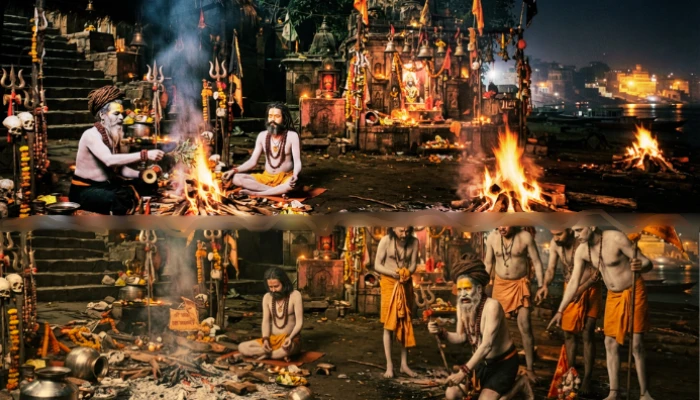
Case Summary
In Meerut, Uttar Pradesh, an ancient Hindu religious site was vandalised by unknown persons. Unknown persons damaged the sacred dhuni of Guru Gorakhnath, along with the tiled worship area within the cremation ground premises. A dhuni (or dhuna) of Guru Gorakhnath is a sacred, perpetually burning fireplace or hearth (Akhand Dhuna) maintained within the Nath Sampradaya tradition. The Shri Sapt Bhawani Akhara stated that the religious site was vandalised as part of an attempt to illegally occupy the land. The matter came to light after Shri Sapt Bhawani Akhara founder and president Shubham Agrawal submitted a written complaint to the SP City on Thursday, 17 September, 2026. He said an ancient temple dedicated to Maa Shamshan Vasini Kali was established within the cremation ground premises and served as a major centre of faith for local devotees. The Akhara committee had also established a dhuna dedicated to Guru Gorakhnath within the same premises and developed the area as a place for worship and religious observance. Every year during Sharadiya Navratri, the Akhara organises a procession of Maa Kali's grand form through the city, and as part of the tradition, devotees come to the dhuna to pay their respects. The religious site and the tiled worship area were subsequently vandalised and damaged by unknown persons. The Akhara office-bearers stated that the destruction was carried out with the intention of illegally occupying the land. Following the complaint, the city police began investigating the matter. SP City Abhishek Pratap Ajeya stated that the matter was being investigated and that strict action would be taken against those responsible.
Why it is Hate Crime ?
This case is being added to the tracker under the primary category: Attack on Hindu religious representations. The subcategory selected is: Desecration of Hindu religious symbol. Icons and symbols, or a religious representation of a spiritual ideal, are widely revered in Hinduism. Iconography is of vital significance in the Hindu milieu. It helps connect people’s spiritual beliefs with the real world. Iconography within the Hindu faith takes several shapes and forms. Murtis are of most significance to Hindus, to which daily rituals, prayers and offerings are done. Besides the murtis, there are several other symbols which have deep significance in the Hindu faith – the Om and Swastika, for example. Since these Hindu religious symbols hold paramount importance in Hinduism, any desecration of symbols, icons, murtis, religious representations and manifestations is driven by animosity towards the faith itself, which manifests itself through these murtis, icons and symbols. Therefore, any desecration of these Hindu religious symbols and representations is considered religiously motivated hate crimes under this category. The other subcategory selected is: Defiling of religious customs. Sanatan Dharma is not a religion of one book, which is to say that while it has religious scriptures that form the central tenets of the faith, there are several traditions followed through thousands of years, mostly passed from generation to generation orally. There are several such customs and traditions that are followed by various Hindus and Hindu sects. Defiling these traditions and customs is a breach of an individual or group’s religious practices. Such practices can range from dietary restrictions like not eating non-vegetarian food for a certain period of the year, not eating non-vegetarian food at all, not eating beef since the cow is considered holy in Hinduism, the sanctity of religious customs followed in the house (like many ISCKON devotees), etc. Any malicious action leading to the breach of such traditions or defilement of these traditions owing to animosity towards the faith or for the sake of activism stems not only from the lack of faith in the religion itself but also from disregard for the faith of the devotees who follow the customs/traditions and implicit bias against the faith, the tradition itself. Since these specific traditions are central to the faith of the devotees of that specific sect of Hindus, any non-compliance with these traditional rules would be considered a religiously motivated hate crime. This case was included in the Hinduphobia Tracker because the act targeted a sacred Hindu religious space that was deeply connected with the worship and observance of local devotees. The religious significance of the site was not limited to the presence of an ancient temple dedicated to Maa Shamshan Vasini Kali. The dhuna dedicated to Guru Gorakhnath also held a distinct place in the devotional life of the community. A dhuna is not an ordinary fire pit but a sacred and continuously tended fire associated with Guru Gorakhnath and the Nath tradition. It is a permanently burning, sacred fire pit tended by the worshippers. It functions as a living altar where devotees and ascetics perform worship, meditation and fire rituals, maintaining a spiritual connection with the Guru and the divine. The fire itself is treated as sacred, and the ash produced from it is regarded as holy prasada and used as vibhuti by devotees. This gave the dhuna an enduring sacred status within the religious life of those who worshipped there. Further, Guru Gorakhnath is a highly revered 11th-to-12th-century master yogi and a primary founder of the Nath monastic tradition in India. Therefore, damaging the pious dhuni dedicated to such a revered saint itself constituted a sacrilegious act, as it directly violated a sacred space and religious object held in reverence by devotees. Its significance was further deepened during Sharadiya Navratri, when devotees came to this very dhuna to pay obeisance as part of the established observance connected with Maa Kali. The dhuna therefore formed part of the living devotional tradition through which devotees honoured Maa Kali while also revering Guru Gorakhnath. For the Hindu community, this was not merely a place associated with a religious structure but a sacred point of worship where an established tradition was carried forward through generations of observance. Moreover, the damage therefore struck at a place where Hindus practised and expressed their faith through established forms of worship and observance. The destruction of the sacred dhuna and the worship area did not merely affect a physical structure. It disrupted a religious space that carried devotional meaning for the Hindu community and interfered with the continuity of customs through which devotees had maintained their connection with Maa Kali and Guru Gorakhnath. At the same time, the stated attempt to illegally occupy the land gave the act a further religious dimension because the sacred character of the site was disregarded in the process of destroying the religious structures established there. The conduct therefore involved deliberate interference with a space created for Hindu worship and with the religious practices associated with it. The damage to the site and the disruption of the devotional setting together demonstrated that the act affected Hindus in the very exercise of their faith. Taken together, the targeting of a sacred Hindu site, the destruction of the dhuna and worship area, and the disruption of a religious tradition followed by devotees during Sharadiya Navratri established the religious nature and impact of the offence. The case therefore fell within the Tracker's parameters as an attack on Hindu religious representations accompanied by the defilement of established Hindu religious customs and observances. It is important to mention here that, though the last update was that the miscreants were unknown, the action stemmed from hatred against Hinduism and resulted in the desecration of the ancient Hindu religious site and would therefore be considered a religiously motivated hate crime.


Case Status
Complaint filed


Perpetrators Details
Perpetrators
Unknown
Perpetrators Range
Unknown
Perpetrators Gender
unknown
 Sources




