Hindu religious festival reduced to commercial events, Hindu organisation vilified as ‘Hindu Taliban’ by leftists journalists
 India
India  21 September, 2026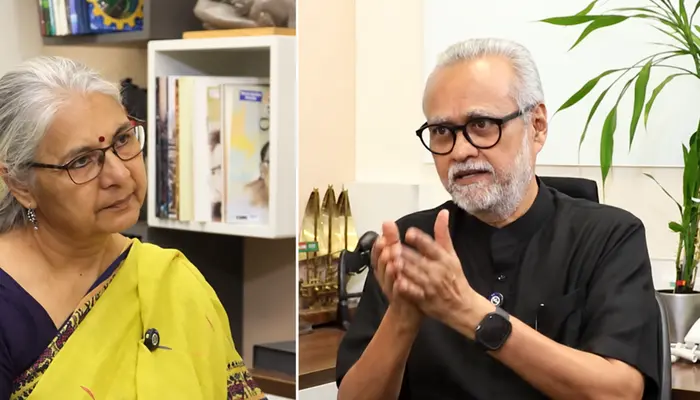
Case Summary
The Indian Express hosted an interview with journalist Shubhangi Khapre and author and journalist Girish Kuber, where the Vishva Hindu Parishad (VHP), a Hindu organisation, was vilified and called a "Hindu Taliban" for its appeal to restrict Muslim participation in Navaratri and Garba events. They declared that Hindus should either permit participation by Muslims in their religious festivities or confine those festivities to their homes, and made repeated attempts to frame Navaratri and other Hindu festivals primarily as commercial, social or cultural events rather than religious observances centred on Hindu deities and traditions. On 22 September 2026, The Indian Express hosted an interview between journalist Shubhangi Khapre and author and journalist Girish Kuber regarding the Vishva Hindu Parishad’s (VHP) call to restrict Muslim participation in Hindu religious celebrations, including Navaratri and Garba events, in Maharashtra, Mumbai, Gujarat and other states. During the discussion, Khapre and Kuber repeatedly criticised the VHP’s position and its demand that Muslims be barred from participating in such events. Khapre described the VHP’s position as a “fatwa”, while Kuber compared the organisation to the “Hindu Taliban”. The discussion centred on questioning the legitimacy of restrictions placed on participation in a Hindu religious festival by the VHP. Khapre claimed that Navaratri celebrations had become closely associated with the cultural nationalism of the right wing and had become large-scale events involving professional dancers, singers, entertainment and ticketed entry, rather than remaining confined to worship of the Goddess within Hindu homes. On this basis, she questioned why Muslims should be excluded from attending the celebrations. Kuber agreeing to her said that the VHP’s position was unacceptable and questioned how such a directive could be implemented. He compared the VHP's call to a “fatwa” and rhetorically asked whether the organisation was becoming the “Hindu Taliban”. He also referred to statements by RSS chief Mohan Bhagwat on unity and diversity and argued that there was an inconsistency between such statements and the VHP’s position on Muslim participation in Navaratri events. The discussion further falsely treated Navaratri primarily as a commercial and social event, with Kuber arguing that although the festival had Hindu foundations, it was now widely celebrated for social and recreational purposes. He also mockingly suggested that Hindus who wished to prevent Muslim participation should restrict their Navaratri observance to their homes. The discussion also downplayed the explicitly religious character of Garba and Dandiya by presenting the musical and dance elements principally as entertainment, despite their place within Navaratri celebrations dedicated to Goddess Durga or Ambika. It is further important to note here that similar arguments had been used to portray other Hindu festivals, including Onam and Pongal or Makar Sankranti, primarily through their cultural or regional dimensions rather than their Hindu religious associations. Kuber also questioned why Muslims should be excluded from Navaratri events by comparing the issue with the participation of Muslims in Hindu cultural productions. He referred to the Hindu bhajan “Man Tadpat Hari Darshan Ko”, sung by Mohammed Rafi with music by Naushad, and questioned whether the same logic would result in such works being prohibited because their creators were Muslim. He also invoked Ustad Bismillah Khan and Hindu weddings while arguing against restrictions based on religious identity. The discussion subsequently compared Navaratri with Bollywood productions and other forms of entertainment, treating participation in a Hindu religious celebration as analogous to professional involvement in cultural or commercial activities. Khapre and Kuber also appealed to Maharashtra Chief Minister Devendra Fadnavis and the state government to intervene in the matter. The discussion then shifted to the political debate surrounding the VHP’s position. Kuber falsely argued that the development reflected insecurity within the Hindu majority and said that the VHP had demonstrated such insecurity. Khapre and Kuber also mocked the issue of “love jihad”, which had been cited by BJP leader and minister Nitesh Rane in connection with the decision to restrict Muslim participation in Navaratri events. Kuber criticised BJP politicians for attempting to demonstrate greater Hindu or saffron credentials and referred to political developments in Assam and West Bengal in this context. He also argued that the BJP could face an electoral price for accommodating such positions. The discussion further questioned the religious character of Hindu festivals by comparing Navaratri and Diwali with Christmas. Kuber argued that Diwali was becoming universal in the same manner as Christmas and questioned how anyone could say that only Hindus should celebrate Diwali or burst crackers. The discussion consequently framed Hindu festivals as events whose public character should permit participation irrespective of religious identity. The source criticised this approach for treating Hindu festivals as general public or cultural occasions while separating them from their religious foundations. It also noted that the discussion moved into related questions concerning boycotts of Muslim artists, the “majority syndrome”, concerts and films, further equating Hindu religious celebrations with ordinary entertainment and commercial cultural activities.
Why it is Hate Crime ?
This case has been added to the tracker under the primary category of - Hate speech against Hindus. Within it, the sub-category selected here is - Anti-Hindu subversion and prejudice. Hate speech is defined as any speech, gesture, conduct, writing, or display that is prejudicial against a specific individual and/or group of people, which is leading to or may lead to violence, prejudicial action or hate against that individual and/or group. Media plays a specific and overarching reach in perpetuating prejudicial attitudes towards a community owing to unfair, untrue coverage and/or misrepresentation/misinterpretation, selective coverage and/or omission of facts of/pertaining to issues affecting a specific religious group. This type of bias can dehumanise the victim group, making it easier for others to justify harmful actions against them, which aligns with the objectives of hate speech laws aimed at preventing such harm. It is often observed that the media takes a prejudicial stand against the Hindu community driven by their need to shield the aggressor community which happens to be a numeric minority, however, is the one perpetrating violence against Hindus. For example, the media is often quick to contextualise religiously motivated crimes against Hindus, omit or misrepresent facts that point towards religiously motivated hate crimes, justify and/or downplay religiously motivated hate crimes or simply present fake news to stereotype Hindus. Such media bias leads to the denial of persecution and is often used to dehumanise Hindus, leading to justification for violence against them. For example, the media covered several fake allegations of Hindus targeting Muslims and forcing them to chant Jai Shree Ram. Most of these cases were proved false and fabricated after police investigation. These fake news reports were subsequently never retracted or clarified. Such fake news led to the justification of violence and dehumanisation of Hindus based on the argument that since Hindus targeted Muslims and forced them to chant Jai Shree Ram, the dehumanisation of Hindus and violence against them was par for the course and merely a retaliation. Such media bias leads to prejudicial portrayal of Hindus and offers a justification for violence against them and therefore, is considered hate speech under this category. The other sub-category selected here is - Anti-Hindu slurs, mocking faith. Anti-Hindu slurs and the deliberate mocking of the Hindu faith owing to religious animosity involve the usage of derogatory terms, stereotypes, or offensive references to religious practices, symbols, or figures. One of the common anti-Hindu slurs used against Hindus is “cow-worshipper” and “cow piss drinker”. The intention of using this term is to demean and mock Hindus as a group and their religious beliefs since Hindus consider the cow holy. Additionally, some symbols and the slurs attached to them have a historical context that exacerbates the insult, hate, stereotyping, dehumanisation and oppression against Hindus. Cow worship has been used for centuries to denigrate Hindus, insult their faith and oppress Hindus specifically as a religious group. There has been overwhelming documentation about how cow slaughter has been used to persecute Hindus with cow meat being thrown in temples and places of worship. There has also been overwhelming documentation where cow meat (beef) has been force-fed to Hindus to either forcefully convert them to Islam or denigrate their faith. Apart from cow worship, the Swastika – which holds deep religious significance for the Hindus – has also been misinterpreted and distorted to use as a slur against Hindus. Similarly, the worship of the Shivling has been used by supremacist ideologies and religions to denigrate Hindus owing to religious animosity. Such slurs and denigration stem out of inherent animosity and hate towards Hindus and their faith, therefore, it is categorised as hate speech targeted at Hindus specifically owing to their religious identity. This case has been added to the tracker because of the manner in which the discussion challenged the legitimacy of Hindu religious identity, Hindu religious practices and the right of Hindus to preserve the religious character of their own festivals, while repeatedly portraying Hindu-specific participation norms as exclusionary or illegitimate. The hate-crime dimension arose from the repeated portrayal of Navratri and Garba as primarily commercial, social or entertainment events rather than as Hindu religious observances. Navratri is an explicitly Hindu festival centred on the worship of the Goddess, with devotees observing religious rituals, prayers and other forms of worship over the festival period. Garba and Dandiya, while involving music and dance, are traditionally performed as part of these Navratri celebrations and are rooted in Hindu devotional practices. Presenting these observances principally as commercial entertainment therefore obscured their religious character and treated a Hindu festival as though it were simply a public cultural event open for participation on the same basis as an ordinary commercial or entertainment programme. This distinction is important because the discussion used the commercial and social aspects of Navratri and Garba to question why participation could be restricted on religious grounds. The central issue was therefore not merely who could attend an entertainment programme, but whether a Hindu religious celebration could retain its religious identity and whether Hindus could establish participation norms for an event organised around their own faith and traditions. By repeatedly reducing Navratri and Garba to cultural or commercial activities, while questioning the legitimacy of Hindu-specific participation, the discussion effectively subjected the religious character of Hindu observance to a standard that would not ordinarily be applied to the private or communal religious practices of other faiths. The hate-crime dimension is further reflected in the manner in which the Vishva Hindu Parishad (VHP), a Hindu organisation that works for the Hindu religious interests and the preservation and promotion of Hindu traditions, was characterised during the discussion. Girish Kuber repeatedly used highly derogatory religious comparisons, describing the organisation as the “Hindu Taliban” and characterising its appeal as a “fatwa”. These descriptions went beyond a substantive criticism of the VHP's position and sought to associate a Hindu organisation with concepts carrying strong negative religious and political connotations. By placing a Hindu organisation's attempt to establish boundaries around participation in Hindu religious festivities in the same conceptual frame as a “fatwa”, the discussion ridiculed the exercise of Hindu religious agency and presented the articulation of Hindu-specific religious norms as something inherently oppressive. This was particularly significant when considered alongside the “Hindu Taliban” comparison, as both descriptions transformed a disagreement over participation in a Hindu religious festival into a broader characterisation of Hindu religious assertion as extreme or illegitimate. The language therefore did not merely challenge the VHP's political or organisational conduct; it attached a derogatory character to VHP because it was protecting Hindu interests. In this context, the repeated vilification of the VHP contributed to a broader pattern of hostility towards Hindu religious assertion, particularly where the expression of Hindu-specific religious boundaries was itself portrayed as inherently extreme or illegitimate. The discussion also failed to acknowledge that concerns about restricting participation in some Garba events have arisen in the context of specific incidents involving misconduct and targeting of Hindu participants. The Hinduphobia Tracker has documented multiple cases in which Muslim individuals attended Garba events will malicious intentions, molesting Hindu women and desecrating and disrespecting the Garba pandal. For instance, during a Garba event in Virar West in September 2025, a Muslim youth was caught filming Hindu girls, with organisers finding obscene chats on his phone that discussed targeting Hindu girls and using Discord to coordinate with others. In another incident, at a Garba celebration in Mira Road on 1 October 2025, eggs were thrown from a residential building onto the venue, resulting in an FIR for disturbing a religious assembly; police identified the accused as Mohsin Shaikh. In Kanpur, Uttar Pradesh, a commotion erupted at a Dandiya-Garba event on 29 September 2025, Hindu women and girls were subjected to sexual harassment by Muslim men. These incidents demonstrate that concerns about security, targeted harassment and disruption at particular Hindu religious events cannot simply be dismissed by equating them with ordinary participation in cultural productions. The existence of documented incidents is relevant to understanding why Hindu organisers may seek identity-based entry restrictions as a preventive measure, even where the proportionality or legitimacy of such restrictions remains a separate question. The discussion also drew a false equivalence between professional participation by Muslims in cultural productions associated with Hindu themes and participation in Hindu religious observances. Kuber invoked Mohammed Rafi's rendition of the Hindu bhajan “Man Tadpat Hari Darshan Ko”, the music of Naushad, Ustad Bismillah Khan's association with Hindu cultural settings and the participation of Muslims in Hindu weddings to question the legitimacy of religiously defined participation in Navratri. These examples, however, concerned artists or professionals contributing to cultural, musical or social settings, and did not establish that a person of another faith is automatically entitled to participate in the religious observance itself. A Muslim singer performing a Hindu devotional song, for instance, is not equivalent to a Muslim attendee participating in a Hindu religious ritual. The comparison therefore obscured the central distinction between cultural exchange and forceful participation in another faith's religious observance. Navratri is a Hindu religious festival, and the question raised by the VHP concerned participation in celebrations organised around Hindu religious traditions and practices. Equating this with Mohammed Rafi singing a Hindu devotional song or Muslims contributing to Hindu cultural productions shifted the discussion away from the religious nature of the event and presented a materially different situation as though the two were identical. Taken together, these aspects demonstrate that the issue extended beyond a disagreement over the VHP's position or over the participation of Muslims at particular events. The discussion repeatedly denied the religious character of Hindu festivals, portrayed Hindu-specific participation norms as inherently exclusionary, and subjected a Hindu organisation advocating the preservation of those religious boundaries to derogatory comparisons such as “Hindu Taliban” and “fatwa”. In this context, the cumulative framing contributed to the denigration of Hindu religious assertion by presenting the preservation of Hindu religious spaces and practices as inherently extreme or illegitimate, thereby making Hindu religious identity and its expression the subject of disparagement in the discussion. Therefore, this case has been added to the hate crime database.


Case Status
Unknown


Perpetrators Details
Perpetrators
Others
Perpetrators Range
From 2 To 5
Perpetrators Gender
both
 Sources




