Hindu family put up “House for Sale” poster amid repeated threats by Muslims in Maihar, Madhya Pradesh
 Maihar, Madhya Pradesh, India
  15 September, 2026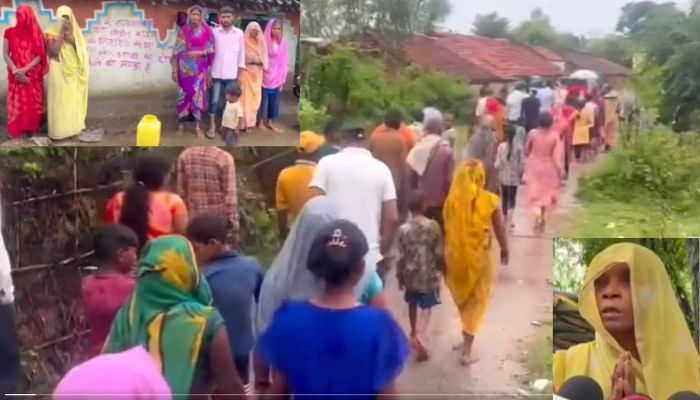
Case Summary
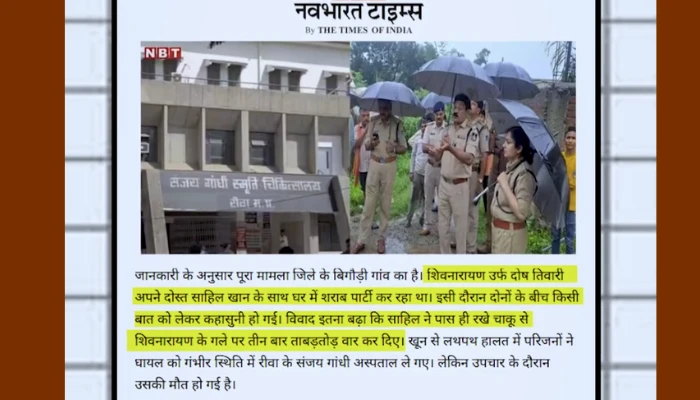
In Bigaudi village of Tala, Maihar district, Madhya Pradesh, a Hindu family was forced to leave the locality amid threats and intimidation by Muslims. The Hindu family was threatened with killing more members of their family, including their nephews. Fearing for their safety, they wrote “House for Sale” on their walls and began leaving the locality. The matter came to wider attention after videos concerning the threats and murders of Hindus were released on X. The videos highlighted the fear among Hindu families and showed the “House for Sale” messages written on walls in Bigaudi. In the video, a Hindu woman was seen speaking about the threats her family received from Muslims in the locality. She stated, “They said that they will kill my family by 8 pm like they cut vegetables.” She further stated that they had threatened her that, just as they had killed her son Bhaiyalal, they would kill all her other family members. When the interviewer asked who had threatened her, she identified Afsar Khan, Ismail and Ajmer Khan. Following Bhaiyalal’s murder, his family faced continued intimidation by the accused. The woman stated that they had been threatened with further violence and feared that more members of the family, including her nephews, would be killed. The threats left the family fearing for their safety and compelled them to consider selling their home and leaving the locality. The words “House for Sale” were subsequently written on walls in the village. Notably, the incident was triggered after a Hindu tribal youth, Bhaiyalal alias Bhaiyan Kol, 36, son of Ramashray Kol and a resident of Bigaudi, was found dead in a well late on 16 September 2026. Bhaiyalal's death created tension in the village. During the investigation, police arrested three Muslim men, Afsar Khan, Ismail and Ajmer Khan, in connection with the case under stringent provisions, including the Scheduled Castes and Scheduled Tribes (Prevention of Atrocities) Act. The murder of Bhaiyalal was not the first such incident involving a Hindu man in the locality. In July/August 2025, a Hindu man, Shivnarayan Tiwari, was murdered in the same area by the Muslim accused. The accused, Sahil, had openly admitted that he killed Shivnarayan Tiwari and threatened his family with consequences. The murder had triggered a mahapanchayat in the locality. According to the 2011 Census, Hindus made up 81.86% of the locality's population, while Muslims made up 17.40%. Yet, despite Hindus forming the majority of the local population, the continuing threats and violence left Hindu families fearing for their safety. The Superintendent of Police, Awadhesh Pratap Singh, visited Bigaudi village and interacted with residents. He reassured villagers about their safety, directed security patrols in the area, and ensured that legal proceedings against the accused were completed.
Case Images
Why it is Hate Crime ?
The primary category selected for this case is: Attack not resulting in death. The subcategory selected for this case is: Attacked for Hindu identity. In several cases, Hindus are attacked merely for their Hindu identity without any perceived provocation. A classic example of this category of religiously motivated hate crime is a murder in 2016. 7 ISIS terrorists were convicted for shooting a school principal in Kanpur because they got ‘triggered’ seeing the Kalava on his wrist and the tilak that he had put. In this, the Hindu victim had offered no provocation except for his Hindu religious identity. The motivation for the murder was purely religious, driven by religious supremacy. Such cases where Hindus are targeted merely for their religious identity would be documented as a hate crime under this category. The other sub-category selected here is - Attacked to induce migration from non-Hindu-dominated area. There have been cases where Hindus living in an area, often with a majority dwelling belonging to non-Hindus or those harbouring animosity towards the Hindu faith, the Hindu residents experience threats and violence. The violence is employed to make the Hindus leave the area and relocate, so the area could be turned into an exclusive ghetto for adherents of the non-Hindu faith or those who harbour animosity towards the Hindu faith. In several cases, the aim of exodus is explicit. However, in several cases, the demand for the exodus of Hindu residents is not explicit; violence by non-Hindu residents leaves the Hindu residents no option but to leave the area, thereby turning the area into an exclusive ghetto of non-Hindu residents. In such cases, there are instances of violence against the Hindu residents. For example, in the Hauz Qazi case of 2019, the Muslim residents claimed that mob violence against the Hindu residents had been triggered by a parking dispute. However, the violence did turn religious, with a temple being desecrated, and was directed specifically against the Hindu residents. The Hindu residents of the area were clear that the violence was religiously motivated, and one of the motives was to affect an exodus of the Hindu residents. In such cases, even though the perpetrators have not explicitly expressed the aim of affecting an exodus, the given circumstances, violence and precedent point to the intention of exodus and therefore would be categorised as a religiously motivated hate crime. Under this category, cases where the attack led to the death of the Hindu victim/s would be documented. This case was included in the Hinduphobia Tracker because the violence and intimidation were directed at Hindu residents in a manner that threatened their continued presence in the locality. The religious dimension lay not only in the identity of those targeted, but in the use of fear, threats of further killings and sustained intimidation to make Hindu families feel that remaining in the area was no longer safe. The pressure ultimately reached the point where Hindu residents began putting their homes up for sale and leaving the locality. The threats carried a direct message of insecurity for the Hindu community. The warning that more members of the family would be killed created fear that the violence would continue beyond the original victim and reach other Hindu relatives. Such threats placed the family's Hindu identity within a climate of intimidation in which ordinary life, residence and physical security became uncertain. More significantly, the intimidation had a clear displacement effect. The fear was not limited to the loss of one family member or to an isolated act of violence. It extended to the family's decision to sell their home and leave the locality. The use of violence and threats in this manner made continued Hindu presence in the area increasingly difficult and created conditions in which Hindu residents were pushed towards abandoning their homes. The earlier murder of another Hindu man in the same locality further strengthened this atmosphere of insecurity. The recurrence of violence against Hindu residents showed that the fear surrounding Bhaiyalal's family existed within a wider local context rather than arising from a single isolated incident. The resulting insecurity affected not only the immediate victims but also the sense of safety of other Hindu families living in the area. The demographic context further underscored the significance of the situation. Hindus formed the majority of the local population, yet Hindu residents were left fearing for their lives and considering leaving their homes because of threats from Muslims in the locality. The fact that a Hindu community could be placed under such pressure despite its numerical presence made the impact of the intimidation particularly significant. Taken together, the murder of a Hindu resident, threats of further killings, continued intimidation and the resulting pressure on Hindu families to sell their homes and leave demonstrated that the violence had consequences extending beyond the immediate victims. It created an environment in which Hindu residents were made to fear remaining in their own locality. The case therefore reflected a serious form of religiously targeted intimidation in which violence and fear operated to undermine the continued presence and security of Hindus in the area. Disclaimer: The Hinduphobia Tracker records the incident date based on when the victim’s ordeal began rather than when the incident was reported by the media. The incident was triggered following the death of Bhaiyalal on 16 September 2026. Therefore, 16 September 2026 was recorded as the incident date. Further, although the immediate victims were the members of Bhaiyalal’s family, the exact number of victims was not specified. Since only one Hindu woman was shown speaking about the threats in the video, the victim count was recorded as one (1) for documentation purposes.
Victim Details
Total Victim
1
Deceased
0
Gender
- Male 0
- Female 1
- Third Gender 0
- Unknown 0
Caste
- SC/ST 1
- OBC 0
- General 0
- Unknown 0
Age Group
- Minor 0
- Adult 1
- Senior Citizen 0
- Unknown 0


Case Status
Arrested


Perpetrators Details
Perpetrators
Muslim Extremists
Perpetrators Range
From 2 To 5
Perpetrators Gender
male
 Sources




