Hindu temple targeted, sacred idol of Lord Hanuman vandalised in Ballia, Uttar Pradesh
 Ballia, Uttar Pradesh, India
  14 September, 2026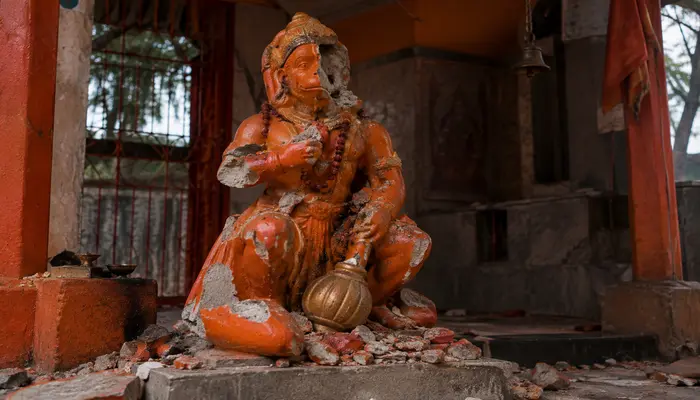
Case Summary
In Chak Khan village under the Sikanderpur police station area of Ballia district, Uttar Pradesh, a Hindu temple was vandalised by a few unidentified miscreants. The sacred idol of the revered Hindu deity Hanuman and sections of the temple premises were also damaged in the incident. According to media reports, the incident came to light on the morning of 15 September 2026, when local Hindu devotees arrived at the temple to offer morning prayers and found the Hanuman idol and the temple premises damaged. Upon discovering the desecration, local Hindu villagers gathered at the site in large numbers and expressed outrage over the incident. The Hindu community promptly alerted the local police and demanded strict legal action against those responsible for damaging the sacred idol and temple premises. Following the report, police personnel arrived at the scene and assessed the situation. Under police supervision, repair work was undertaken on the damaged Hanuman idol and the affected portions of the temple premises. The police also initiated necessary legal action and an inquiry into the circumstances surrounding the incident. However, despite the entire temple premises being vandalised, the Sikanderpur Police Outpost In-charge Grijesh Singh claimed that the idol had simply fallen down and was subsequently restored. At the time of writing this report, the situation in the village remained normal, while police continued to monitor the area to maintain peace.
Why it is Hate Crime ?
The primary category selected in this case is: Attack on Hindu religious representations. The subcategory selected is: Desecration of Hindu religious symbol. Icons and symbols or a religious representation of a spiritual ideal are widely revered in Hinduism. Iconography is of vital significance in the Hindu milieu. It helps connect people’s spiritual beliefs with the real world. Iconography within the Hindu faith takes several shapes and forms. Murtis are of most significance to Hindus, to which daily rituals, prayers and offerings are done. Besides the murtis, there are several other symbols which have deep significance in the Hindu faith – the Om and Swastika for example. Since these Hindu religious symbols hold paramount importance in Hinduism, any desecration of symbols, icons, murtis, religious representations and manifestations, is driven by animosity towards the faith itself which manifests itself through these murtis, icons and symbols. Therefore, any desecration of these Hindu religious symbols and representations is considered religiously motivated hate crimes under this category. The other subcategory selected is: Attack on Temples. In Hinduism, a temple is the abode of the Deity. The Deity in the Temple is consecrated, thereby, making it a real, breathing entity. Hindus believe that not just the Deity but the temple premises itself are sacred to Hindus since Hindus hold the faith that the entire Temple space is an amalgamation of the divine energy of the deity. Given the central significance of Temples in Hindu Dharma, any attack against a Hindu Temple or its peripheral premises is an attack on the faith itself and is born out of animosity towards the faith, of which, the Temple is a central tenet. Any manner of attack against a Temple and/or its premises would therefore be considered a religiously motivated hate crime. This incident is a clear example of a religiously driven hate crime, as the entire temple premises and the sacred idol of Lord Hanuman were vandalised and damaged by unidentified miscreants. A Hindu temple is a deeply revered religious institution where Hindus worship and believe that the divine presence resides. The temple is not merely a physical structure but a sacred space dedicated to the worship and invocation of the divine. Hindu idols, known as murtis, hold profound religious significance as sacred representations through which devotees worship and connect with the divine. Lord Hanuman is one of the most revered deities in Hinduism and is worshipped as a symbol of devotion, strength, courage, loyalty and protection. His idol therefore holds deep spiritual and religious significance for Hindu devotees. The sanctity of a Hindu temple extends to its entire premises, including the spaces where prayers are offered, rituals are performed, and devotees gather for worship. Therefore, the deliberate vandalisation of the temple, damage to its premises and the desecration of the sacred idol of Lord Hanuman amounted to an attack on Hindu religious representation and a Hindu place of worship. Such acts showed profound disrespect for Hindu sacred symbols and the religious sentiments of devotees, who hold their deities, idols and temples in the highest regard. The desecration of a Hindu temple and its sacred idol caused deep hurt and distress within the Hindu community and reflected the perpetrators' hostility towards Hinduism and its religious symbols. The incident therefore constituted a clear example of a hate crime. The police response further downplayed the communal angle of the incident. Despite the temple premises having been found damaged, Sikanderpur Police Outpost In-charge Grijesh Singh claimed that the idol had simply fallen down and had subsequently been restored. Even if the possibility of the idol having fallen were to be considered, this explanation failed to account for the damage to other portions of the temple premises. The damage to the wider temple premises could not simply be explained away as an accidental fall and warranted a proper investigation. By attributing the damage to the idol to an accidental fall while failing to address the vandalisation of the temple premises, the police effectively downplayed the religious dimension of the incident. Such a response demonstrated institutional prejudice against Hindus by failing to adequately acknowledge or investigate an attack targeting a Hindu place of worship and its sacred religious representation. This is not the first time that the police are trying to whitewash religiously motivated crimes against Hindus. The police, in many such cases, where the motive behind the crime is obvious but not explicitly mentioned, deny that the crime committed was in any way motivated by a religious bias or say that there was ‘no communal angle’ to the crime. Several factors are generally at play here. Many a time the police downplay incidents of low-level communal crime because it is their jurisdiction that comes under question. The police also often say that there was ‘no communal angle’ to a crime when there was one because they wish to ensure that, owing to the crime already committed, there is no further flare-up in the area. However, a police statement alone cannot be enough to determine whether there is a communal angle present in the crime that has been committed. In fact, to determine whether the crime is communal in nature or not, we need to give emphasis to the ground realities. For example, in the case of Rinku Sharma, the Bajrang Dal activist who was mercilessly stabbed in his house in front of his family members in Delhi’s Mangolpuri area in the year 2021, the leftist media and the leftist ecosystem had tried to peddle that there was no communal angle to the crime. Even the police denied that the crime was communal in nature. However, Opindia spoke to several people who were on the ground with the family of Rinku Sharma, and they were told that the communal tension in the area was palpable. The family of Rinku Sharma had said that the Muslims of the area held a grudge against Rinku ever since he celebrated the Ram Mandir verdict. Like the case of Rinku Sharma, there are cases where, even when the police deny or downplay a communal angle, the facts on the ground make the religious motivation behind the incident clear. In this case, the police claimed that the temple idol had simply fallen, but failed to explain how other parts of the entire temple premises had also been vandalised. This amounted to a malicious downplaying of a religiously targeted attack on a Hindu place of worship, particularly when the wider damage to the temple could not be explained by the supposed fall of the idol. At the time of documentation, the perpetrators remained unidentified. However, the nature of the act, involving the vandalisation of a Hindu temple and damage to its sacred idol, was rooted in hostility towards Hinduism and its sacred places of worship. The case was therefore documented in the hate crime database of the Hinduphobia Tracker.


Case Status
Unknown


Perpetrators Details
Perpetrators
Unknown
Perpetrators Range
Unknown
Perpetrators Gender
unknown
 Sources




